Bacterial Conjunctivitis
Clinical Snapshot
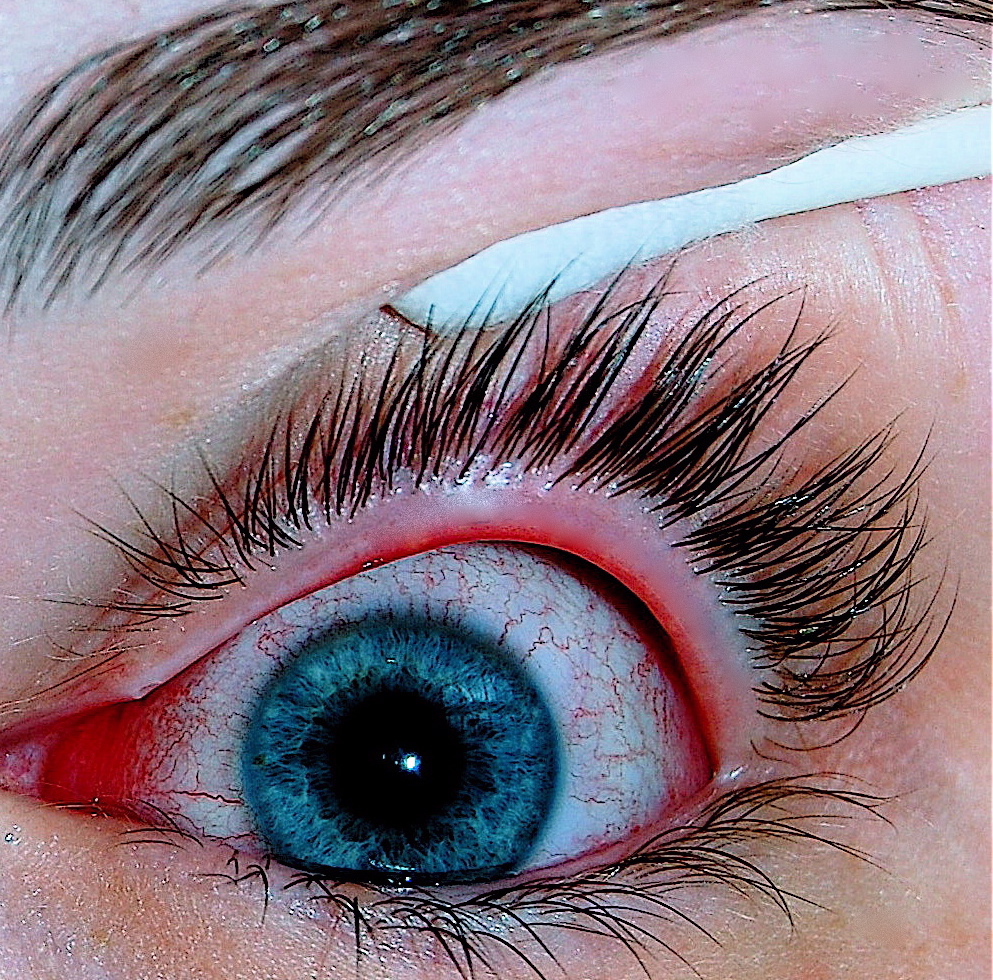
Bacterial conjunctivitis is a purulent infection of the conjunctiva, most common in children, and one of the most common causes of a red eye seen in primary care/community pharmacy.[1] It is usually self-limited, resolving over 1-2 weeks even without treatment, though a topical antibiotic modestly shortens the course.[2] The essential first task is not treating the discharge — it is confirming this is simple bacterial conjunctivitis and not one of the sight-threatening red-eye mimics (angle-closure glaucoma, iritis/uveitis, scleritis, keratitis, corneal ulcer) or the two special forms requiring systemic therapy: gonococcal (hyperacute, vision-threatening) and chlamydial conjunctivitis.[3]
Recognize the Condition
Typical presentation
Purulent discharge, often starting in one eye, with lids crusted shut on waking. Common pathogens: Haemophilus influenzae, Staphylococcus aureus, Streptococcus pneumoniae; Moraxella catarrhalis occurs mainly in children, often with concurrent otitis media.
Special forms of bacterial conjunctivitis
Gonococcal conjunctivitis
Hyperacute onset (within 12-24 hours), copious thick purulent discharge that reaccumulates within minutes of wiping, marked lid swelling and conjunctival chemosis. This is a true ocular emergency — untreated gonococcal conjunctivitis can perforate the cornea within days. Occurs in sexually active adults (autoinoculation from genital infection) and neonates (ophthalmia neonatorum, from maternal exposure at delivery).
Chlamydial conjunctivitis
A more indolent, subacute course than typical bacterial conjunctivitis — chronic mucopurulent discharge, follicular conjunctival reaction, and often a preauricular node (usually a viral clue, but also seen here). Occurs in sexually active adults and neonates exposed at delivery. Frequently misdiagnosed as viral conjunctivitis given the follicular/subacute pattern, or missed entirely if it is assumed all bacterial conjunctivitis looks acute and purulent.
Risk Factors
- Contact lens wear — raises the risk of bacterial keratitis specifically, not just conjunctivitis, which is a more serious, sight-threatening process.
- Neonates — chlamydial or gonococcal conjunctivitis risk from maternal exposure at delivery (ophthalmia neonatorum).
- Sexually active adults — gonococcal or chlamydial conjunctivitis from genital-to-eye autoinoculation.
- Concurrent or recent otitis media in children.
- Ocular surgery, trauma, or chemical exposure.
- Immunocompromise.
Red Flags & Refer
Refer immediately to an ophthalmologist (or an optometrist if one is not available) for any of the following:
- Marked redness concentrated at the corneoscleral junction (limbal/ciliary injection), especially if one-sided.
- White corneal opacity or haze.
- Moderate-to-severe pain or photophobia not relieved by a test dose of topical anesthetic.
- Reduced visual acuity.
- An abnormal pupil.
- Recent trauma, ocular surgery, or chemical exposure.
- A contact-lens wearer with suspected corneal infiltrate/ulcer.
- Chronic unilateral conjunctivitis lasting over 3 weeks.
- Refer/escalate the same day for suspected gonococcal conjunctivitis (hyperacute, copious, rapidly reaccumulating purulent discharge) — this needs urgent same-day ophthalmology assessment plus systemic antibiotic treatment, not routine topical therapy alone.[4]
- Refer urgently for suspected chlamydial conjunctivitis (subacute follicular conjunctivitis with a sexual contact history).
- Refer urgently for any neonatal conjunctivitis, regardless of suspected cause.
Assessment & Diagnosis
Differentiating bacterial, viral, and allergic conjunctivitis, and blepharitis
These four conditions are the most commonly confused causes of a red, irritated eye in community practice. Distinguishing them correctly determines whether the patient needs an antibiotic, supportive care, an antihistamine, or eyelid hygiene — and getting it wrong means either an unnecessary antibiotic or a missed diagnosis.



| Feature | Bacterial conjunctivitis | Viral conjunctivitis | Allergic conjunctivitis | Blepharitis |
|---|---|---|---|---|
| Laterality | Often one eye first, may spread to the other | Usually starts in one eye, spreads to the other within days | Bilateral, essentially always | Bilateral, essentially always |
| Discharge | Purulent, thick, yellow-green; lids stuck together on waking | Watery to mucoid; no true pus | Watery, stringy/mucoid | Greasy debris and crusting at the lash base, not a true discharge |
| Itching | Minimal or absent | Mild, if present | The dominant symptom — if the patient does not report itching, reconsider allergic conjunctivitis | Mild irritation/burning more than itching |
| Associated findings | May follow otitis media in children; no preauricular node in most cases | Preauricular lymph node, recent URTI, conjunctival membranes, subconjunctival hemorrhage | Chemosis (conjunctival swelling), lid edema, history of atopy/seasonal pattern | Lash crusting, missing/misdirected lashes, recurrent styes, meibomian gland dysfunction |
| Typical course | Self-limited over 1-2 weeks even without treatment; antibiotics modestly shorten this | Self-limited over 1-3 weeks; highly contagious for the first 3-7 days | Persists as long as allergen exposure continues; recurs seasonally | Chronic, relapsing; managed rather than cured |
| 1st-line management | Often no treatment needed; a topical antibiotic modestly shortens recovery | Supportive care only — cold compresses, lubricants | Remove/avoid the allergen; topical antihistamine/mast-cell stabilizer | Lid hygiene: warm compresses plus lid margin cleansing |
History
- Onset speed — hyperacute (hours) suggests gonococcal; typical bacterial onset is over 1-2 days; chlamydial is more indolent/subacute.
- Unilateral or bilateral, duration, and progression.
- Discharge character — purulent and reaccumulating rapidly after wiping raises concern for gonococcal disease.
- Sexual history and contact history in adults with a subacute or hyperacute presentation.
- Contact lens wear, and any recent trauma or chemical exposure.
Examination
- Best corrected visual acuity (with pinhole if glasses are unavailable).
- Inspect lids, conjunctiva, sclera, and cornea; fluorescein staining if corneal involvement is possible.
- Palpate for preauricular lymphadenopathy.
- Consider culture/Gram stain and gonococcal/chlamydial nucleic acid testing for: neonatal conjunctivitis, hyperacute or copiously purulent presentations, contact-lens-related infections, recurrent or treatment-unresponsive cases, or any case with a relevant sexual history.
Treatment Targets
- Preserve eyesight and prevent structural damage to the eye.
- Control and prevent spread of infection.
- Provide symptomatic relief.
Choose Initial Treatment
1st line, typical bacterial conjunctivitis most cases are self-limited and benign — a topical antibiotic is not required but modestly shortens recovery time when used.[2]
Do not use ophthalmic corticosteroids or antibiotic/corticosteroid combinations for infectious conjunctivitis — may worsen undiagnosed herpetic or fungal keratitis.[5]
Gonococcal conjunctivitis requires systemic treatment (ceftriaxone), not topical therapy alone, plus same-day ophthalmology assessment and STI evaluation/partner treatment — treating with eye drops only is a genuine treatment failure waiting to happen.
Chlamydial conjunctivitis requires systemic treatment (azithromycin or doxycycline) — topical therapy alone does not eradicate genital co-infection and is not adequate treatment on its own.
Non-Pharmacologic Treatment
- Stop wearing contact lenses until fully resolved; reassess fit and hygiene before resuming.
- Fastidious hand hygiene, separate towels, and stay home from school/work for 24 hours after starting an antibiotic (or until resolution if untreated).
- Warm compresses 2-3 times daily for 5-10 minutes, followed by gentle lid cleaning to remove crusting.
- Discard any potentially contaminated eye makeup or contact lens solutions used during the infection.
Special Populations
Neonates
Ophthalmia neonatorum (neonatal conjunctivitis) is usually chlamydial or gonococcal and requires urgent same-day referral and systemic treatment; it can also result from chemical toxicity from prophylactic medication instilled at birth. Timing of onset can hint at the cause: chemical (day 1), gonococcal (days 2-5, hyperacute and severe), chlamydial (days 5-14, more indolent) — but this pattern is not reliable enough to withhold urgent evaluation.
Pregnancy/breastfeeding
Topical ophthalmic antibacterials have minimal systemic absorption. For gonococcal/chlamydial conjunctivitis requiring systemic treatment, azithromycin is generally preferred over doxycycline in pregnancy.
Contact lens wearers
Any suspected corneal infiltrate or ulcer in a contact lens wearer is a red flag requiring urgent referral, not routine conjunctivitis management — this reflects a more serious process (bacterial keratitis) than conjunctivitis alone.
Children
Bacterial conjunctivitis is more common in children and is often associated with concurrent otitis media. Fluoroquinolones and prolonged antibiotic courses should be used cautiously and per product labelling.
Monitoring & Follow-Up
If there is no improvement after 3-5 days of topical therapy (or no improvement at all if untreated), refer to an ophthalmologist. Chronic, unilateral conjunctivitis should be referred for investigation of a retained foreign body or nasolacrimal duct obstruction, which can act as a bacterial reservoir. Gonococcal and chlamydial conjunctivitis require follow-up of systemic treatment response and confirmation that sexual partners have been evaluated/treated.
Common Errors to Avoid
- Treating gonococcal or chlamydial conjunctivitis with topical antibiotics alone — both require systemic therapy.
- Missing gonococcal conjunctivitis by not recognizing the hyperacute, copiously and rapidly reaccumulating purulent discharge pattern as distinct from typical bacterial conjunctivitis.
- Using an ophthalmic corticosteroid or antibiotic/corticosteroid combination without specialist supervision — can worsen undiagnosed herpetic or fungal keratitis.[5]
- Missing a red-eye mimic (angle-closure glaucoma, iritis, scleritis, keratitis) by assuming every red eye with discharge is simple bacterial conjunctivitis.
- Not evaluating/treating sexual partners when gonococcal or chlamydial conjunctivitis is diagnosed.
Clinical Decision Algorithm
Drug Tables
How to use this table: Doses are adult doses and require patient-specific confirmation (renal/hepatic function, weight, allergy history). Pediatric dosing is weight-based per the current product monograph unless stated. Drug pricing is intentionally omitted. Select any drug name to open its complete Pharmasist Drug Database page.
Topical antibacterials — typical bacterial conjunctivitis
| Drug | Dosage | Adverse effects | Comments |
|---|---|---|---|
| Erythromycin ophthalmic | All ages: Ointment 1.25 cm 2-6 times/day for 7-14 days | Chronic use may cause corneal epithelial toxicity, allergy, resistance | Superficial bacterial infections of the conjunctiva/cornea; also used for blepharitis. |
| Fusidic acid ophthalmic | All ages: 1 drop Q12H for 7 days | Chronic use may cause corneal toxicity, allergy | BID dosing is especially useful in children and elderly patients. Enterobacteriaceae and Pseudomonas are resistant. |
| Tobramycin ophthalmic | All ages: Drops 1-2 drops Q4H, or ointment BID-TID | Chronic use may cause corneal toxicity, allergy, resistance | External bacterial infections of the eye. |
| Ciprofloxacin ophthalmic | Drops: 1-2 drops Q2H while awake x 2 days, then Q4H x 5 days Ointment: 1.25 cm TID x 2 days then BID x 5 days | Chronic use may cause corneal toxicity, resistance | Fluoroquinolones should be reserved for serious corneal infections. |
| Moxifloxacin ophthalmic | All ages: 1 drop TID for 7 days | Chronic use may cause corneal toxicity, resistance | The only preservative-free topical antibacterial agent. Reserve for serious corneal infections. |
| Gramicidin/polymyxin B ophthalmic | All ages: 1-3 drops Q1H initially, gradually decreasing to 1-2 drops 4-6 times/day for 7 days | Chronic use may cause corneal toxicity, allergy, resistance | Limit use to 4-5 days. Choose a broad-spectrum agent first, guided by patient allergies. |
Systemic therapy for gonococcal and chlamydial conjunctivitis
Topical therapy alone is inadequate for either of these — systemic treatment is required, alongside STI evaluation and partner treatment.
| Drug | Dosage | Adverse effects | Comments |
|---|---|---|---|
| Ceftriaxone (gonococcal) | Adults: 1 g IM single dose | Pain at IM injection site; hypersensitivity | Manage jointly with ophthalmology given vision-threatening potential if undertreated. |
| Azithromycin (chlamydial) | Adults: 1 g PO single dose | GI upset | Preferred agent in pregnancy. |
| Doxycycline (chlamydial, alternative) | Adults: 100 mg PO BID for 7 days | GI upset, photosensitivity | Avoid in pregnancy. |
References
- Conjunctivitis: a systematic review of diagnosis and treatment — JAMA (Azari AA, Barney NP). JAMA 2013;310(16):1721-1729
- Antibiotics versus placebo for acute bacterial conjunctivitis — Cochrane Database of Systematic Reviews (Sheikh A, Hurwitz B, van Schayck CP, et al.). Cochrane Database Syst Rev 2012;(9):CD001211
- Bedside diagnosis of the 'red eye': a systematic review — American Journal of Medicine (Narayana S, McGee S). Am J Med 2015;128(11):1220-1224
- Sexually Transmitted Infections Treatment Guidelines — Gonococcal Infections — Centers for Disease Control and Prevention. CDC STI Treatment Guidelines
- Use of topical steroids in conjunctivitis: a review of the evidence — Cornea (Holland EJ, Fingeret M, Mah FS). Cornea 2019;38(8):1062-1067
- Conjunctivitis Preferred Practice Pattern — American Academy of Ophthalmology (Hoskins Center for Quality Eye Care, PPP Cornea/External Disease Committee). 2023 update, published 2024
Professional reference only. Apply clinical judgment and verify patient-specific decisions against current authoritative guidance and product information.