Canker Sore (Aphthous Stomatitis)
Canker Sore (Aphthous Stomatitis)
References
- Recurrent Aphthous Stomatitis — StatPearls, StatPearls Publishing (Plewa MC, Chatterjee K). StatPearls [Internet], updated 2023-11-13
- Common Oral Lesions — American Family Physician (Randall DA, Wilson Westmark NL, Neville BW). Am Fam Physician 2022;105(4):369-376
- The International Criteria for Behçet's Disease (ICBD): a collaborative study of 27 countries on the sensitivity and specificity of the new criteria — Journal of the European Academy of Dermatology and Venereology (International Team for the Revision of the International Criteria for Behçet's Disease). J Eur Acad Dermatol Venereol 2014;28(3):338-347
- Enamel defects and aphthous stomatitis in celiac and healthy subjects: Systematic review and meta-analysis of controlled studies — Journal of Dentistry (Nieri M, Tofani E, Defraia E, Giuntini V, Franchi L). J Dent 2017;65:1-10
- Effect of sodium lauryl sulfate on recurrent aphthous stomatitis: A systematic review — Journal of Oral Pathology & Medicine (Alli BY, Erinoso OA, Olawuyi AB). J Oral Pathol Med 2019;48(5):358-364
- Effectiveness of Vitamin B12 in Treating Recurrent Aphthous Stomatitis: A Randomized, Double-Blind, Placebo-Controlled Trial — The Journal of the American Board of Family Medicine (Volkov I, Rudoy I, Freud T, Sardal G, Naimer S, Peleg R, Press Y). J Am Board Fam Med 2009;22(1):9-16
- Single application of topical doxycycline in management of recurrent aphthous stomatitis: a systematic review and meta-analysis of the available evidence — BMC Oral Health (Al-Maweri SA, Halboub E, Ashraf S, Alqutaibi AY, Qaid NM, Yahya K, Alhajj MN). BMC Oral Health 2020;20(1):231
Clinical Snapshot
Canker sores — recurrent aphthous stomatitis, or recurrent aphthous ulcers — are the most common ulcerative condition of the oral cavity, affecting roughly 1 in 5 people in the general population at some point.[1][2]
They are shallow, round or oval ulcers of the oral mucosa with a grey-yellow fibrinous base and a red inflammatory halo. Critically, they are not infectious and not contagious — the precise mechanism is incompletely understood, but current evidence points to a localized, cell-mediated immune reaction against the oral mucosa in a genetically predisposed person, set off by local trauma, stress, certain foods, sodium lauryl sulfate (SLS)-containing toothpaste, or a deficiency of vitamin B12, folate, iron, or zinc.[1]
The single most useful counselling point in this chapter is the distinction from herpes simplex (cold sores) — an entirely different, genuinely contagious viral infection that patients very commonly confuse with canker sores, sometimes in either direction. Getting this right shapes contagion counselling and which self-care product actually fits the presentation (see Recognize the Condition). Most canker sores are minor, self-limited, and fully managed with OTC self-care; this chapter also covers the minority of major, herpetiform, or refractory presentations that need prescription therapy, and the systemic conditions — celiac disease, inflammatory bowel disease, Behçet disease, HIV infection, and cyclic neutropenia among them — for which recurrent or unusually severe aphthous ulcers can be the first visible sign.
Recognize the Condition
Classification
Aphthous ulcers fall into 3 types, distinguished by size, number, duration, and whether they scar.[2][1]
| Type | Share of cases | Size | Number per episode | Typical duration | Scarring |
|---|---|---|---|---|---|
| Minor | 75-85% | Under 1 cm | 1 to 5 | 7-14 days | None |
| Major | 5-10% | Over 1 cm, deeper | Usually 1 to a few | Several weeks — commonly cited as up to about 6 weeks, occasionally longer | Common |
| Herpetiform | 5-10% | Small, about 1-3 mm, often coalescing into a larger irregular ulcer | Up to 100 at once, in clusters | 7-14 days | Possible if coalesced lesions form one larger ulcer |
Despite the name, herpetiform aphthous ulcers are not caused by, and have no relationship to, the herpes simplex virus — the name refers only to the clustered appearance resembling a herpetic eruption.[1]

Where aphthous ulcers occur — and why that matters for telling them apart from cold sores
Aphthous ulcers arise almost exclusively on non-keratinized, movable oral mucosa — the inner surface of the lips and cheeks, the floor of the mouth, the ventral and lateral tongue, and the soft palate. They essentially never occur on keratinized, bound-down tissue (the hard palate, the dorsum of the tongue, or attached gingiva around the teeth) — a genuinely useful bedside distinguishing feature, since herpes labialis has essentially the opposite distribution.
Distinguishing a canker sore from a cold sore
Cold sores (herpes labialis) are recurrent reactivations of herpes simplex virus type 1, almost always on the keratinized vermilion border of the lip or adjacent perioral skin, and they are genuinely contagious through direct contact with the lesion or viral shedding.[2]
| Feature | Canker sore (aphthous ulcer) | Cold sore (herpes labialis) |
|---|---|---|
| Cause | Not infectious — a localized immune-mediated reaction | Herpes simplex virus type 1 (occasionally type 2) |
| Contagious? | No | Yes — direct contact or viral shedding |
| Typical location | Inside the mouth — non-keratinized mucosa (cheek, lip lining, floor of mouth, tongue, soft palate) | Outer, keratinized lip border and adjacent skin; rarely intraoral except with primary infection |
| Appearance | Starts as an ulcer directly — shallow, round/oval, grey-yellow base, red halo | Starts as a cluster of small fluid-filled vesicles that rupture, crust, and scab over |
| Prodrome | Usually absent, or only mild local irritation | Tingling, burning, or itching at the site is common 1-2 days before lesions appear |
| First occurrence | Any age, most often in the second decade | Often in early childhood (primary herpetic gingivostomatitis), with lifelong latency and recurrence |
| Typical trigger for a recurrence | Local trauma, stress, certain foods, SLS toothpaste, nutrient deficiency | Sun exposure, fever/illness, stress, immunosuppression, local trauma |
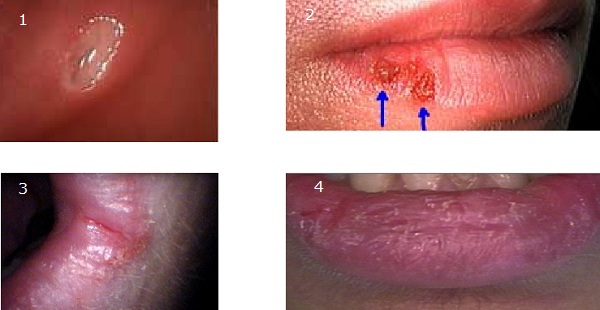
A young child with sudden, widespread, painful oral ulcers plus diffuse gingival inflammation and high fever most likely has primary herpetic gingivostomatitis, not a first episode of aphthous stomatitis — this is a genuinely different, contagious, systemic viral illness and is managed and counselled on differently (see Special Populations and Red Flags & Refer).
Risk Factors
- A family history of canker sores — a positive family history is found in roughly 40% of patients, suggesting a genetic predisposition.
- Age 10-19 years is the peak for first onset; frequency generally declines with age.
- Local trauma — biting the cheek or lip, a sharp tooth edge, orthodontic brackets/wires, or a poorly fitting denture.
- Psychological stress and lack of sleep.
- Certain foods — commonly implicated triggers include citrus fruit, tomato, chocolate, coffee, nuts, and foods containing benzoic acid or cinnamaldehyde (a common flavouring in toothpaste, chewing gum, and some candies).
- Toothpaste or mouthwash containing sodium lauryl sulfate (SLS), a foaming detergent that can irritate the oral mucosa in susceptible people.
- Deficiency of vitamin B12, folate, iron, or zinc.
- Smoking cessation — somewhat counterintuitively, stopping smoking is itself associated with new or worsening aphthous ulcers in some patients, and nicotine may have a mild protective effect.
- Hormonal fluctuation across the menstrual cycle in some women.
- Certain medications, including NSAIDs, nicorandil, and some chemotherapy agents, can cause aphthous-like oral ulceration.
- An underlying systemic condition — see Assessment & Diagnosis and Red Flags & Refer for celiac disease, inflammatory bowel disease, Behçet disease, HIV infection, and cyclic neutropenia.
Red Flags & Refer
Most canker sores need nothing beyond reassurance and OTC self-care. Any of the following changes the plan from "self-care and reassure" to "investigate further or refer":
- An ulcer that has not healed within 3 weeks — this is the single most important red flag in this chapter. A solitary, non-healing, or progressively enlarging oral ulcer beyond 3 weeks needs prompt dental or medical assessment and biopsy to rule out oral squamous cell carcinoma or another serious pathology, particularly in a patient over 40, a smoker, or a heavy alcohol user.
- An ulcer with a hard, rolled, or indurated edge, or one that is firm/fixed to underlying tissue on palpation.
- Unusually large, unusually numerous, or unusually frequent ulcers (near-constant presence, or a new episode starting before the last has healed) — this pattern warrants investigation for an underlying systemic cause rather than repeated self-care alone.
- Genital ulcers, eye redness/pain/vision change, or skin lesions (e.g., erythema nodosum-like lesions) occurring alongside recurrent oral ulcers — raises suspicion for Behçet disease and warrants referral for formal assessment against the International Criteria for Behçet's Disease.[3]
- Chronic diarrhea, abdominal pain, unexplained weight loss, or blood in the stool alongside recurrent oral ulcers — raises suspicion for celiac disease or inflammatory bowel disease.[4][1]
- Recurrent fevers, skin/soft-tissue infections, or a periodic pattern of oral ulcers with a roughly 3-week cycle in a child — raises suspicion for cyclic neutropenia or PFAPA syndrome (periodic fever, aphthous stomatitis, pharyngitis, and cervical adenitis).[1]
- Atypically severe, unusually large, or treatment-refractory aphthous ulcers in a patient with HIV risk factors — can be a presenting sign of HIV infection and warrants testing.[1]
- A young child with sudden widespread oral ulcers, diffuse gingival inflammation, drooling, and high fever — suspect primary herpetic gingivostomatitis rather than aphthous stomatitis; this needs its own assessment and family counselling on contagion, not aphthous-ulcer self-care.
- New oral ulceration temporally linked to starting a new medication (e.g., nicorandil, methotrexate, an NSAID) — reassess the medication with the prescriber rather than treating as ordinary recurrent aphthous stomatitis.
Assessment & Diagnosis
History
- Onset, number, size, and location of the ulcer(s); whether this is a first episode or a recurrence, and if recurrent, the usual frequency and pattern.
- Pain severity and functional impact — difficulty eating, drinking, speaking, or (in a child) feeding.
- Possible triggers: recent oral trauma (biting, dental work, a new appliance), stress, specific foods, and any recent toothpaste/mouthwash change.
- Medication review, including any new drug started around the time of onset.
- Directed screening for the associated-condition red flags above: GI symptoms/weight loss, genital ulcers/eye symptoms/skin lesions, recurrent fevers or infections, and HIV risk factors.
- Smoking status, including any recent quit attempt.
Examination
Confirm the lesion is a genuine aphthous ulcer — shallow, round/oval, grey-yellow fibrinous base, red halo, on non-keratinized mucosa — and classify it as minor, major, or herpetiform (see Recognize the Condition). Palpate the ulcer and surrounding tissue; induration, a rolled edge, or fixation to deeper tissue is not consistent with a simple aphthous ulcer (see Red Flags & Refer). Note the total number of ulcers and whether any are healing while new ones appear (suggesting an ongoing/refractory process rather than a single self-limited episode).
Diagnosis is clinical
Typical minor aphthous ulcers are diagnosed on history and examination alone — no laboratory testing or biopsy is needed for a classic, resolving presentation.[1][2]
When to investigate further
- Recurrent, severe, or major aphthous ulcers: a reasonable baseline work-up includes a CBC and ferritin, vitamin B12, and folate levels to identify a treatable hematinic deficiency.[1]
- GI symptoms or unexplained weight loss: consider celiac serology (tissue transglutaminase IgA) and referral for further GI assessment; recurrent aphthous stomatitis is significantly more common in patients with celiac disease than in the general population.[4]
- Suspected Behçet disease: refer for formal assessment — the 2014 International Criteria for Behçet's Disease (ICBD) score oral aphthosis, genital aphthosis, and ocular lesions at 2 points each, and skin lesions, neurological involvement, vascular involvement, and a positive pathergy test at 1 point each, with a total score of 4 or more supporting the diagnosis.[3]
- HIV risk factors with atypically severe or refractory ulcers: offer HIV testing.[1]
- Any ulcer meeting the 3-week or induration red flags: refer promptly for biopsy — do not substitute further empiric self-care for tissue diagnosis.
Differential diagnosis
| Condition | Distinguishing features |
|---|---|
| Herpes labialis / primary herpetic gingivostomatitis | Vesicular onset, keratinized-tissue location (cold sores) or diffuse gingival involvement with fever (primary infection); genuinely contagious — see Recognize the Condition |
| Traumatic ulcer | Clear mechanical cause (cheek/tongue bite, sharp tooth, appliance), location matches the trauma site, resolves once the cause is removed |
| Oral lichen planus | Lacy white (Wickham) striae typically accompany any ulceration; more chronic, bilateral, often on buccal mucosa |
| Erythema multiforme | Widespread oral erosions plus target skin lesions; often follows an infection (e.g., HSV) or a new medication |
| Hand-foot-and-mouth disease | Coxsackievirus infection in a child; oral ulcers accompanied by a vesicular rash on the palms and soles |
| Drug-induced oral ulceration | Temporal link to a new medication (methotrexate, an NSAID, nicorandil); resolves on discontinuation |
| Oral squamous cell carcinoma | Solitary, non-healing beyond 3 weeks, indurated/rolled edge, often in a smoker or heavy alcohol user over 40 — biopsy, do not observe further |
| Behçet disease | Recurrent oral ulcers plus genital ulcers, ocular inflammation, and/or skin lesions |
| Inflammatory bowel disease | Oral ulcers accompanied by chronic GI symptoms, weight loss, or extraintestinal signs |
Treatment Targets
- Relieve pain and restore the ability to eat, drink, and speak comfortably.
- Support timely healing and shorten episode duration.
- Reduce the frequency and severity of recurrences where a modifiable trigger or deficiency is identified.
- Correctly reassure patients that typical canker sores are not contagious and not preventable in every case, while correcting the common confusion with cold sores.
- Avoid unnecessary antibiotics or antivirals — aphthous ulcers are not a bacterial or viral infection.
- Identify and address an underlying nutrient deficiency or systemic condition in patients with recurrent, severe, or major disease.
- Recognize and refer promptly for any ulcer that behaves atypically, chiefly one that fails to heal within 3 weeks.
Choose Initial Treatment
Typical minor aphthous ulcer — OTC self-care first
1st line a topical oral anesthetic (benzocaine or lidocaine) for on-demand pain relief, a protective barrier paste to shield the ulcer from friction, and warm saltwater rinses several times daily; these measures do not shorten healing time meaningfully but make the 7-14 day course tolerable (see Drug Tables for products and dosing).
Alternative/adjunct an OTC benzydamine oral rinse for its combined topical analgesic and anti-inflammatory effect.
Special situation — frequent recurrences a trial of SLS-free toothpaste is a reasonable, low-risk recommendation — a systematic review of 4 randomized crossover trials found SLS-free dentifrice reduced ulcer number, duration, episode frequency, and pain compared with SLS-containing toothpaste, though the effect size is modest and evidence quality only moderate.[5]
Confirmed or suspected nutrient deficiency
Confirmed B12, folate, iron, or zinc deficiency replace the specific deficiency per standard dosing (see Drug Tables) — this both treats the deficiency on its own merits and can reduce aphthous ulcer recurrence.[1]
Empiric vitamin B12, even without a confirmed deficiency a reasonable option for patients with troublesome recurrent aphthous stomatitis — a randomized, double-blind, placebo-controlled trial of sublingual vitamin B12 1000 mcg daily for 6 months found significantly reduced outbreak duration, ulcer count, and pain regardless of baseline B12 level, with roughly 74% of the treatment group versus 32% of the placebo group achieving an ulcer-free status by the final month.[6] Set expectations that benefit accrues gradually over several months, not days.
Major, herpetiform, or refractory ulcers not responding to OTC self-care
1st line step-up a prescription topical corticosteroid — triamcinolone acetonide 0.1% dental paste applied directly to the ulcer — for ulcers not improving within about a week of OTC self-care, or for major/herpetiform disease from the outset.
Alternative/adjunct a tetracycline-class rinse (doxycycline or tetracycline, swished and expectorated) — a systematic review and meta-analysis found a single topical doxycycline application significantly increased the proportion of ulcers healed by day 3 compared with placebo.[7] Avoid in children under 8 and in pregnancy given the risk of permanent tooth discoloration (see Special Populations).
Severe major or herpetiform flare significantly limiting oral intake a short systemic corticosteroid course (e.g., prednisone) is a reasonable step for a severe, disabling flare, reserved for this specific situation rather than routine recurrent disease.
Frequent, refractory major aphthous ulcers despite adequate topical and nutrient-directed therapy refer to oral medicine or dermatology — colchicine, dapsone, pentoxifylline, or thalidomide are specialist-initiated systemic options for this specific refractory population, each with its own significant monitoring burden; thalidomide in particular is an extreme teratogen and requires a formal pregnancy-prevention program in anyone of childbearing potential.
Avoid systemic antibiotics or antivirals as therapy for aphthous ulcers — they are neither a bacterial nor a viral infection, and neither class of drug treats the underlying process.
Non-Pharmacologic Treatment
- Explicitly reassure the patient that a typical canker sore is not contagious and cannot be transmitted to another person — this is the point of greatest patient confusion with cold sores and is worth stating directly.
- Avoid identified trigger foods where a clear pattern exists — citrus, tomato, chocolate, coffee, nuts, and rough or sharp-textured foods (chips, toast crusts) that can traumatize the mucosa.
- Use a soft-bristled toothbrush and gentle technique to minimize incidental mucosal trauma, especially during a flare.
- Apply orthodontic wax over a bracket or wire causing repeated trauma; have a poorly fitting denture adjusted rather than tolerating ongoing friction.
- Warm saltwater rinses (about 1/2 teaspoon of salt in 1 cup of warm water) several times daily, or a plain baking-soda rinse, provide mild antiseptic and soothing benefit.
- Sucking on ice chips or drinking cold liquids through a straw can reduce pain from an ulcer contacting food or a cup rim.
- Basic stress-management and adequate sleep are reasonable general advice given the recognized link between stress and flares, even though evidence for any single stress-reduction technique specifically preventing aphthous ulcers is limited.
- A trial of SLS-free toothpaste for patients with frequent recurrences (see Choose Initial Treatment).[5]
- Do not pick at or repeatedly probe a healing ulcer — this delays healing and increases the chance of secondary trauma.
- Maintain hydration and nutrition during a painful flare; a soft, bland diet reduces incidental trauma while the ulcer heals.
Pharmacologic Treatment Options
| Drug / intervention | Role | Dose / use | Important adverse effects | Teaching points |
|---|---|---|---|---|
| Benzocaine (topical oral gel) Preferred | 1st line OTC pain relief, minor ulcers | Apply a small amount to the ulcer up to 4 times daily per product labelling | Local irritation/stinging; rare methemoglobinemia, chiefly reported with excessive/frequent use | Not for children under 2 years without physician direction; do not exceed the labelled frequency or duration. |
| Lidocaine (viscous 2% oral solution) Alternative | Short-term pain relief, e.g. before a meal | A small measured amount swabbed onto the ulcer or swished and expectorated, per product labelling | Oral numbness, risk of biting/burn injury while numb; systemic toxicity with excessive use | Use sparingly and only as directed — numbness can impair swallowing and increase choking/aspiration risk, especially in children. |
| Protective barrier paste (carboxymethylcellulose-based) Preferred | 1st line OTC, shields the ulcer from friction | Apply a thin layer directly to the dried ulcer surface, reapply as needed | Minimal; occasional local irritation | Dry the area before application for the paste to adhere; does not accelerate healing but meaningfully reduces friction pain. |
| Benzydamine (oral rinse) Alternative | OTC combined analgesic/anti-inflammatory rinse | Per product labelling, swish and expectorate | Transient local stinging/numbness; rare hypersensitivity | Do not swallow; a reasonable adjunct to or alternative for a topical anesthetic. |
| Triamcinolone acetonide 0.1% dental paste Special situation | Rx step-up for major/refractory ulcers not responding to OTC self-care | Apply a thin film directly to the dried ulcer 2-3 times daily, ideally after meals and at bedtime | Local candidiasis with prolonged use; mucosal thinning | Avoid eating or drinking for about 30 minutes after application; reassess if no meaningful improvement within 7 days. |
| Doxycycline (compounded oral rinse) Special situation | Rx adjunct/alternative for major or refractory ulcers | A capsule's contents dissolved in water, swished for several minutes and expectorated, per compounding directions | Local candidiasis; tooth discoloration if swallowed regularly by a young child or used in pregnancy | Not for children under 8 years or in pregnancy — see Special Populations. |
| Vitamin B12 (cyanocobalamin, sublingual/oral) Special situation | Empiric trial for troublesome recurrent disease, or confirmed deficiency | 1000 mcg by mouth (sublingual) once daily | Minimal at standard doses | Benefit accrues over months, not days or weeks — set this expectation explicitly. |
| Prednisone (short systemic course) Special situation | Severe major/herpetiform flare significantly limiting oral intake | A short course and taper individualized to severity — a specific dose/duration reference should be confirmed before prescribing | Standard short-course corticosteroid effects (hyperglycemia, mood change, insomnia, GI upset) | Reserve for a genuinely severe, disabling flare rather than routine recurrent disease; refer if this is needed repeatedly. |
| Systemic antibiotics or antivirals Avoid | Not indicated for aphthous ulcers | No aphthous-specific role | Unnecessary adverse-effect and resistance exposure | Aphthous ulcers are neither a bacterial nor a viral infection — reserve antimicrobials for a genuinely infectious process. |
Special Populations
Pregnancy
Preferred topical benzocaine or lidocaine, a protective barrier paste, and saltwater rinses remain reasonable first-line choices in pregnancy given minimal systemic absorption. Routine prenatal folic acid supplementation already addresses one of the nutrient-deficiency triggers.
Avoid a tetracycline-class rinse (doxycycline or tetracycline) — tetracyclines cross the placenta and can permanently discolour the developing fetal teeth; avoid this option throughout pregnancy.
Contraindicated thalidomide is an extreme teratogen and is absolutely contraindicated in pregnancy or in anyone who could become pregnant without a strict, monitored pregnancy-prevention program in place.
Triamcinolone dental paste may be used short-term if a topical corticosteroid is genuinely needed, given minimal systemic absorption from limited local application — confirm with the prescriber and use the smallest effective course.
Breastfeeding
Topical benzocaine, lidocaine, protective barrier paste, and benzydamine rinse are generally considered compatible with breastfeeding given minimal systemic absorption. Avoid a tetracycline-class rinse given known transfer into breast milk and the same tooth-discoloration concern in the nursing infant if ingested. Triamcinolone dental paste used briefly and locally is generally considered compatible.
Pediatrics
Avoid benzocaine in children under 2 years without physician direction, given a genuine risk of methemoglobinemia. Preferred first protective barrier paste and saltwater rinses are reasonable initial choices in children. Viscous lidocaine use only as directed, with careful attention to dose and supervision, given real aspiration and systemic toxicity risk in small children who cannot reliably expectorate. Avoid a tetracycline-class rinse in children under 8 years — permanent tooth discoloration is a genuine risk while dental enamel is still forming. A young child with sudden widespread oral ulcers, gingival inflammation, drooling, and fever should be assessed for primary herpetic gingivostomatitis rather than treated as aphthous stomatitis (see Recognize the Condition). Consider PFAPA syndrome (periodic fever, aphthous stomatitis, pharyngitis, and cervical adenitis) in a child with a regular, roughly 3-4 week cycle of fever plus oral ulcers, and refer to pediatrics.[1]
Older adults
Review the medication list for a drug temporally linked to new oral ulceration (nicorandil, methotrexate, an NSAID, and others) before assuming ordinary recurrent aphthous stomatitis. Assess denture fit and adjust if trauma from an ill-fitting denture is a plausible contributor. Maintain a lower threshold for biopsy referral in this group — the 3-week non-healing red flag carries a higher pretest probability of malignancy with advancing age, smoking history, and heavy alcohol use.
Immunocompromised patients, including HIV infection
Aphthous ulcers can be atypically large, more numerous, more painful, and slower to heal in immunocompromised patients, and an unusually severe or refractory presentation can be a presenting sign of HIV infection — offer testing where risk factors are present and the presentation is atypically severe.[1] Have a lower threshold for a prescription topical or systemic step-up and for specialist referral in this group.
Monitoring & Follow-Up
Most minor aphthous ulcers need no formal follow-up beyond advising the patient to return if the ulcer has not resolved within about 2 weeks, or sooner if pain is not controlled by OTC self-care. Arrange follow-up (or a phone check-in) within about a week for a patient started on prescription topical corticosteroid or a tetracycline-class rinse, to confirm improvement and screen for oral candidiasis with continued corticosteroid use.
- For a patient started on empiric or deficiency-directed vitamin B12, folate, iron, or zinc, set the expectation that benefit in ulcer frequency/severity accrues over months, and plan a check-in at around 4-6 weeks primarily to confirm tolerability and adherence rather than to judge treatment failure this early.
- Recheck relevant nutrient levels (B12, folate, ferritin) after a few months of replacement therapy if a confirmed deficiency was being treated.
- Track recurrence frequency and severity over time in patients with recurrent disease — a genuine change in pattern (more frequent, larger, more numerous, or non-healing) should prompt the work-up in Assessment & Diagnosis rather than another round of the same self-care.
- For any ulcer referred for the 3-week non-healing red flag, confirm the biopsy or specialist appointment was actually completed rather than assuming the referral alone resolved the concern.
Treatment Failure / Next Step
- Re-confirm the diagnosis is genuinely a typical aphthous ulcer — re-examine for the features in Recognize the Condition and reconsider the differential diagnosis table (herpes labialis, a traumatic ulcer, a drug-induced ulcer, or an early malignant lesion) rather than assuming simply a harder-to-treat canker sore.
- No meaningful improvement after about a week of appropriate OTC self-care: step up to a prescription topical corticosteroid (triamcinolone dental paste), with or without a tetracycline-class rinse.
- Still refractory after an adequate topical prescription trial: if not already done, complete the deficiency and systemic-condition work-up in Assessment & Diagnosis (CBC/ferritin/B12/folate, celiac serology if GI symptoms, HIV testing if risk factors, Behçet screening if extraoral features).
- Frequent, major, or herpetiform disease that remains refractory despite adequate topical therapy and correction of any identified deficiency: refer to oral medicine or dermatology for consideration of a systemic agent (colchicine, dapsone, pentoxifylline, or thalidomide) under specialist supervision.
- Any ulcer that reaches or exceeds 3 weeks without healing, regardless of treatment tried: refer promptly for biopsy — do not extend empiric therapy further while waiting to see if it resolves on its own.
- New systemic symptoms emerging during work-up or treatment (GI symptoms, genital ulcers/eye symptoms, recurrent fevers/infections): refer to the appropriate specialty (gastroenterology, rheumatology, infectious diseases, or hematology) rather than continuing to manage as isolated aphthous stomatitis.
Common Errors to Avoid
- Prescribing a systemic antibiotic or antiviral for a canker sore — it is neither a bacterial nor a viral infection.
- Telling a patient a canker sore is contagious (or, in the other direction, telling a patient with a genuine cold sore that it is not) — get the distinction in Recognize the Condition right, since it directly shapes real-world contagion behaviour.
- Using benzocaine in a child under 2 years without physician direction, given the genuine methemoglobinemia risk.
- Continuing a topical corticosteroid dental paste well beyond a week without reassessment — this raises the risk of local candidiasis without added benefit if the ulcer has already resolved or genuinely is not responding.
- Attributing a solitary ulcer that has not healed by 3 weeks to "just another canker sore" and offering more self-care instead of a biopsy referral.
- Missing recurrent or severe aphthous stomatitis as a possible first sign of celiac disease, inflammatory bowel disease, Behçet disease, HIV infection, or cyclic neutropenia in a patient with a suggestive history.
- Presenting SLS-free toothpaste as a guaranteed fix rather than a modest, evidence-limited adjunct for patients with frequent recurrences.
- Using a tetracycline-class rinse in a child under 8 years or in pregnancy without recognizing the permanent tooth-discoloration risk.
- Overlooking that thalidomide, when used for refractory disease, requires a strict, monitored pregnancy-prevention program given its extreme teratogenicity.
- Treating a young child's sudden widespread oral ulcers with gingival involvement and fever as ordinary aphthous stomatitis rather than considering primary herpetic gingivostomatitis.
Clinical Decision Algorithm
Drug Tables
OTC Topical Self-Care — First Line for Typical Minor Ulcers
None of these shorten healing time meaningfully; they make the self-limited course tolerable while the ulcer heals on its own.
| Drug | Dosage | Adverse effects | Drug interactions | Comments |
|---|---|---|---|---|
| Benzocaine | Adults and children 2 years and older: Apply a small amount to the ulcer up to 4 times daily, per product labelling | Local irritation/stinging; rare methemoglobinemia with excessive or frequent use | None significant at labelled topical doses | Apply directly to the ulcer; not for children under 2 years without physician direction; do not exceed labelled frequency/duration. |
| Lidocaine (viscous 2% oral solution) | Adults: A small measured amount swabbed onto the ulcer or briefly swished and expectorated, per product labelling | Oral numbness with bite/burn injury risk while numb; systemic toxicity with excessive use | Additive CNS/cardiac effects with other local anesthetics used concurrently | Use sparingly and only as directed; numbness can impair swallowing and increase choking/aspiration risk in young children. |
| Protective barrier paste (carboxymethylcellulose-based) | Adults and children: Apply a thin layer directly to the dried ulcer surface, reapply as needed | Minimal; occasional local irritation | None significant | Dry the ulcer surface before application for the paste to adhere properly. |
| Benzydamine (oral rinse) | Adults: Per product labelling, typically several times daily | Transient local stinging/numbness; rare hypersensitivity | None significant at standard topical doses | Combined topical analgesic and anti-inflammatory effect; swish and expectorate, do not swallow. |
Prescription Topical Therapy — Major or Refractory Ulcers
Reserve for ulcers not responding to about a week of OTC self-care, or for major/herpetiform disease from the outset.
| Drug | Dosage | Adverse effects | Drug interactions | Comments |
|---|---|---|---|---|
| Triamcinolone acetonide 0.1% dental paste | Adults: Apply 2-3 times daily as above | Local oral candidiasis with prolonged use; mucosal thinning | None significant at standard topical doses | Apply a thin film to the dried ulcer 2-3 times daily, ideally after meals and at bedtime; avoid eating/drinking for about 30 minutes after application; reassess if no improvement within 7 days. |
| Doxycycline (compounded oral rinse) | Adults: Per compounding/product-specific directions | Local candidiasis; tooth discoloration if swallowed regularly by a young child or used in pregnancy | Antacids, calcium, iron, and other metal cations reduce absorption if any portion is swallowed | Not for children under 8 years or in pregnancy given the tooth-discoloration risk; capsule contents dissolved in water, swished for several minutes, and expectorated. |
| Tetracycline (compounded oral suspension/rinse) | Adults: Per compounding/product-specific directions | Local candidiasis; tooth discoloration if swallowed regularly by a young child or used in pregnancy | Antacids, calcium, iron, and other metal cations reduce absorption if any portion is swallowed | Same age/pregnancy cautions as doxycycline; an alternative tetracycline-class rinse where doxycycline is not available. |
Nutrient Replacement — Confirmed or Empiric Deficiency
Confirmed deficiency should be corrected on its own merits; empiric vitamin B12 is also reasonable in troublesome recurrent disease without a confirmed deficiency.
| Drug | Dosage | Adverse effects | Drug interactions | Comments |
|---|---|---|---|---|
| Vitamin B12 (cyanocobalamin, sublingual/oral) | Adults: 1000 mcg by mouth (sublingual) once daily | Minimal at standard doses | None significant at standard doses | Benefit accrues gradually over several months, not days or weeks — set this expectation explicitly. |
| Folic acid | Adults: Per standard deficiency-replacement dosing | Minimal at standard doses; may mask hematologic signs of B12 deficiency if given alone | May reduce phenytoin levels | Confirm B12 status before or alongside folate replacement to avoid masking a B12 deficiency. |
| Ferrous sulfate | Adults: Per standard deficiency-replacement dosing | GI upset, constipation, dark stools | Reduces absorption of levothyroxine, some antibiotics (tetracyclines, fluoroquinolones), and bisphosphonates if co-administered | Confirm iron deficiency (ferritin) before starting; separate dosing from interacting medications. |
Severe or Refractory Disease — Systemic Therapy
Systemic corticosteroid for a severe disabling flare is a reasonable pharmacist-visible step; colchicine, dapsone, pentoxifylline, and thalidomide are specialist-initiated options for refractory major aphthous stomatitis, included here for reference and counselling only.
| Drug | Dosage | Adverse effects | Drug interactions | Comments |
|---|---|---|---|---|
| Prednisone (short course) | Adults: A short course and taper individualized to severity | Hyperglycemia, mood change, insomnia, GI upset, and the standard short-course corticosteroid profile | Increased GI bleeding risk with NSAIDs; may reduce vaccine response; monitor blood glucose in diabetes | Reserve for a genuinely severe flare significantly limiting oral intake; refer if this is needed repeatedly. |
| Dapsone | Adults: Per specialist-directed dosing | Hemolytic anemia (especially with G6PD deficiency), methemoglobinemia, agranulocytosis | Increased dapsone levels with trimethoprim; additive hematologic risk with other marrow-suppressing drugs | Specialist-initiated for refractory major aphthous stomatitis; requires G6PD testing and hematologic monitoring. |
| Pentoxifylline | Adults: Per specialist-directed dosing | GI upset, dizziness, flushing | Increased bleeding risk with anticoagulants/antiplatelets | Specialist-initiated adjunct for refractory recurrent major aphthous stomatitis. |
| Thalidomide | Adults: Per specialist-directed dosing and REMS-equivalent monitoring program | Peripheral neuropathy, sedation, venous thromboembolism, severe teratogenicity | Additive sedation with other CNS depressants; additive VTE risk with other prothrombotic drugs | Extreme teratogen — requires a strict, monitored pregnancy-prevention program in anyone of childbearing potential; reserved for refractory major aphthous stomatitis under specialist direction only. |
Professional reference only. Apply clinical judgment and verify patient-specific decisions against current authoritative guidance and product information.