Chronic Sinusitis
Clinical Snapshot
Chronic rhinosinusitis (CRS) is symptomatic inflammation of the nasal cavity and paranasal sinuses lasting 12 weeks or longer — a fundamentally different disease from acute rhinosinusitis (see the Acute Rhinosinusitis chapter), not simply a prolonged version of it. Diagnosis requires both a qualifying symptom pattern — at least 2 of 4 cardinal symptoms (nasal obstruction/congestion, purulent nasal discharge, facial pain/pressure, and reduced or lost sense of smell) — and objective confirmation of sinonasal inflammation on nasal endoscopy and/or CT imaging; unlike acute rhinosinusitis, CRS is never a diagnosis made on history and time course alone.[1][2] Estimated prevalence ranges from roughly 2% to 15% of the adult population depending on the diagnostic criteria applied.[2]
The single most important branch point in this chapter is phenotype: CRS with nasal polyps (CRSwNP) and CRS without nasal polyps (CRSsNP) are increasingly understood as biologically distinct diseases with different dominant inflammatory drivers, different natural histories, and different treatment ladders — not two severities of one disease.[1][2] Pathophysiology in both phenotypes centres on chronic mucosal inflammation with impaired mucociliary clearance and disrupted sinus drainage, frequently compounded by bacterial biofilm and, in a subset of patients, fungal colonization that perpetuates the inflammatory cycle rather than acting as a simple infection to be eradicated.[1] Management is correspondingly not primarily antibiotic-focused: high-volume saline irrigation and intranasal corticosteroids are the mainstay of therapy for essentially every patient, with short antibiotic courses reserved for genuine acute bacterial exacerbations, and — for CRSwNP that remains severe despite standard therapy — biologic therapy or endoscopic sinus surgery as escalation options.[3][2]
Recognize the Condition
The 4 cardinal symptoms
CRS is defined by at least 2 of the following 4 symptoms, present for 12 weeks or longer, with at least one being nasal obstruction/congestion or nasal discharge:[1][2]
- Nasal obstruction or congestion.
- Nasal discharge — anterior mucopurulent drainage and/or posterior nasal drip.
- Facial pain or pressure — typically dull and positional (worse leaning forward), unlike the sharper, well-localized pain of a dental or neurologic cause.
- Hyposmia or anosmia — reduced or lost sense of smell; a genuinely distinguishing feature from allergic rhinitis, where smell is usually preserved.
CRSwNP vs. CRSsNP — a phenotype split, not a severity scale
2 phenotypes
CRS without nasal polyps (CRSsNP)
The more common phenotype. Facial pain/pressure and mucopurulent discharge tend to dominate; endoscopy shows mucosal edema and discharge without visible polyps. Often driven by non-type 2 (neutrophilic) inflammation and bacterial biofilm, though a type 2 component can still be present.[2]
CRS with nasal polyps (CRSwNP)
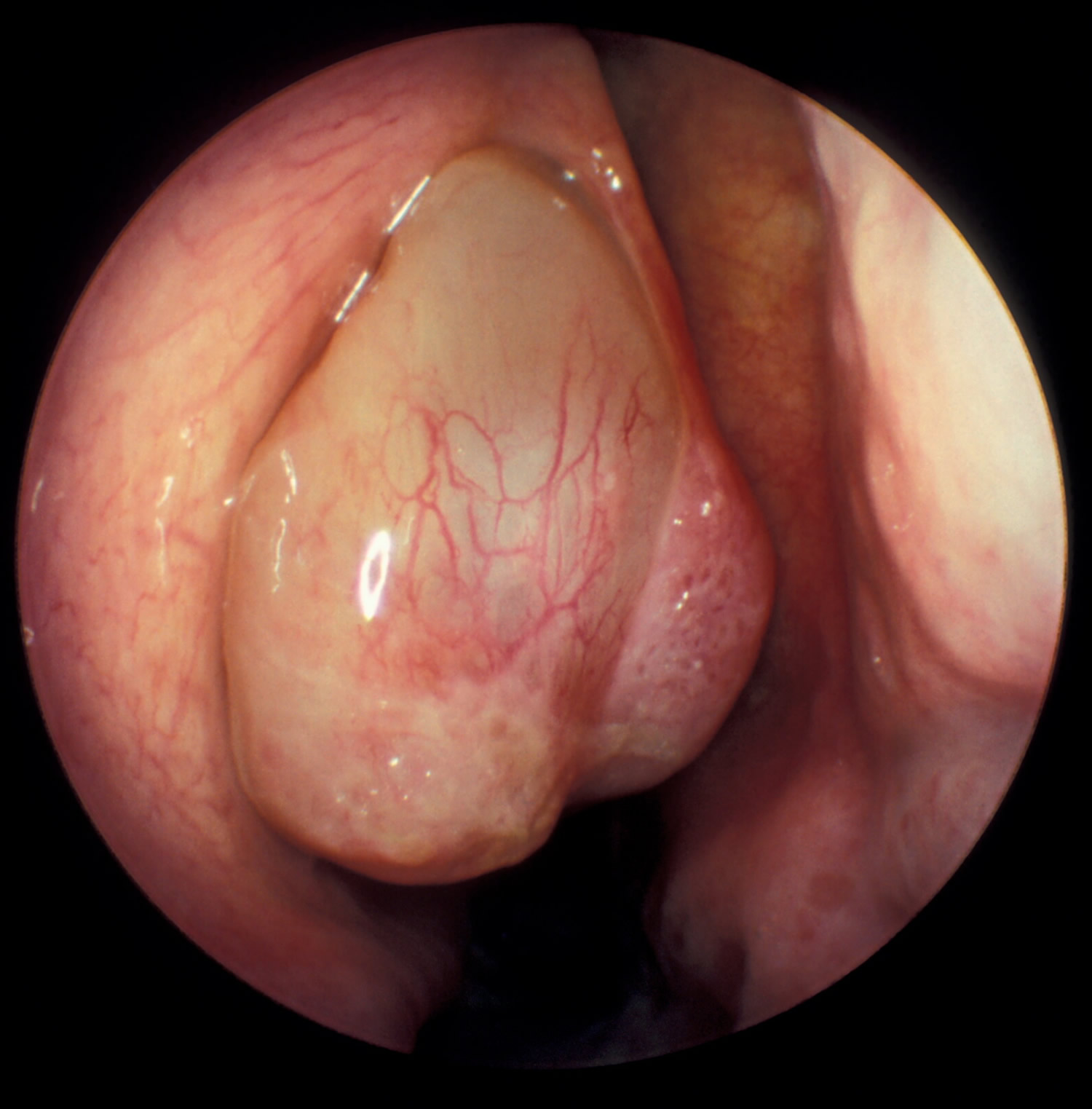
Nasal obstruction and hyposmia/anosmia tend to dominate, often severe and progressive; visible, usually bilateral polyps on endoscopy. Usually driven by type 2 (eosinophilic) inflammation and carries the strongest association with asthma and aspirin-exacerbated respiratory disease (see below). This is the phenotype current biologic therapy and Canadian biologic-eligibility criteria specifically target.[2][4]
Pathophysiology
Chronic inflammation begins with disrupted sinus ostial drainage and impaired mucociliary clearance, which perpetuates a cycle of mucosal edema, secretion stasis, and further obstruction.[1] Two further processes commonly sustain this cycle rather than acting as a simple treatable infection:
- Bacterial biofilm — surface-adherent bacterial communities (commonly Staphylococcus aureus and Pseudomonas aeruginosa) embedded in a self-produced matrix that is markedly more resistant to systemic antibiotics and host immune clearance than free-living bacteria; biofilm presence correlates with more severe, more antibiotic-refractory disease and worse post-surgical outcomes.[1]
- Fungal colonization — most patients with CRS have detectable fungal elements in sinus mucus, now understood as a normal component of the sinus microbiome in most cases rather than a pathogen requiring eradication; a genuine host hypersensitivity response to this fungal presence, rather than the fungus itself, is thought to drive disease in a distinct subset with allergic fungal rhinosinusitis — a specific, more severe phenotype co-managed with ENT and treated with surgical debridement, not antifungal pharmacotherapy.[1]
Increasingly, CRS is described by its inflammatory endotype rather than phenotype alone: type 2 (eosinophilic) inflammation, driven by interleukin (IL)-4, IL-5, and IL-13, predominates in CRSwNP and is the specific pathway biologic therapy targets; non-type 2 (often neutrophilic) inflammation predominates in much CRSsNP.[2][1]
Clinical pearl — aspirin-exacerbated respiratory disease (AERD, Samter's triad)
Ask every patient with CRSwNP and asthma specifically about reactions to aspirin or another NSAID: the triad of CRSwNP, asthma, and aspirin/NSAID hypersensitivity (historically Samter's triad) affects roughly 0.3-0.9% of the general population but 10-20% of patients with asthma and up to 30-40% of patients with both asthma and nasal polyposis — a genuinely common and frequently under-recognized combination.[5] Polyps and asthma both tend to be more severe and more treatment-refractory in AERD than in aspirin-tolerant CRSwNP, and unrecognized AERD is a common, avoidable cause of a severe reaction when a patient is later given aspirin or another NSAID for an unrelated indication (see Special Populations).[5]
Differentiating from recurrent acute rhinosinusitis
Recurrent acute rhinosinusitis is 4 or more discrete episodes of acute rhinosinusitis per year, each meeting acute diagnostic criteria on its own, with the patient genuinely symptom-free between episodes — a fundamentally different pattern from CRS, where symptoms are continuously present for 12 weeks or longer. Confirm true symptom-free intervals by history before labelling a presentation as CRS instead of recurrent acute disease, since the two have different management pathways.
Differentiating from allergic rhinitis
Allergic rhinitis and CRS frequently coexist, but ask specifically about sneezing, watery (not purulent) rhinorrhea, and nasal/ocular pruritus — these point toward allergic rhinitis; smell is usually preserved in isolated allergic rhinitis, unlike the hyposmia/anosmia that is common, and often prominent, in CRS, especially CRSwNP. See the Allergic Rhinitis chapter for its own full diagnostic and management detail.
Risk Factors
- Asthma — a bidirectional association; CRS (especially CRSwNP) and asthma frequently coexist, and each can worsen control of the other.
- Allergic rhinitis and other atopic disease.
- Aspirin-exacerbated respiratory disease (AERD/Samter's triad) — see Recognize the Condition.
- Cystic fibrosis — near-universal sinus disease; consider in refractory pediatric or young-adult CRS, especially with polyps (see Special Populations).
- Primary ciliary dyskinesia — impaired mucociliary clearance; consider in refractory CRS with a history of neonatal respiratory distress, bronchiectasis, or infertility.
- Primary or acquired immunodeficiency (e.g., common variable immunodeficiency, HIV) — consider in refractory or atypical CRS.
- Gastroesophageal reflux disease — a proposed contributing factor via direct mucosal irritation, though evidence that treating GERD specifically improves CRS outcomes is limited.
- Tobacco smoke and other environmental or occupational irritant exposure, including recognized occupational triggers (e.g., wood dust, certain industrial chemicals).
- Anatomic variants narrowing the sinus outflow tracts (e.g., a deviated septum, concha bullosa, or Haller cell) — can predispose to obstruction and recurrent inflammation.
- Dental disease (odontogenic sinusitis) — a periapical infection or a complication of dental work can seed the adjacent maxillary sinus; typically unilateral (see Red Flags & Refer and Assessment & Diagnosis).
- Prior sinus surgery with recurrent or persistent disease.
Red Flags & Refer
Any of the following changes the plan from routine CRS management to urgent evaluation for a different or more serious process:
- Unilateral symptoms — unilateral nasal obstruction, discharge, or facial pain, especially when the contralateral side is never involved — genuine CRS is rarely a strictly one-sided disease; investigate for a mass lesion, including malignancy.[6]
- Unexplained or persistent epistaxis, particularly if unilateral or recurrent — a recognized presenting feature of sinonasal malignancy that is easily and dangerously mistaken for benign CRS.[6]
- A unilateral nasal polyp on examination — unlike the bilateral polyps typical of CRSwNP, a unilateral polyp carries a meaningfully higher risk of an underlying neoplasm (e.g., an inverted papilloma or frank malignancy) and needs endoscopic biopsy, not simply medical therapy.[6]
- Visual change, diplopia, proptosis, or periorbital swelling/erythema — evaluate urgently for an orbital complication.
- Severe headache, altered mental status, neck stiffness, or a focal neurologic sign — evaluate urgently for an intracranial complication.
- Cranial neuropathy (e.g., facial numbness, or diplopia from a cranial nerve palsy) — consider both an intracranial/orbital complication and a skull-base malignancy.
- Systemic illness, high fever, or marked deterioration during a CRS exacerbation — evaluate for a complicated acute-on-chronic bacterial process rather than assuming a routine flare.
- Unremitting, treatment-refractory unilateral facial or dental pain with a normal-appearing sinus — reconsider a dental (odontogenic) source or a primary headache syndrome instead of escalating sinus-directed therapy.
Refer to ENT (routine, not urgent) for: CRS symptoms persisting despite an adequate trial (generally 8-12 weeks) of high-volume saline irrigation plus a properly used intranasal corticosteroid; any CRSwNP being considered for biologic therapy or surgery; suspected allergic fungal rhinosinusitis; suspected AERD needing aspirin desensitization; and any red flag above that does not need same-day emergency assessment.
Assessment & Diagnosis
Diagnostic criteria
Diagnose CRS only when both criteria are met: at least 2 of the 4 cardinal symptoms (see Recognize the Condition) present for 12 weeks or longer, and objective confirmation of sinonasal inflammation.[1][2] Objective confirmation is genuinely required — unlike acute rhinosinusitis, history and symptom pattern alone are not sufficient to diagnose CRS.[2]
| Method | What it can show | Practical notes |
|---|---|---|
| Anterior rhinoscopy | Gross mucosal edema, obvious polyps, purulent discharge | Available at any primary-care visit with a simple nasal speculum and light source, but limited posterior and deep visualization — a normal anterior rhinoscopy does not exclude CRS. |
| Nasal endoscopy | Direct visualization of the middle meatus, polyps (graded per side by size), mucopurulent discharge at the sinus outflow tracts, mucosal edema | The preferred objective-confirmation method where available, performed by ENT or a primary-care clinician trained in the technique — also the tool used to grade CRSwNP severity and response to therapy over time.[2] |
| CT of the sinuses | Mucosal thickening, sinus opacification, air-fluid levels, ostiomeatal complex obstruction, anatomic variants, and the anatomic detail needed for safe surgical planning | Reserve for diagnostic uncertainty, treatment-refractory disease, pre-surgical planning, or when a complication or an alternative diagnosis (including malignancy) is suspected — not for routine confirmation when endoscopy is diagnostic.[2] |

Lund-Mackay CT staging (teaching reference)
| Sinus system (scored bilaterally) | Scoring |
|---|---|
| Maxillary | 0 = no opacification, 1 = partial opacification, 2 = total opacification |
| Anterior ethmoid | Same 0/1/2 scoring |
| Posterior ethmoid | Same 0/1/2 scoring |
| Sphenoid | Same 0/1/2 scoring |
| Frontal | Same 0/1/2 scoring |
| Ostiomeatal complex | 0 = not obstructed, 2 = obstructed (no partial-credit score) |
Each of the 5 paired sinus systems is scored 0-2 per side (maximum 20), and the ostiomeatal complex is scored 0 or 2 per side (maximum 4), for a total possible score of 0-24; a higher total reflects more extensive radiographic disease, though it correlates only loosely with the patient's own symptom burden.[7][2] Because of that loose correlation, this platform presents Lund-Mackay as a teaching reference for interpreting a radiology report, not as a live interactive calculator — the patient-reported SNOT-22 symptom/quality-of-life questionnaire is the distinct, complementary tool used to track the patient's own symptom trajectory over time.[2]
Differential diagnosis
| Category | Distinguishing features |
|---|---|
| Recurrent acute rhinosinusitis | Discrete episodes (4 or more per year) each meeting acute diagnostic criteria, with genuine symptom-free intervals between — unlike the continuous 12-week-or-longer pattern of CRS. |
| Allergic rhinitis | Sneezing, watery (not purulent) rhinorrhea, nasal/ocular pruritus; smell usually preserved; often a clear seasonal or trigger-associated pattern. See the Allergic Rhinitis chapter. |
| Odontogenic (dental) sinusitis | Typically unilateral and maxillary; a preceding dental infection, extraction, or root canal; a foul unilateral odour is common. Refer for dental assessment alongside sinus-directed care. |
| Sinonasal malignancy | Unilateral symptoms, a unilateral polyp, unexplained epistaxis, or a cranial neuropathy — see Red Flags & Refer. |
| Primary headache syndrome (migraine, tension-type, or a trigeminal autonomic cephalalgia) | Facial or head pain without the other cardinal symptoms (obstruction, discharge, hyposmia) and without objective inflammation on endoscopy/CT; a normal sinus workup should prompt reconsidering a primary headache diagnosis rather than repeating sinus-directed therapy. |
| Temporomandibular disorder | Pain reproduced or worsened with jaw movement or palpation of the temporomandibular joint or muscles of mastication; normal sinus endoscopy/imaging. |
Additional workup in refractory or atypical disease
Consider allergy testing where an allergic component is suspected. Consider sweat chloride or genetic testing for cystic fibrosis, and ciliary studies for primary ciliary dyskinesia, in refractory pediatric or young-adult CRS, especially with bronchiectasis or a history of neonatal respiratory distress. Consider immunoglobulin levels (including IgG subclasses) and HIV testing in refractory or atypical adult CRS. A peripheral eosinophil count and total IgE are supportive, not diagnostic, markers pointing toward a type 2/CRSwNP-driven, biologic-responsive endotype.[2]
Treatment Targets
- Reduce mucosal inflammation and restore normal sinus drainage and ventilation.
- Control the cardinal symptoms (nasal obstruction, discharge, facial pain/pressure, smell) and improve quality of life, tracked with a tool such as SNOT-22.
- In CRSwNP, reduce polyp burden and its downstream obstruction and anosmia.
- Reduce the frequency and severity of acute bacterial exacerbations without relying on chronic or repeated antibiotic courses.
- Identify and specifically manage AERD when present, including safe long-term NSAID/aspirin avoidance or definitive desensitization.
- Minimize cumulative systemic corticosteroid exposure while still controlling disease.
- Reserve biologic therapy and surgery for patients who genuinely need them — severe CRSwNP inadequately controlled by standard medical therapy — rather than as a default escalation.
- Identify and refer red-flag presentations (see Red Flags & Refer) rather than treating them as routine CRS.
Choose Initial Treatment
Every CRS patient, regardless of phenotype
1st line high-volume saline irrigation plus a properly used intranasal corticosteroid, continued daily for a genuine 8-12 week trial before judging response — this is the mainstay of therapy for essentially every CRS patient, CRSwNP and CRSsNP alike, and should be started before, not instead of, further workup.[3][2][8]
Antibiotics — not a routine or chronic therapy
Acute bacterial exacerbation only a short antibiotic course (see Drug Tables), using the same clinical criteria and agent selection as acute bacterial rhinosinusitis, for a genuine acute-on-chronic flare (new purulent discharge, facial pain, or fever superimposed on the baseline pattern) — not as maintenance or routine long-term therapy for CRS itself.[3][2]
Special situation — prolonged low-dose macrolide a 4-12 week course of low-dose clarithromycin (an anti-inflammatory, not primarily antimicrobial, mechanism at this dose) is a reasonable specialist-directed trial specifically for treatment-refractory CRSsNP with a low serum IgE — evidence is weak and inconsistent, and this is not an early or default option.[1]
CRSwNP-specific escalation
Inadequate response to saline + intranasal corticosteroid a short course of oral corticosteroid can reduce polyp size and improve symptoms/smell for CRSwNP specifically — use short, infrequent courses (see Drug Tables) given cumulative systemic corticosteroid risk with repeated use, and do not use routinely for CRSsNP, where evidence of benefit is weaker.[1][2]
Confirmed AERD refer for aspirin desensitization under specialist (allergy/immunology) supervision — a defined, effective option specifically for this subgroup, not a routine CRSwNP therapy (see Special Populations).[5]
Severe, refractory CRSwNP
Biologic therapy dupilumab, omalizumab, or mepolizumab — each is Health Canada-approved as add-on therapy to intranasal corticosteroids specifically for adults with severe CRSwNP inadequately controlled by systemic corticosteroids and/or surgery; this is genuinely a severe/refractory-disease option, not an early-line therapy, and Canadian eligibility practice mirrors that.[4][9]
Endoscopic sinus surgery (FESS) a reasonable and effective alternative or complementary option to biologic therapy for medically refractory CRS (with or without polyps) — restores sinus ventilation/drainage and allows direct polyp removal, but is not curative on its own and does not replace ongoing saline/intranasal-corticosteroid maintenance therapy afterward.[10][2]
The choice between biologic therapy and surgery for refractory CRSwNP is individualized — comorbid asthma severity, patient preference, surgical risk, and drug cost/access all reasonably factor in; the 2 approaches are not mutually exclusive, and surgery remains an option after or alongside biologic therapy for a patient who has already had it.[2]
Non-Pharmacologic Treatment
- High-volume saline irrigation — daily, large-volume (roughly 150-250 mL) irrigation with isotonic or hypertonic saline, delivered by a squeeze bottle or pressurized device rather than a small-volume spray; large-volume irrigation outperforms small-volume (about 5 mL) nebulized spray, which offers no benefit over an intranasal corticosteroid alone.[8] This is a genuine, ongoing daily commitment, not a short course — set this expectation explicitly with the patient.
- Avoid known irritant/allergen triggers — tobacco smoke, occupational irritants, and, where an allergic component is confirmed, the specific relevant allergen(s).
- Smoking cessation counselling — see the Tobacco Use Disorder chapter for the full cessation approach.
- Optimize control of comorbid asthma and, where present, treat GERD — poorly controlled disease at one site of the "unified airway" can worsen the other.
- Humidification may provide symptomatic comfort, though it lacks the same trial evidence as saline irrigation itself.
- After endoscopic sinus surgery, ENT-directed postoperative debridement and continued saline irrigation are part of routine surgical aftercare, not optional add-ons.
- For confirmed Staphylococcus aureus biofilm-associated disease refractory to standard therapy, ENT may direct a trial of mupirocin nasal irrigation — a specialist-directed, not primary-care-initiated, option (see Drug Tables).[1]
Special Populations
Pregnancy
Favor saline irrigation as first-line, unrestricted therapy throughout pregnancy. Intranasal corticosteroids have minimal systemic absorption and are considered compatible with pregnancy — continue an already-effective regimen rather than stopping it. Avoid oral corticosteroid courses where possible given first-trimester and cumulative-dose concerns, reserving them for a genuinely needed CRSwNP flare with specialist input. Avoid oral decongestants in the first trimester (possible gastroschisis risk) and limit topical decongestant use elsewhere in pregnancy to brief, occasional use given the same rebound-congestion risk as in the general population. Defer elective FESS until after delivery where clinically reasonable — a genuinely urgent surgical indication (e.g., a red-flag complication) is not deferred for pregnancy. Biologic therapy in pregnancy is individualized with specialist input, since pregnancy safety data for dupilumab, omalizumab, and mepolizumab in CRSwNP specifically remain limited; a patient already established on one who becomes pregnant should not simply stop it without that discussion.
Breastfeeding
Saline irrigation and intranasal corticosteroids are both considered compatible with breastfeeding given minimal systemic/milk transfer. Acetaminophen and ibuprofen are appropriate for associated pain. For antibiotics used during an acute exacerbation, follow the same breastfeeding guidance as the Acute Rhinosinusitis chapter's own antibiotic detail.
Pediatrics
CRS in children shares the same 12-week/2-of-4-symptom definition but has some genuinely different contributing anatomy and drivers: adenoid hypertrophy independently obstructs the nasopharynx and postnasal drainage pathway and is a specific, treatable contributor in children with no adult equivalent — adenoidectomy is a reasonable early surgical option in refractory pediatric CRS, often trialled before sinus surgery itself. Refractory or recurrent pediatric CRS, especially with polyps, bronchiectasis, or a history of neonatal respiratory distress, should prompt cystic fibrosis and primary ciliary dyskinesia workup (see Assessment & Diagnosis) rather than simply escalating sinus-directed therapy. Biologic therapy is not established in young children and is generally reserved for older adolescents under specialist direction, following the same severe/refractory CRSwNP criteria as adults where approved for that age group.
Older adults
Diagnostic overlap with other causes of facial pain and nasal symptoms (e.g., dental disease, dry mucosa, medication effects) is more common — confirm the diagnosis with objective endoscopy/CT rather than treating empirically on symptoms alone. Use particular caution with repeated oral corticosteroid courses given cumulative bone density, glycemic, and cardiovascular risk in this population; consider bone health monitoring with recurrent courses.
Immunocompromised patients
Maintain a lower threshold for imaging and ENT referral, and specifically distinguish ordinary CRS from acute invasive fungal sinusitis — a true, rapidly progressive emergency (not the indolent fungal colonization described in Recognize the Condition) that occurs almost exclusively in significantly immunocompromised or poorly controlled diabetic patients and needs same-day ENT/infectious diseases involvement, urgent imaging, and surgical debridement, not routine CRS management.
Confirmed AERD
Counsel explicitly on lifelong avoidance of aspirin and other cyclooxygenase-1-inhibiting NSAIDs outside of a supervised desensitization protocol — an inadvertent exposure can trigger a severe respiratory reaction. Acetaminophen is generally tolerated. Aspirin desensitization followed by daily maintenance aspirin, performed under allergy/immunology supervision, is a specific, effective option for reducing polyp recurrence and improving both sinus and asthma control in this subgroup, and should be discussed with every confirmed AERD patient rather than reserved as a last resort.[5]
Renal and hepatic impairment
Saline irrigation and intranasal corticosteroids require no adjustment. Dose-adjust renally cleared antibiotics per the Acute Rhinosinusitis chapter's own dosing detail. Use oral corticosteroids cautiously in significant hepatic impairment given altered metabolism.
Monitoring & Follow-Up
Reassess 8-12 weeks after starting or adjusting saline irrigation and intranasal corticosteroid therapy — this is the minimum genuine trial period before judging response; do not escalate therapy or refer for "failure" sooner unless a red flag is present.[3]
- Track patient-reported symptom burden and quality of life at follow-up, ideally with a structured tool such as SNOT-22, comparing to the pretreatment baseline.[2]
- For CRSwNP, ENT-performed endoscopic polyp grading over time is the objective way to track disease activity and treatment response, including on biologic therapy.
- Confirm saline irrigation technique and adherence specifically at follow-up — a common, correctable reason for an apparently inadequate response is under-dosing (a small-volume spray instead of high-volume irrigation) or inconsistent use, not true treatment failure.
- On biologic therapy, reassess objective and patient-reported response at around 6 months, matching the trial endpoints used to establish efficacy, and periodically thereafter — ongoing benefit, not simply absence of harm, should be confirmed before continuing indefinitely.[9][4]
- After FESS, follow the ENT-directed postoperative debridement and surveillance schedule; continue saline irrigation and intranasal corticosteroids afterward — surgery restores anatomy and drainage but does not eliminate the underlying inflammatory disease.
- Reassess for AERD, cystic fibrosis, primary ciliary dyskinesia, or immunodeficiency in any patient whose CRS remains genuinely refractory despite an adequate, adherent trial of standard therapy, rather than simply repeating or escalating the same approach.
Common Errors to Avoid
- Diagnosing CRS on symptoms and time course alone, the way acute rhinosinusitis is diagnosed — objective endoscopy or CT confirmation is genuinely required.
- Treating CRS as a primarily antibiotic-responsive disease and reaching for repeated or prolonged antibiotic courses as the default therapy, rather than saline irrigation and intranasal corticosteroids.
- Recommending only a small-volume nasal spray or nebulized saline when high-volume irrigation has the actual supporting evidence.
- Judging an intranasal corticosteroid or saline regimen a "failure" before a genuine 8-12 week trial, or before confirming technique and adherence.
- Missing a unilateral presentation, a unilateral polyp, or unexplained epistaxis as the CRS red flags they are, and treating them with a routine intranasal steroid trial instead of prompt referral.
- Prescribing or continuing a topical nasal decongestant beyond 3-5 days, causing rebound congestion (rhinitis medicamentosa) on top of the underlying disease.
- Overlooking AERD in a patient with CRSwNP and asthma, and inadvertently exposing them to aspirin or an NSAID for an unrelated indication.
- Offering or expecting biologic therapy or surgery as an early-line option rather than reserving these for CRSwNP that remains severe despite an adequate trial of standard medical therapy.
- Using repeated oral corticosteroid courses as routine long-term CRS management rather than a short, infrequent option specifically for CRSwNP flares.
- Assuming FESS alone is curative and stopping saline irrigation/intranasal corticosteroids afterward — surgery restores drainage but does not eliminate the underlying inflammatory disease.
- Failing to consider cystic fibrosis or primary ciliary dyskinesia in a child with refractory or recurrent CRS, especially with polyps or bronchiectasis.
Clinical Decision Algorithm
Drug Tables
How to use this table: Doses are adult doses and require patient-specific confirmation (renal/hepatic function, weight, allergy history). Pediatric dosing is weight-based per the current product monograph unless stated. Drug pricing is intentionally omitted. Select any drug name to open its complete Pharmasist Drug Database page.
Intranasal Corticosteroids
The mainstay of therapy for every CRS phenotype, combined with high-volume saline irrigation. Maximal effect takes 2 or more weeks — commit to a genuine 8-12 week trial before judging response.
| Drug | Dosage | Adverse effects | Drug interactions | Comments |
|---|---|---|---|---|
| Mometasone | Adults/adolescents: 2 sprays/nostril once daily | Nasal irritation/burning, epistaxis | None significant at intranasal doses | Priming needed; re-prime if unused 14 or more days. |
| Fluticasone propionate | Adults/adolescents: 2 sprays/nostril BID | Nasal irritation/burning, epistaxis | None significant | Priming needed; re-prime if unused 7 or more days. |
| Budesonide | Adults/adolescents: 2 sprays/nostril daily, or 1 spray/nostril BID | Nasal irritation/burning, epistaxis | None significant | Respule/ampule formulation can be compounded into a high-volume saline irrigation under ENT direction, particularly post-FESS. |
| Beclomethasone dipropionate | Adults/adolescents: 1-2 sprays/nostril BID | Nasal irritation/burning, epistaxis | None significant | An interchangeable alternative within the class. |
Oral Corticosteroids — CRSwNP Flares Only
Short, infrequent courses only, given cumulative systemic risk with repeated use. Not routine therapy for CRSsNP, where evidence of benefit is weaker.
| Drug | Dosage | Adverse effects | Drug interactions | Comments |
|---|---|---|---|---|
| Prednisone | Adults: 30-50 mg PO once daily for 5-7 days | Hyperglycemia, insomnia, mood change, GI upset, fluid retention; adrenal suppression and reduced bone density with repeated courses | Increased hyperglycemia risk with other glucose-elevating drugs; increased GI bleed risk with NSAIDs; may reduce vaccine response | Reserve for a CRSwNP flare or pre-operative polyp shrinkage; reassess the need for biologic therapy or surgery rather than repeating courses for recurring flares. |
Antibiotics — Acute Bacterial Exacerbation Only
Same selection principles and duration as acute bacterial rhinosinusitis (see the Acute Rhinosinusitis chapter) — not maintenance or routine long-term therapy for CRS itself.
| Drug | Dosage | Adverse effects | Drug interactions | Comments |
|---|---|---|---|---|
| Amoxicillin/clavulanate | Adults: 875 mg PO BID x 5-10 days | Nausea, vomiting, hypersensitivity; diarrhea more common than amoxicillin alone | May increase methotrexate levels; may increase INR with warfarin | Broader coverage than amoxicillin alone is reasonable given the biofilm/resistant-organism burden more common in CRS. |
| Amoxicillin | Adults: 500 mg-1 g PO TID x 5-10 days | Usually well tolerated; nausea, diarrhea, rash | May increase methotrexate levels, decrease mycophenolate active metabolite levels | A narrower alternative for a milder exacerbation. |
| Doxycycline | Adults: 200 mg PO x1, then 100 mg PO BID x 5-10 days | Nausea, photosensitivity, rash | Aluminum/bismuth/iron/magnesium reduce absorption; increases warfarin effect | Preferred alternative for true penicillin allergy. Avoid in pregnancy. |
| Cefuroxime | Adults: 500 mg PO BID x 5-10 days | Nausea, diarrhea, hypersensitivity (negligible cross-reactivity with penicillins) | May increase aminoglycoside nephrotoxicity; possible increased INR with warfarin | An option for penicillin allergy where doxycycline is not appropriate. |
| Moxifloxacin | Adults: 400 mg PO once daily x 5-10 days | Headache, dizziness, QTc prolongation; rare tendinopathy, peripheral neuropathy | Antacids/sucralfate/metal cations/dairy reduce absorption; avoid with other QTc-prolonging drugs | Reserve for a patient unable to take any beta-lactam, given resistance potential and disabling side-effect risk. |
Prolonged Low-Dose Macrolide — Refractory CRSsNP, Specialist-Directed
An anti-inflammatory, not primarily antimicrobial, mechanism at this dose. Evidence is weak and inconsistent — reserve for ENT-directed treatment-refractory CRSsNP with a low serum IgE, not an early or default option.
| Drug | Dosage | Adverse effects | Drug interactions | Comments |
|---|---|---|---|---|
| Clarithromycin (low-dose) | Adults: 250 mg PO once daily for 8-12 weeks | GI upset, QTc prolongation, hepatotoxicity | Potent CYP3A4 inhibitor — increases atorvastatin/carbamazepine/digoxin/simvastatin levels; avoid with other QTc-prolonging drugs | A distinct low-dose, prolonged regimen from its short-course use as an acute-exacerbation antibiotic above. |
Adjunctive Therapy for Concomitant Allergic/Asthma Overlap
Weak direct evidence for CRS itself — a reasonable adjunct specifically when concomitant allergic rhinitis or asthma needs treatment in its own right, not a primary CRS therapy.
| Drug | Dosage | Adverse effects | Drug interactions | Comments |
|---|---|---|---|---|
| Montelukast | Adults: 10 mg PO once daily | Headache, GI upset; rare neuropsychiatric effects | Phenobarbital/rifampin may reduce montelukast levels | Consider only alongside, not instead of, saline irrigation and an intranasal corticosteroid. |
Biologic Therapy — Severe, Refractory CRSwNP Only
Health Canada-approved as add-on therapy to an intranasal corticosteroid specifically for adults with severe CRSwNP inadequately controlled by systemic corticosteroids and/or surgery — a severe/refractory-disease option, not early-line therapy.
| Drug | Dosage | Adverse effects | Drug interactions | Comments |
|---|---|---|---|---|
| Dupilumab | Adults: 600 mg SC loading dose, then 300 mg SC every 2 weeks | Injection-site reaction, conjunctivitis, eosinophilia | Avoid live vaccines during treatment | IL-4/IL-13 pathway inhibitor. SINUS-24/SINUS-52 trial evidence supports reduced polyp size, sinus opacification, and symptom severity. |
| Omalizumab | Adults: Weight- and IgE-based dosing per the product monograph | Injection-site reaction; rare anaphylaxis | Avoid live vaccines during treatment | Anti-IgE mechanism; a reasonable alternative particularly with a strong allergic/atopic component. |
| Mepolizumab | Adults: 100 mg SC every 4 weeks | Injection-site reaction, headache | Avoid live vaccines during treatment | Anti-IL-5 mechanism; a reasonable alternative particularly with a strong peripheral eosinophilia. |
Aspirin Desensitization — Confirmed AERD, Specialist-Directed
Performed exclusively in a monitored allergy/immunology setting — never a self-directed home therapy. Reduces polyp recurrence and improves both sinus and asthma control in confirmed AERD.
| Drug | Dosage | Adverse effects | Drug interactions | Comments |
|---|---|---|---|---|
| Acetylsalicylic acid (desensitization protocol) | Desensitization then maintenance: Per the supervising allergy/immunology specialist's protocol | GI upset/bleeding; the desensitization reaction itself (bronchospasm, rhinorrhea, flushing), managed only in a monitored setting | Increased bleeding risk with anticoagulants; avoid other NSAIDs during desensitization | Followed by daily maintenance aspirin per the supervising specialist's protocol. |
Nasal Decongestant — Short-Term Adjunct Only
Not a CRS maintenance therapy. Limit to 3-5 consecutive days — longer use causes rhinitis medicamentosa (rebound congestion) on top of the underlying disease.
| Drug | Dosage | Adverse effects | Drug interactions | Comments |
|---|---|---|---|---|
| Oxymetazoline | Adults: 2-3 sprays/nostril Q12H PRN, maximum 3-5 consecutive days | Transient burning/stinging/dryness; rebound congestion beyond 3-5 days | Avoid with MAOIs | Used briefly to facilitate intranasal corticosteroid penetration in a severely congested patient, not as ongoing therapy. |
Topical Antibacterial Nasal Irrigation — Biofilm-Refractory Disease, ENT-Directed
Not primary-care-initiated. Reserved for confirmed Staphylococcus aureus biofilm-refractory disease, typically compounded into a saline irrigation under ENT direction, often post-FESS.
| Drug | Dosage | Adverse effects | Drug interactions | Comments |
|---|---|---|---|---|
| Mupirocin (compounded nasal irrigation) | ENT-directed protocol: Per the supervising ENT specialist's compounded-irrigation protocol | Local nasal irritation/burning | None significant at the small topical amounts used in an irrigation | Culture-directed and specialist-initiated only — not a routine or self-directed CRS therapy. |
References
- European Position Paper on Rhinosinusitis and Nasal Polyps 2020 — Rhinology (Fokkens WJ, Lund VJ, Hopkins C, et al.). Rhinology 2020;58(Suppl S29):1-464
- Diagnosis and management of chronic rhinosinusitis — CMAJ (Chin CJ, Scott JR, Lee JM). CMAJ 2025;197(6):E148-E154
- Canadian clinical practice guidelines for acute and chronic rhinosinusitis — Allergy, Asthma & Clinical Immunology (Desrosiers M, Evans GA, Keith PK, et al.). Allergy Asthma Clin Immunol 2011;7(1):2
- Canadian multidisciplinary expert consensus on the use of biologics in upper airways: a Delphi study — Journal of Otolaryngology - Head & Neck Surgery (Thamboo AV, Lee M, Bhutani M, et al.). J Otolaryngol Head Neck Surg 2023;52:30
- Clinical evaluation and diagnosis of aspirin-exacerbated respiratory disease — Journal of Allergy and Clinical Immunology (Haque R, White AA, Jackson DJ, Hopkins C). J Allergy Clin Immunol 2021;148(2):283-291
- Nose and sinus tumours: red flags and referral — British Journal of General Practice (Slinger CA, McGarry GW). Br J Gen Pract 2018;68(670):247-248
- The Lund-Mackay staging system for chronic rhinosinusitis: how is it used and what does it predict? — Otolaryngology-Head and Neck Surgery (Hopkins C, Browne JP, Slack R, Lund V, Brown P). Otolaryngol Head Neck Surg 2007;137(4):555-561
- Saline irrigation for chronic rhinosinusitis — Cochrane Database of Systematic Reviews (Chong LY, Head K, Hopkins C, Philpott C, Schilder AG, Burton MJ). Cochrane Database Syst Rev 2016;4:CD011995
- Efficacy and safety of dupilumab in patients with severe chronic rhinosinusitis with nasal polyps (LIBERTY NP SINUS-24 and LIBERTY NP SINUS-52): results from two multicentre, randomised, double-blind, placebo-controlled, parallel-group phase 3 trials — The Lancet (Bachert C, Han JK, Desrosiers M, et al.). Lancet 2019;394(10209):1638-1650
- Clinical Practice Guideline: Surgical Management of Chronic Rhinosinusitis — Otolaryngology-Head and Neck Surgery, American Academy of Otolaryngology-Head and Neck Surgery Foundation (Shin JJ, Wilson M, McKenna M, et al.). Otolaryngol Head Neck Surg 2025;172(S2):S1-S47
- Clinical Practice Guideline: Adult Sinusitis Update — Otolaryngology-Head and Neck Surgery, American Academy of Otolaryngology-Head and Neck Surgery Foundation (Payne SC, McKenna M, Buckley J, et al.). Otolaryngol Head Neck Surg 2025;173(2 Suppl)
Professional reference only. Apply clinical judgment and verify patient-specific decisions against current authoritative guidance and product information.