Eosinophilic Esophagitis
Eosinophilic Esophagitis
References
- Recommendations for the diagnosis and management of eosinophilic esophagitis in adults and children in Canada: a Delphi consensus project — Journal of the Canadian Association of Gastroenterology (Avinashi V, Gupta M, Payne BA, et al.). J Can Assoc Gastroenterol 2025;8(6):207-227
- Updated International Consensus Diagnostic Criteria for Eosinophilic Esophagitis: Proceedings of the AGREE Conference — Gastroenterology (Dellon ES, Liacouras CA, Molina-Infante J, et al.). Gastroenterology 2018;155(4):1022-1033.e10
- ACG Clinical Guideline: Diagnosis and Management of Eosinophilic Esophagitis — American Journal of Gastroenterology (Dellon ES, Muir AB, Katzka DA, et al.). Am J Gastroenterol 2025;120:31-59
- Dupilumab in Adults and Adolescents with Eosinophilic Esophagitis — New England Journal of Medicine (Dellon ES, Rothenberg ME, Collins MH, et al.). N Engl J Med 2022;387(25):2317-2330
- Dupilumab for Eosinophilic Esophagitis in Patients 1 to 11 Years of Age — New England Journal of Medicine (Dellon ES, et al.). N Engl J Med 2024;390(24):2239-2251
Clinical Snapshot
Eosinophilic esophagitis (EoE) is a chronic, immune- and antigen-mediated disease of the esophagus, defined clinically by symptoms of esophageal dysfunction and confirmed histologically by a dense, eosinophil-predominant inflammatory infiltrate in the esophageal mucosa.[1] It shares pathophysiologic mechanisms with other type 2 inflammatory diseases — asthma, atopic dermatitis, and chronic rhinosinusitis with nasal polyps — and the family resemblance runs deep: a genetically and environmentally primed esophageal epithelium develops barrier dysfunction, mounts a delayed, non-IgE-mediated allergic response to food and environmental allergens, and sustains a type 2 immune cascade that, left uncontrolled over years, remodels the esophageal wall into a narrowed, fibrotic, poorly distensible tube.[1]
The overlap with atopic disease is not a footnote — it is central to how EoE actually presents. Patients with EoE carry markedly elevated rates of IgE-mediated food allergy, asthma, atopic dermatitis, chronic rhinosinusitis with nasal polyps, and allergic rhinitis, and the relationship runs in both directions: a patient with an established IgE-mediated food allergy carries a roughly 9-fold higher risk of later developing EoE.[1] A family history of EoE, or of unexplained dysphagia, in a first-degree relative is common enough to be worth asking about directly.[1]
A genuine paradigm shift changes how this chapter should be read against older material. Proton pump inhibitor (PPI) responsiveness was once treated as evidence against a diagnosis of EoE — the entity "PPI-responsive esophageal eosinophilia" (PPI-REE) was carved out as something to rule out before EoE could be confirmed. Current international consensus and the current Canadian consensus both reject that framework: PPI response reflects a genuine anti-inflammatory drug effect that is at least partly independent of acid suppression, a clinical or histologic response to PPI therapy does not exclude EoE, and a diagnostic trial of PPI therapy is not required to diagnose EoE.[2][1] PPI-REE is understood today as existing on the same disease spectrum as EoE rather than as a separate, ruled-out entity — practically, this means PPI therapy is simply one of the first-line treatment options for EoE, not a diagnostic hurdle to clear first.
Acute food bolus impaction — the inability to swallow oral secretions — is a true emergency requiring urgent endoscopic removal, and it is a common way EoE first presents rather than a rare complication of already-established disease. See Red Flags & Referral.
Recognize the Condition
How common this actually is — and why it keeps climbing
EoE is genuinely increasing in prevalence, not simply being diagnosed more often against a stable true background rate — though rising awareness among endoscopists and pathologists is part of the story, and the true prevalence in Canada specifically is not yet well defined.[1] A systematic review and meta-analysis pooling population-based studies estimated an EoE incidence of 3.7 per 100,000 person-years (95% CI 1.7-6.5), higher in adults (7 per 100,000) than in children (5.1 per 100,000), and a pooled prevalence of 22.7 cases per 100,000 (95% CI 12.4-36), again higher in adults than in children.[1] Canadian-specific data remain limited, but what exists points the same direction: a study from Edmonton, Alberta found pediatric EoE incidence had risen sharply to 11.1 cases per 100,000 between 2015 and 2018, and a 15-year evaluation from Calgary, Alberta found a 50.2% yearly increase in EoE incidence that could not be explained by increased diagnostic testing (more biopsies, more endoscopy) alone.[1]
EoE occurs across all genders and ethnic backgrounds, but Canadian and global epidemiological data both show it is diagnosed roughly 2 to 10 times more often in White males than in females, and a Canadian pediatric cohort found a relative paucity of East Asian patients compared with White and South Asian patients.[1] Family history and coexisting type 2 allergic disease are both well-documented risk markers — see Risk Factors.
How it presents in adolescents and adults
Dysphagia is the dominant presenting symptom, reported in more than 70% of cases, followed by food impaction in roughly 30% — food impaction is disproportionately seen in men and is frequently the presentation that finally brings longstanding, unrecognized EoE to medical attention.[1] Heartburn, reflux, and chest pain occur too, but in fewer than 60% of adult patients, and should not be mistaken for the dominant pattern.[1]
A genuinely pharmacist-relevant clinical pearl: many adults with EoE never volunteer "dysphagia" as a symptom at all, because they have unconsciously adapted their eating over years. The pattern is consistent enough to have its own teaching acronym, IMPACT:[1]
- Imbibing fluids with meals, to help lubricate and wash food down
- Modifying food — cutting it into small pieces or pureeing it
- Prolonged mealtimes
- Avoidance of hard-textured foods (bread, meats)
- Chewing excessively
- Turning away tablets and pills
Asking directly about these behaviours — rather than only asking "do you have trouble swallowing?" — is often what actually uncovers longstanding, unrecognized EoE.
Children present differently
Younger children rarely describe dysphagia in adult terms. Look instead for feeding difficulties, abdominal pain (affecting 30-100% of patients diagnosed before age 11), failure to thrive (a finding essentially unique to disease presenting before age 6), and vomiting, which is more common in infants and toddlers and in non-White pediatric patients.[1] Feeding avoidance and poor progression to solid textures can look exactly like a primary pediatric feeding disorder, and picky eating is often the presenting complaint rather than anything that sounds like a swallowing problem — many affected children also carry concomitant type 2 allergic conditions, which should raise the index of suspicion.[1] Dysphagia itself is seen in fewer than 60% of children — meaningfully less often than in adults.[1]

Risk Factors
- Male sex — EoE is diagnosed roughly 2 to 10 times more often in males, particularly White males, than in females.[1]
- Coexisting IgE-mediated food allergy, asthma, atopic dermatitis, chronic rhinosinusitis with nasal polyps, and allergic rhinitis — EoE shares pathophysiologic mechanisms with each of these type 2 inflammatory diseases, and they cluster together in the same patients.[1]
- A pre-existing IgE-mediated food allergy specifically — associated with a roughly 9-fold higher risk of later developing EoE, a genuinely large effect that argues for shared underlying susceptibility rather than coincidence.[1]
- A family history of EoE, or of unexplained dysphagia, in a first-degree relative.[1]
- Pollen sensitization — a subset of pollen-sensitized patients experience genuine seasonal intensification of EoE, distinct from (though sometimes confused with) pollen-food allergy syndrome — see Special Populations.[1]
- Oral or sublingual immunotherapy (OIT/SLIT) for a food or aeroallergen allergy — the pooled prevalence of EoE developing during OIT is about 2.7%, and more recent real-world data suggest a lower figure (under 1%); it is often transient and can resolve with OIT discontinuation, though whether immunotherapy actually causes EoE or simply unmasks pre-existing, previously silent esophageal eosinophilia remains genuinely unclear.[1]
The pathophysiology behind these risk factors
The mechanism is not fully understood, but it involves a genetically, environmentally, antigenically, and intrinsically primed esophageal epithelium with impaired barrier function.[1] That impaired barrier increases permeability to food and environmental allergens, which trigger a delayed, non-IgE-mediated allergic response — inflammatory cytokines recruit eosinophils into the esophageal mucosa, sustaining a type 2 immune cascade (interleukin-4 and interleukin-13 signalling are central drivers) that, over years, produces tissue remodelling: basal zone hyperplasia, dilated intercellular spaces, and eventually lamina propria fibrosis.[1] This is why untreated or under-treated EoE is not simply an uncomfortable chronic symptom to manage — it is a slowly progressive fibrotic process with a real endpoint (stricture) if inflammation is not controlled. See Complications, below, and in Red Flags & Referral.
Red Flags & Refer
Any of the following changes the plan from routine outpatient follow-up to urgent action:
- Food bolus impaction with obstruction — specifically, inability to swallow oral secretions — is a true emergency requiring urgent endoscopic removal; esophageal biopsies should be taken at the same procedure wherever possible, since this is often a patient's first and only opportunity for tissue diagnosis.[1]
- Any food bolus impaction, even one that passes spontaneously without emergency endoscopy, still needs referral to gastroenterology — either a new consultation or a follow-up endoscopic evaluation — rather than being treated as a one-off event that resolved on its own.[1] Severe symptoms of this kind occur in roughly 16% of EoE patients and are seen more often in patients who already have active inflammatory and fibrotic features (rings, strictures) reflecting more chronic, longstanding disease.[1]
- Progressive dysphagia, particularly with unintentional weight loss — this pattern always deserves prompt endoscopic evaluation rather than being normalized as a food-texture preference.
- Any suspicion of an esophageal stricture (food consistently "sticking" at a reproducible level, progressive solid-food dysphagia) — see Non-Pharmacologic Treatment for the dilation pathway.
In rural or remote regions of Canada where access to gastroenterology is delayed or unavailable, general surgeons may safely provide endoscopy and biopsy for EoE diagnosis, following the same procedural standards, with post-endoscopy collaboration between the surgeon, allergist, and gastroenterologist to coordinate ongoing management.[1]
Assessment & Diagnosis
The clinicopathological diagnosis — and the PPI-trial paradigm shift
EoE is defined clinically by symptoms of esophageal dysfunction together with esophageal biopsies showing 15 or more eosinophils per high-power field (hpf), after other causes of esophageal eosinophilia have been considered and excluded.[1] A trial of proton pump inhibitor therapy is not required for diagnosis.[1] Reliance on PPI response to distinguish EoE from gastroesophageal reflux disease was standard practice for years, but current research shows the relationship between these conditions is more complex than a simple either/or: PPIs exert a genuine anti-inflammatory effect in EoE through mechanisms that are at least partly independent of acid suppression, so a clinical or histologic response to PPI therapy does not rule out EoE, and referral for endoscopic evaluation should never be delayed while a PPI trial runs its course.[2][3][1] In practice, many patients are still pragmatically started on a PPI while awaiting confirmatory biopsies — that is reasonable, but for an accurate diagnostic biopsy, PPI therapy should ideally be stopped for at least 3-4 weeks before the diagnostic endoscopy is performed.[1]
Endoscopy and the EREFS score
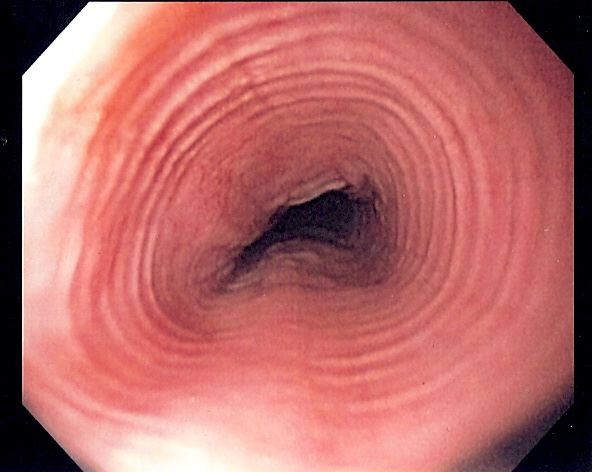
Endoscopic findings in EoE include edema (loss of the normal vascular pattern), rings ("trachealization"), exudates (white plaques reflecting eosinophilic microabscesses), linear furrows, and stricture — each occurring in roughly 20-50% of cases, with up to 93% of patients showing at least one of these findings.[1] These findings should be scored and reported using the EREFS (Endoscopic Reference Score) system, a validated grading tool used in both adult and pediatric populations to assess disease severity and treatment response, and now incorporated into the broader Index of Severity for Eosinophilic Esophagitis (I-SEE), which layers symptom frequency and complications on top of the EREFS findings.[1] Critically, up to 21% of patients with biopsy-confirmed EoE have a completely normal-appearing esophagus on endoscopy — a normal endoscopic appearance does not rule out EoE, and biopsies are required for diagnosis regardless of what the esophagus looks like macroscopically.[1]
Biopsy protocol
Because histologic findings vary significantly by biopsy site, a single biopsy is not sufficient. Guidance calls for at least 2 biopsies per level, from at least 2 esophageal segments (distal, mid, and proximal), for a total of at least 4-6 biopsies.[1] In one retrospective study of 66 adults, a single biopsy carried a sensitivity of only 55% for the ≥15 eos/hpf threshold, rising to 100% once 5 biopsies were taken — diagnostic yield genuinely depends on how thoroughly the esophagus is sampled.[1] Biopsies of the stomach and duodenum should be considered at the same initial endoscopy, particularly in pediatric patients or those with other gastrointestinal symptoms or macroscopic abnormalities, specifically to rule out non-EoE eosinophilic gastrointestinal disease and other conditions such as celiac disease.[1]
Histology
Eosinophil density should be reported as a count per 0.3 mm² (equivalent to one hpf), with a diagnosis of EoE requiring 15 or more eosinophils/hpf — a threshold reported at 100% sensitivity and 96% specificity in prospective evaluation.[1] Classic histologic features beyond eosinophil density can further strengthen the diagnosis, including dilated intercellular spaces, basal zone hyperplasia, eosinophilic abscesses, and lamina propria fibrosis; the Eosinophilic Esophagitis Histologic Scoring System (EoEHSS), which evaluates 8 such features, has been shown to outperform peak eosinophil count alone for tracking treatment status, and has been validated for predicting active disease state in Canadian children.[1]
Differential diagnosis
Consider and exclude gastroesophageal reflux disease, non-EoE eosinophilic gastrointestinal disease, Crohn's disease, achalasia, hypermobility syndromes (including connective tissue disorders), and drug hypersensitivity disorders before finalizing a diagnosis of EoE.[1]
Allergy testing — not for finding food triggers
Skin prick testing, specific IgE blood testing, and patch testing are not recommended to identify which specific foods are driving a patient's EoE — these tests have consistently shown poor predictive value for EoE food triggers (skin prick testing correctly identifies true triggers only around 45.5% of the time), and empiric dietary elimination outperforms panel-based allergy testing for this purpose.[1] The genuine role for allergy testing in EoE is different: ruling out a potentially anaphylactic IgE-mediated food allergy when the history is suggestive of one, not guiding which foods to eliminate for EoE itself.[1] Reflexive "panel testing" carries real downstream harms — over-diagnosis of food allergy, unnecessarily restrictive diets, malnutrition, and even a risk of converting a previously tolerated food into a true anaphylactic allergy after a period of avoidance — so this distinction is worth explaining clearly to patients who expect an allergy panel to identify their trigger foods.[1]
Treatment Targets
- Induce and then maintain both histologic (fewer than 15 eosinophils/hpf) and symptomatic remission — not one without the other, since the two correlate poorly and each needs its own objective assessment.[1]
- Control the inflammatory component of disease early and durably enough to prevent the fibrostenotic component — stricture — from developing in the first place.[1]
- Address both the inflammatory and fibrostenotic aspects of disease at every assessment, since a therapy that controls inflammation does not by itself reverse an established stricture, and dilation that relieves a stricture does not by itself control inflammation.[3]
- Build and sustain a genuinely multidisciplinary care team — gastroenterology, allergy, pathology, dietetics, and pharmacy — around a shared decision-making relationship with the patient, which is independently associated with significantly better treatment satisfaction.[1]
- Protect against the two adverse outcomes of getting therapy wrong in either direction: undertreated disease progressing silently to fibrosis and stricture behind adapted eating behaviours that mask ongoing symptoms, and overly aggressive elimination diets or systemic corticosteroids that impose real nutritional, developmental, or quality-of-life costs without added benefit.[1]
- Preserve quality of life and psychosocial wellbeing as an explicit, monitored treatment goal in its own right, not an afterthought to histologic control.[1]
- Plan for chronicity from the outset — EoE relapses frequently once treatment stops, so every initial treatment conversation is also the start of a long-term management conversation.[1]
Choose Initial Treatment
The "3 D's" — Drugs, Diet, Dilation
Three genuinely first-line, guideline-endorsed options exist side by side for inducing remission in EoE, and none is inherently superior to the others: Drugs (a proton pump inhibitor or a swallowed topical corticosteroid), Diet (empiric elimination), or, once a stricture has already developed, Dilation — which relieves the narrowing but does nothing for the underlying inflammation and must always be paired with one of the other two.[1] When feasible, start with a single intervention rather than combining several at once, specifically so its individual effectiveness can actually be assessed — reserve combination therapy for more severe disease.[1] Whichever option is chosen, response must be confirmed on repeat endoscopy and biopsy at 6-12 weeks, not by symptoms alone — symptomatic response to placebo runs as high as 40% in EoE clinical trials, while histologic and endoscopic placebo response is very low, a real gap that makes objective reassessment, not how the patient feels, the thing that actually tells you whether therapy is working.[1]
Drugs — proton pump inhibitors
First-line a PPI, typically prescribed at a higher-than-reflux dose, is the most accessible and lowest-cost of the three options and improves histology in roughly 50% of patients.[1] Its anti-inflammatory effect in EoE works partly by inhibiting interleukin-4-stimulated eotaxin-3 expression in esophageal cells and blocking STAT6 signalling — a genuine drug effect on the inflammatory pathway itself, not merely a byproduct of acid suppression.[1] One study found an allergic phenotype (multiple concurrent atopic conditions) predicts a lower likelihood of PPI response, worth factoring into the initial conversation about which option to try first.[1]
Drugs — swallowed topical corticosteroids
First-line swallowed topical corticosteroid therapy — an orodispersible budesonide tablet, a compounded viscous budesonide suspension, or an off-label swallowed fluticasone metered-dose inhaler (MDI) — is an effective alternative or complementary option.[1] Budesonide orodispersible tablets are Health Canada-approved for EoE in adults — the first pharmacologic treatment ever specifically approved for EoE in Canada — based on placebo-controlled trials showing clinical and histologic remission in 58% of adults at 6 weeks (rising to 85% by 12 weeks) and durable maintenance of remission in 75% of patients previously in remission followed for up to 48 weeks.[1] Viscous budesonide slurry and swallowed fluticasone MDI remain effective, evidence-supported, off-label options used in both adults and children where the approved tablet is not suitable, funded, or available.[1]
Swallow technique is a genuinely pharmacist-relevant counselling point. A swallowed fluticasone MDI is puffed directly into the mouth and swallowed, with no spacer and no inhalation — the opposite technique from the same device's approved asthma use, and worth explicitly confirming with every patient rather than assuming they already know it differs. A budesonide slurry needs the right thickening vehicle and consistency to coat the esophagus rather than being swallowed like a thin liquid. For both formulations, food and drink should be avoided for at least 30 minutes afterward to give the dose time to work topically. Getting any of this wrong meaningfully undermines mucosal contact and treatment effectiveness — see Drug Tables.
Diet — empiric elimination
First-line empiric dietary elimination is a genuine drug-free alternative — see Non-Pharmacologic Treatment for the full step-up approach, starting with cow's milk alone, or cow's milk plus wheat, rather than jumping straight to a 6-food elimination diet.[1]
When conventional therapy fails, is not tolerated, or severe allergic comorbidity is present — dupilumab
Biologic — refractory or comorbid disease dupilumab, an anti-interleukin-4/13 monoclonal antibody, is Health Canada-approved for EoE and should be considered specifically for (1) disease refractory to conventional treatment, (2) patients unable to tolerate conventional therapy, or (3) patients who also carry another currently-approved, concurrent severe allergic condition (severe asthma, atopic dermatitis, or chronic rhinosinusitis with nasal polyps) where a single biologic could reasonably treat both.[1] It is not a routine first-line option — see Pharmacologic Treatment Options and Drug Tables for dosing and trial evidence.[4][5]
Dilation — only ever as an adjunct
Adjunct, not monotherapy once a stricture has developed, endoscopic dilation can meaningfully relieve dysphagia — a meta-analysis of 27 studies found symptom improvement in 95% of patients with major complications in fewer than 1% — but dilation does nothing to control the underlying inflammation driving the stricture, and symptom improvement from dilation has not been shown to translate into any measurable improvement in inflammatory markers.[1] Dilation must always be combined with ongoing medical or dietary anti-inflammatory therapy to reduce the risk of the narrowing recurring — it is never a substitute for treating the disease itself.[1]
Not recommended
Systemic corticosteroids oral prednisone and other systemic corticosteroids are not recommended for routine EoE treatment. A randomized trial in 80 children found no short- or long-term clinical advantage of oral prednisone over topical swallowed fluticasone — both reached roughly 40% remission by 24 weeks — while systemic corticosteroid adverse effects (hyperphagia, weight gain, cushingoid features) occurred in 40% of the systemic-therapy group and none of the topical-therapy group.[1] Allergy-panel-guided elimination selecting elimination foods based on skin prick or specific IgE testing results, rather than an empiric elimination protocol, is also not recommended — see Assessment & Diagnosis.[1]
Non-Pharmacologic Treatment
Empiric dietary elimination — start small, step up only if needed
- Start with a 1-food (cow's milk alone) or 2-food (cow's milk plus wheat) elimination — this balances efficacy against convenience, adherence, and quality of life, and milk is by far the single most common causative allergen, implicated in roughly 40-50% of cases.[1]
- A 6-food elimination diet does achieve a higher remission rate (roughly 79%, versus 43% for 1-food and 60% for 4-food elimination) but is not recommended as first-line therapy given its poorer convenience, lower adherence, and greater impact on quality of life — adherence measurably drops with every additional food removed.[1] A recent study found no meaningful difference in response between 1-food (dairy-only) and 6-food elimination, or between 1-food and 4-food elimination, supporting single-food elimination as a genuinely viable starting point rather than a compromise.[1]
- Step-up strategies (starting narrow, escalating only if needed) reduce the time and resources required to reach remission by roughly 20% compared with top-down strategies that start at 6-food elimination.[1]
- Dietitian consultation is essential for every patient undertaking dietary elimination — this is not an optional add-on. Dietitians support nutritional adequacy (children on elimination diets are at particular risk of low vitamin D and calcium intake), help families plan and problem-solve around feeding, and support long-term adherence.[1]
- Elemental (amino-acid-based) diets are rarely recommended despite achieving high histopathologic remission rates (around 90%) in both adults and children — poor palatability drives drop-out rates of 5-20%, a large majority of pediatric patients (82% in one 164-patient study) require a nasogastric tube to sustain adherence, adults on elemental diets can experience significant weight loss, and the impact on quality of life is substantial. Elemental diets are not intended as long-term maintenance therapy.[1]
- Watch for new IgE-mediated food allergy after prolonged elimination and reintroduction. Patients who undergo strict elimination for 6 months to 2 or more years are at heightened risk of developing a new, sometimes severe (anaphylactic or urticarial) IgE-mediated allergic reaction when the eliminated food is reintroduced — a pattern also seen when atopic dermatitis is managed with elimination diets. Food reintroduction after prolonged elimination should be monitored carefully, ideally with allergist involvement, rather than treated as a routine, low-risk step.[1]
Esophageal dilation
- Reserved for patients with an established stricture or clinically significant luminal narrowing causing dysphagia or recurrent food impaction — not for uncomplicated inflammatory disease.[1]
- A meta-analysis of 27 studies (845 adults, 87 pediatric patients) found a median of 3 dilations per patient, symptom improvement in 95% of patients, and major complications (perforation) in fewer than 1% — a genuinely favourable safety profile when performed by an experienced endoscopist.[1]
- Dilation relieves the mechanical narrowing but does not treat the underlying inflammation and has not been shown to improve inflammatory markers — it must always be paired with ongoing anti-inflammatory therapy (PPI, swallowed topical corticosteroid, and/or dietary elimination) to reduce the risk of the stricture recurring.[1]
Shared decision-making, transitions of care, and psychosocial support
- EoE care works best as a genuinely collaborative effort across gastroenterology, allergy, surgery (where relevant), pathology, dietetics, and pharmacy, built around shared decision-making with the patient — a prospective study of 243 adults and 270 pediatric caregivers found shared decision-making was associated with significantly higher treatment satisfaction (odds ratio 2.62).[1]
- Decreased belief in the necessity of treatment is a strong predictor of poor adherence in adults with EoE — addressing a patient's own doubts about whether ongoing therapy is really needed is a genuine adherence intervention, not just an educational nicety.[1]
- Transition from pediatric to adult care is a genuine risk period — a survey found more than 75% of adolescent and young adult patients reported no knowledge of the transition process at all. Plan the transition years ahead, not at the moment of transfer.[1]
- EoE carries a real, well-documented psychosocial burden. In one review of pediatric psychological evaluations, 69% of children showed some form of psychosocial issue, 64% had social difficulties, and 41% had anxiety — monitoring overall wellbeing, not only histology, is an explicit part of ongoing EoE care.[1]
- Because pills themselves are frequently difficult for EoE patients to swallow, the choice of medication formulation (dissolvable/orodispersible, liquid, or simply the smallest available pill size) should be made collaboratively with the patient, balanced against availability and cost.[1]
Pharmacologic Treatment Options
| Drug / intervention | Role | Dose / use | Important adverse effects | Teaching points |
|---|---|---|---|---|
| Omeprazole Preferred | First-line drug therapy — proton pump inhibitor, at a higher-than-reflux dose | 20-40 mg PO twice daily; reassess with repeat endoscopy/biopsy at 6-12 weeks, not as a diagnostic trial | GI upset; long-term risk of fracture, C. difficile infection, B12 deficiency | Improves histology in about 50% of patients; an allergic phenotype (multiple concurrent atopic conditions) predicts a lower response rate |
| Budesonide (Oral) Preferred | First-line drug therapy — swallowed topical corticosteroid; Health Canada-approved orodispersible tablet in adults | Induction: 1 mg PO twice daily; Maintenance: 0.5 mg PO twice daily (tablet or off-label viscous slurry) | Oral candidiasis (under 5%); dysphonia; theoretical adrenal suppression risk | Swallow, don't chew or inhale; avoid food and drink for at least 30 minutes; rinse the mouth after dosing to reduce candidiasis risk |
| Fluticasone Propionate (Inhaled) Alternative | Off-label swallowed topical corticosteroid (MDI), used when the approved tablet is unsuitable, unfunded, or unavailable | 440-880 mcg PO twice daily, swallowed | Oral candidiasis, dysphonia | Puff directly into the mouth and swallow — do NOT use a spacer or inhale; this is the opposite technique from asthma use of the same device |
| Dupilumab Special situation | Biologic — refractory to conventional therapy, intolerant of conventional therapy, or a qualifying concurrent severe allergic condition | 300 mg subcutaneously once weekly (age 1 year or older, weight 15 kg or more) | Injection-site reactions, conjunctivitis, arthralgia | First biologic approved for EoE in Canada (adults, May 2023; children 1 year and older, September 2024); weekly EoE dosing is double the biweekly dosing used for dupilumab's other indications — confirm reimbursement before prescribing |
| Prednisone Avoid | Systemic corticosteroid — not recommended for routine EoE treatment | Not recommended for routine use | Hyperphagia, weight gain, cushingoid features, and the full range of systemic corticosteroid toxicity with any extended course | No demonstrated long-term advantage over topical swallowed corticosteroid therapy, with substantially more systemic adverse effects (40% vs 0% in a pediatric trial) |
Special Populations
Pediatrics
Children present differently — see Recognize the Condition — and management differs in some real ways too. Dupilumab is Health Canada-approved for children as young as 1 year old (weighing at least 15 kg): a phase 3 trial in patients 1-11 years old who had not responded to PPI therapy found dupilumab achieved histologic remission at week 16 with both a higher- and a lower-exposure weight-based regimen, though only the higher-exposure regimen improved key secondary endpoints (endoscopic and transcriptomic measures); the trial found no significant between-group difference in reported symptoms, which the study authors attributed to real limitations in assessing symptoms in young children — cognitive and verbal development, and the same adaptive eating behaviours that mask symptoms in adults.[1][5] The Health Canada-approved orodispersible budesonide tablet is approved for adults only; children rely on off-label viscous budesonide slurry or swallowed fluticasone MDI.[1] Elemental diets are used more often in pediatric practice than in adults but carry a real burden — 82% of children in one 164-patient study required a nasogastric tube to sustain adherence.[1] Every EoE-affected child needs planned, proactive transition to adult care well before the actual transfer, given how poorly understood and poorly navigated this transition is reported to be by patients and families.[1]
Pregnancy and breastfeeding
Dedicated EoE-specific pregnancy data are limited. As general principles: proton pump inhibitors are widely used and generally considered compatible in pregnancy; swallowed topical corticosteroids achieve low systemic absorption relative to their local mucosal effect, which is reassuring but not a substitute for individualized counselling; and dupilumab has more limited pregnancy safety data specific to EoE dosing. Discuss the specific risks and benefits with the patient's obstetric and gastroenterology/allergy team rather than defaulting to any one answer, and confirm current guidance for each specific agent before prescribing in pregnancy or lactation.
Older adults
No EoE-specific dose adjustment is required for age alone, but long-term PPI use carries the same accumulating risks in this population as in any other indication — fracture, Clostridioides difficile infection, and vitamin B12 deficiency — worth factoring into a genuinely long-term EoE treatment plan.[1]
Concurrent allergic disease
Allergists bring genuinely distinct value to EoE care beyond what gastroenterology alone offers: managing concurrent IgE-mediated food allergy, determining relevant aeroallergen sensitization, and helping a patient distinguish true seasonal EoE exacerbation from pollen-food allergy syndrome (PFAS) — a related but distinct condition that causes immediate oropharyngeal symptoms on exposure to raw fruits and vegetables that cross-react with pollen, without the chronic dysphagia or food impaction that defines EoE itself.[1] For patients receiving oral or sublingual immunotherapy for an unrelated food or aeroallergen allergy who then develop EoE, the decision to continue or stop immunotherapy should be individualized, weighing benefits and risks through shared decision-making, rather than treated as an automatic contraindication — Canadian OIT guidelines now list EoE as a relative rather than an absolute contraindication to continuing therapy.[1]
Renal and hepatic impairment
No specific dose adjustment is required for proton pump inhibitors or dupilumab in renal or hepatic impairment. Use swallowed topical budesonide cautiously in significant hepatic impairment given reduced first-pass clearance, consistent with other topical corticosteroid formulations.
Monitoring & Follow-Up
Clinical evaluation alone is not sufficient to judge whether treatment is working — histologic and symptomatic response correlate poorly, and many patients have developed adaptive eating behaviours that mask ongoing disease activity even when it is significant. Repeat endoscopy and biopsy to reassess treatment efficacy after any change in management, ideally at 6-12 weeks.[1]
- The follow-up interval, including how often to repeat endoscopy, should vary with symptom frequency and severity, phenotype (including any history of stricture), and how much inflammation is present — uncontrolled EoE needs more frequent follow-up than disease that is stable in remission.[1]
- Validated disease activity indices exist for symptoms, endoscopy, histology, and quality of life — the Dysphagia Symptom Questionnaire (DSQ), PEESS 2.0, and the Index of Severity for Eosinophilic Esophagitis (I-SEE), which combines symptom frequency and complications with EREFS endoscopic findings and histologic features into a single composite severity score — and can be incorporated into routine care, though none is universally adopted and each has practical limitations.[1]
- Monitor psychosocial wellbeing at every follow-up, not only at diagnosis — EoE has a well-documented negative impact on quality of life and mental health in both children and adults.[1]
- Duration of therapy is genuinely unclear in the literature for patients who achieve control: current publications are broadly unanimous that long-term treatment should continue with whichever agent induced remission, since relapse is frequent — especially after treatment is stopped — and lack of treatment leads to recurrence and rising rates of stricture and food impaction. There is not enough evidence to universally support or reject eventual discontinuation once long-term remission is established; this decision should be revisited explicitly and periodically with the patient rather than defaulted to indefinitely.[1]
- For patients on dupilumab, confirm ongoing indication (refractory disease, intolerance of conventional therapy, or a qualifying concurrent severe allergic condition) and reimbursement status at each renewal, given the access and cost barriers specific to this therapy in Canada.[1]
Treatment Failure / Next Step
- Inadequate histologic response to an 8-week trial of high-dose PPI: switch to (or add) a swallowed topical corticosteroid or empiric dietary elimination, rather than simply extending or further increasing the PPI dose indefinitely.[1]
- Inadequate response to 1- or 2-food empiric elimination: before assuming the approach has failed, confirm genuine adherence with the dietitian, then step up to a 4-food elimination diet if adherence was solid and response is still inadequate.[1]
- Inadequate response to a swallowed topical corticosteroid: reassess technique and adherence first — correct MDI swallow technique (no spacer), correct slurry vehicle and consistency, and the 30-minute post-dose food/drink restriction — before concluding the drug itself has failed.
- Refractory to conventional therapy (PPI, topical corticosteroid, and/or dietary elimination), unable to tolerate conventional therapy, or a patient with a qualifying severe allergic comorbidity: this is exactly the population for dupilumab — escalate rather than cycling repeatedly through the same conventional options.[1]
- An established stricture causing persistent dysphagia despite adequate anti-inflammatory therapy: proceed to endoscopic dilation as an adjunct, continuing — not replacing — the anti-inflammatory therapy already in place.[1]
- Recurrent food impaction despite an apparently adequate treatment plan: reassess adherence and technique first, then repeat endoscopy and biopsy to confirm whether inflammation is actually controlled before assuming the existing plan simply needs more time.
Common Errors to Avoid
- Requiring a trial of PPI therapy to rule EoE in or out before pursuing endoscopy — current consensus has specifically eliminated this requirement, and PPI response does not exclude EoE.[2][1]
- Assuming a normal-appearing esophagus on endoscopy rules out EoE — up to 21% of patients with biopsy-confirmed EoE have no visible endoscopic findings at all.[1]
- Diagnosing, or excluding, EoE from a single esophageal biopsy, or from biopsies taken at only one esophageal level — sensitivity for the ≥15 eos/hpf threshold rises from as low as 55% with one biopsy to 100% with five.[1]
- Starting empiric dietary elimination with a 6-food protocol as the default first step, rather than a 1- or 2-food elimination — the broader diet is not first-line despite its somewhat higher remission rate, given its poor adherence and quality-of-life burden.[1]
- Ordering skin prick or specific IgE panel testing to identify which foods are driving a patient's EoE — these tests are poorly predictive of EoE food triggers and are reserved for ruling out anaphylactic IgE-mediated food allergy instead.[1]
- Prescribing a fluticasone MDI for EoE and coaching the patient to use it with a spacer and inhale it, exactly as for asthma — the EoE technique is the opposite: swallow, don't inhale, no spacer.
- Reaching for oral prednisone or another systemic corticosteroid as a routine EoE treatment — no demonstrated long-term advantage over topical therapy, with substantially more systemic toxicity.[1]
- Treating esophageal dilation as a stand-alone cure rather than a mechanical adjunct that must be paired with ongoing anti-inflammatory therapy.[1]
- Judging treatment success from symptoms alone rather than repeat endoscopy and biopsy — placebo symptom response in EoE trials runs as high as 40%, while histologic placebo response is very low.[1]
- Reintroducing eliminated foods after a prolonged elimination diet without appropriate monitoring — a meaningful minority of patients develop new, sometimes severe, IgE-mediated reactions to foods they tolerated well before the elimination period.[1]
- Letting a patient's longstanding adaptive eating behaviours (the IMPACT pattern) go unrecognized as a symptom of EoE simply because the patient never uses the word "dysphagia."[1]
Clinical Decision Algorithm
Drug Tables
How to use this table: Doses are adult doses and require patient-specific confirmation (renal/hepatic function, weight, allergy history). Pediatric dosing is weight-based per the current product monograph unless stated. Drug pricing is intentionally omitted. Select any drug name to open its complete Pharmasist Drug Database page.
Proton Pump Inhibitors — First-Line Drug Therapy
Any PPI may be used at an equivalent higher-than-reflux dose. A PPI trial is not required to diagnose EoE, and PPI response does not exclude the diagnosis — see Assessment & Diagnosis.
| Drug | Dosage | Adverse effects | Drug interactions | Comments |
|---|---|---|---|---|
| Omeprazole | Adults: 20-40 mg PO twice daily | GI upset; long-term risk of fracture, C. difficile infection, B12 deficiency | Reduces clopidogrel activation (CYP2C19); reduces absorption of drugs needing an acidic stomach | The most widely studied PPI in EoE trials; improves histology in about 50% of patients. |
| Pantoprazole | Adults: 40 mg PO twice daily | GI upset; long-term risk similar to other proton pump inhibitors | Similar interaction profile to omeprazole | A reasonable alternative PPI where formulary or tolerability favours it. |
| Esomeprazole | Adults: 20-40 mg PO twice daily | GI upset; long-term risk similar to other proton pump inhibitors | Reduces clopidogrel activation (CYP2C19) | An alternative PPI; EoE dosing sits at the higher end of the range used for reflux. |
| Lansoprazole | Adults: 30 mg PO twice daily | GI upset; long-term risk similar to other proton pump inhibitors | Reduces absorption of drugs needing an acidic stomach | An alternative PPI option. |
| Dexlansoprazole | Adults: 30-60 mg PO once or twice daily per product monograph | GI upset; long-term risk similar to other proton pump inhibitors | Similar interaction profile to lansoprazole | An alternative, delayed-release PPI option. |
Swallowed Topical Corticosteroids — First-Line Drug Therapy
Swallow technique determines effectiveness. Avoid food and drink for at least 30 minutes after dosing, and rinse the mouth afterward to reduce candidiasis risk.
| Drug | Dosage | Adverse effects | Drug interactions | Comments |
|---|---|---|---|---|
| Budesonide (Oral) | Induction: 1 mg PO twice daily Maintenance: 0.5 mg PO twice daily | Oral candidiasis (under 5%); dysphonia; theoretical adrenal suppression risk, especially with concurrent topical steroid use elsewhere | Strong CYP3A4 inhibitors increase systemic exposure | Health Canada-approved orodispersible tablet for adults (the first EoE-specific drug approval in Canada). A viscous slurry — mixed with a thickening vehicle such as sucralose, applesauce, maple syrup, or honey — is used off-label in adults and children where the tablet is not suitable or available. Swallow, don't chew. |
| Fluticasone Propionate (Inhaled) | Adults: 440-880 mcg PO twice daily, swallowed | Oral candidiasis, dysphonia | Strong CYP3A4 inhibitors increase systemic corticosteroid exposure | Off-label swallowed use of an asthma MDI product. Puff directly into the mouth and swallow — do NOT use a spacer or inhale the dose, the opposite technique from its approved asthma indication. |
Biologic Therapy — Refractory or Comorbid Disease
Not a routine first-line option — reserve for disease refractory to, or intolerant of, conventional therapy, or a qualifying concurrent severe allergic condition.
| Drug | Dosage | Adverse effects | Drug interactions | Comments |
|---|---|---|---|---|
| Dupilumab | Age 1 year or older, weight 15 kg or more: 300 mg subcutaneously once weekly | Injection-site reactions, conjunctivitis, arthralgia | Avoid concurrent live vaccines; no major pharmacokinetic drug interactions | First biologic approved for EoE in Canada (adults May 2023; children 1 year and older, weighing 15 kg or more, September 2024). Weekly EoE dosing is double the biweekly dosing (and cost) used for dupilumab's other approved indications — confirm reimbursement status before prescribing, since public coverage specifically for the EoE indication has lagged its other indications. |
Not Recommended for Routine EoE Treatment
Included for completeness — these are not treatment options to reach for in typical practice.
| Drug | Dosage | Adverse effects | Drug interactions | Comments |
|---|---|---|---|---|
| Prednisone | Routine use: Not recommended | Hyperphagia, weight gain, cushingoid features, and the full range of systemic corticosteroid toxicity with any extended course | Numerous — CYP3A4 substrates, live vaccines, additive hyperglycemia with other hyperglycemic drugs | A randomized pediatric trial found no long-term clinical advantage of oral prednisone over topical swallowed fluticasone, with substantially more systemic adverse effects (40% vs 0%). Reserve for situations where topical therapy has genuinely failed, under specialist direction. |
Professional reference only. Apply clinical judgment and verify patient-specific decisions against current authoritative guidance and product information.