Metabolic Dysfunction-Associated Steatotic Liver Disease (MASLD)
Metabolic Dysfunction-Associated Steatotic Liver Disease (MASLD)
References
- A multisociety Delphi consensus statement on new fatty liver disease nomenclature — Hepatology (Rinella ME, Lazarus JV, Ratziu V, et al.). Hepatology 2023;78(6):1966-1986
- Part 2: CAR Metabolic Dysfunction-Associated Steatotic Liver Disease Working Group Recommendations for Risk Stratifying Patients With MASLD — Canadian Association of Radiologists (Wilson MP, Low G, Shaheen AA, Costa AF, Tang A, Pang E, Chang S, Medellin A, Dana J, Millo N, Kielar A, Zhang LX, Whitaker T, Swain M, Leung V, Fung D, Hurrell C, Fung C.). Can Assoc Radiol J 2025
- AASLD Practice Guidance on the clinical assessment and management of nonalcoholic fatty liver disease — American Association for the Study of Liver Diseases (Rinella ME, Neuschwander-Tetri BA, Siddiqui MS, et al.). Hepatology 2023;77(5):1797-1835
- Phase 3 Trial of Semaglutide in Metabolic Dysfunction-Associated Steatohepatitis (ESSENCE) — New England Journal of Medicine (Sanyal AJ, Newsome PN, Kliers I, et al.). N Engl J Med 2025;392(21):2089-2099
- Wegovy (semaglutide injection) Receives Conditional Marketing Authorization from Health Canada as the First and Only Treatment for Adults with Non-Cirrhotic MASH — Novo Nordisk Canada. News release, December 15, 2025
- A Phase 3, Randomized, Controlled Trial of Resmetirom in NASH with Liver Fibrosis — New England Journal of Medicine (Harrison SA, Bedossa P, Guy CD, et al.). N Engl J Med 2024;390(6):497-509
- MASLD Guidance: clinical practice recommendations for identifying, risk-stratifying, and managing MASLD across Canadian healthcare settings — Canadian Association for the Study of the Liver (CASL). Canadian Liver Journal 2026
Clinical Snapshot
Metabolic dysfunction-associated steatotic liver disease (MASLD) is hepatic steatosis (fat in more than 5% of hepatocytes) occurring in a patient with at least one of five cardiometabolic risk factors — overweight/obesity, impaired glucose regulation or type 2 diabetes, hypertension, elevated triglycerides, or low HDL cholesterol — and without another explanation for the steatosis (significant alcohol use, another liver disease, or a steatogenic medication).[1] The name replaces "nonalcoholic fatty liver disease (NAFLD)" — a 2023 multisociety Delphi consensus involving 236 panellists from 56 countries found the old terminology stigmatizing and diagnostically backwards (defined by what it isn't rather than what it is), and formally adopted MASLD, with MASH (metabolic dysfunction-associated steatohepatitis) replacing NASH for the inflammatory, more fibrogenic subtype. A related but distinct category, MetALD, describes patients who meet the cardiometabolic criteria for MASLD but also drink more alcohol than the MASLD definition allows (roughly 140-350 g/week for women, 210-420 g/week for men) — a mixed-etiology group that needs both metabolic and alcohol-focused counselling.[1]
MASLD is common — an estimated 30% of North American adults have some degree of it — and it is now the fastest-growing cause of cirrhosis, hepatocellular carcinoma, and liver transplantation in North America, a trajectory that tracks directly with rising obesity and type 2 diabetes prevalence. Most patients are asymptomatic and are identified incidentally — mildly elevated ALT/AST on routine bloodwork, or steatosis noted on an abdominal ultrasound or CT ordered for an unrelated reason — which means the people best positioned to catch it early are often not hepatologists but primary care and community pharmacy.[2] The great majority of MASLD never progresses to serious liver disease; the goal of assessment is not to label every patient with fatty liver, but to correctly identify the roughly 20-30% with MASH and the smaller subset with clinically significant fibrosis (stage F2 or higher) who are the ones actually at risk of liver-related morbidity and mortality and who benefit most from structured intervention.
Recognize the Condition
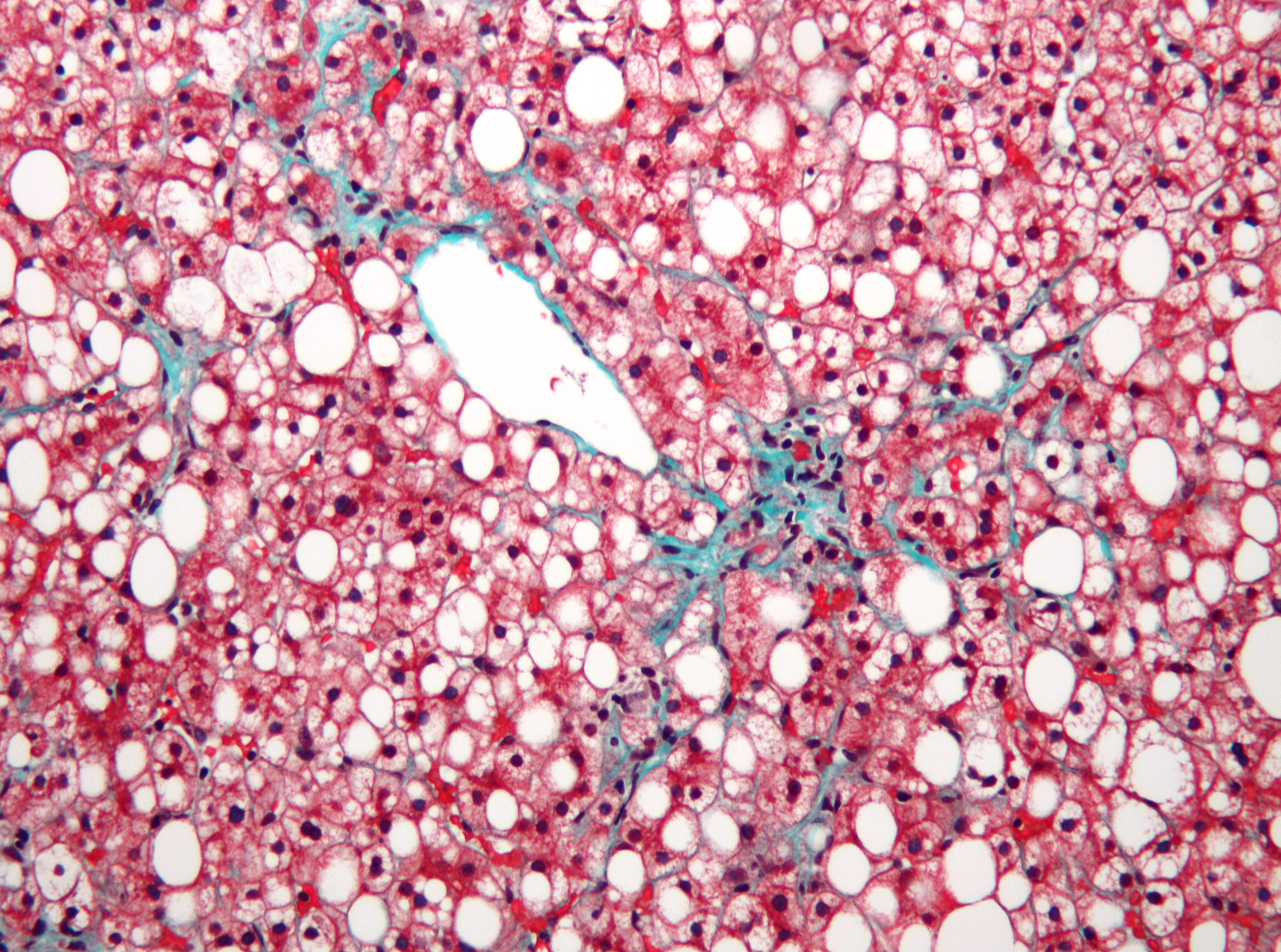
Typical presentation
The overwhelming majority of patients with MASLD have no symptoms at all. When something is noticed, it is usually one of: vague right-upper-quadrant discomfort or fullness, unexplained fatigue, or an incidental finding — mildly elevated ALT/AST on routine labs (often ordered for diabetes or cardiovascular risk monitoring, not for the liver), or hepatic steatosis reported on an ultrasound, CT, or MRI done for an unrelated reason. A patient can have completely normal liver enzymes and still have MASH or even advanced fibrosis — normal ALT does not rule out clinically significant disease, which is exactly why risk-factor-based case finding (see Assessment & Diagnosis), not symptom- or enzyme-based suspicion alone, is the recommended approach.[2]
MASLD, MASH, and fibrosis are not the same thing
| Term | What it means |
|---|---|
| Steatosis (MASLD) | Fat alone. Usually a benign, non-progressive finding on its own — the umbrella term for the whole disease spectrum. |
| MASH | Steatosis plus hepatocyte injury (ballooning) and inflammation. The subtype capable of driving fibrosis; can only be confirmed on biopsy, though noninvasive tools estimate the probability. |
| Fibrosis stage (F0-F4) | Scarring, on a spectrum from none (F0) through advanced bridging fibrosis (F3) to cirrhosis (F4). Fibrosis stage — not steatosis grade and not enzyme level — is the single strongest predictor of liver-related mortality and is what the entire risk-stratification pathway in this chapter exists to estimate without a biopsy in most patients.[3] |
A patient can have severe steatosis with completely normal fibrosis, or comparatively mild-looking steatosis with advanced fibrosis — imaging and enzymes alone cannot distinguish these, which is precisely the gap FIB-4-based staging is designed to close.
Risk Factors
Cardiometabolic risk factors (any one, alongside steatosis, meets the MASLD definition)
- Overweight/obesity, particularly central/visceral adiposity.
- Type 2 diabetes or prediabetes/insulin resistance — the single most impactful risk factor for both developing MASLD and for fibrosis progression, hepatocellular carcinoma, and liver-related mortality once MASLD is present.[3]
- Hypertension.
- Elevated triglycerides.
- Low HDL cholesterol.
Who actually warrants case finding
Per current Canadian multidisciplinary guidance, prioritize risk-factor-based case finding — not universal population screening — in:
- Type 2 diabetes (the single highest-yield group to case-find in).
- Two or more of the cardiometabolic risk factors above (central obesity, high triglycerides, low HDL, hypertension, prediabetes/insulin resistance).
- Elevated aminotransferases with no other clear explanation.
- Incidental imaging findings of hepatic steatosis on any modality.[2]
Other contributors and modifiers
- Polycystic ovary syndrome, obstructive sleep apnea, and hypothyroidism are all independently associated with MASLD and worth asking about.
- Sarcopenia and a sedentary lifestyle independently accelerate fibrosis progression, even after accounting for BMI.
- Genetic modifiers (e.g., PNPLA3 variants) influence individual risk but are not part of routine clinical assessment.
- A family history of cirrhosis or hepatocellular carcinoma in a first-degree relative with MASLD raises the index of suspicion for that patient's own fibrosis risk.
- Concurrent alcohol use above the MASLD-definition threshold shifts the diagnosis toward MetALD or alcohol-associated liver disease rather than pure MASLD, and needs its own counselling track.[1]
Red Flags & Refer
Refer to a liver specialist (hepatology or a gastroenterologist with hepatology focus) for any of the following:
- FIB-4 >2.67 (standard adult thresholds; see Assessment & Diagnosis for age-adjusted cutoffs) — refer directly without necessarily waiting for elastography.[2]
- Liver stiffness on elastography >12 kPa (or >13 kPa if FIB-4 was not available beforehand) — this "rules in" a high probability of advanced fibrosis.[2]
- Any clinical sign of decompensated cirrhosis — ascites, jaundice, variceal bleeding, hepatic encephalopathy, or coagulopathy — this is an urgent same-day-to-days referral, not a routine one, and shifts management to decompensated-cirrhosis-specific care (see the separately-authored Cirrhosis chapter for that management in full; it is not duplicated here).
- Physical exam findings suggesting established chronic liver disease — spider angiomata, palmar erythema, splenomegaly, or a firm/nodular liver edge.
- Persistently and significantly elevated transaminases (roughly >5x the upper limit of normal), or an AST:ALT ratio >1 in a patient without heavy alcohol use — both raise concern for a coexisting or alternative liver disease (viral hepatitis, autoimmune hepatitis, hemochromatosis, alpha-1 antitrypsin deficiency, Wilson disease) that needs its own dedicated work-up rather than being assumed to be MASLD by default.
- Thrombocytopenia, an elevated INR, or hypoalbuminemia in a patient with known or suspected MASLD — these suggest synthetic dysfunction consistent with more advanced disease than the enzyme pattern alone would suggest.
- Diagnostic uncertainty after a complete noninvasive work-up, where biopsy or specialist input is needed to confirm MASH or resolve a discordant fibrosis estimate.
Assessment & Diagnosis
Step 1 — confirm steatosis and exclude other causes
- Steatosis is usually first identified on ultrasound, CT, or MRI ordered for another reason, or suspected from elevated ALT/AST in a patient with cardiometabolic risk factors.
- Take a careful alcohol history — quantify actual weekly intake, since the MASLD/MetALD/alcohol-associated liver disease distinction depends on it.[1]
- Review medications for steatogenic culprits (e.g., amiodarone, methotrexate, tamoxifen, corticosteroids, valproate) and consider viral hepatitis serologies, ferritin/transferrin saturation, and — where the clinical picture is atypical (young age, disproportionate enzyme elevation, low ceruloplasmin) — screening for autoimmune or genetic liver disease, per the treating clinician's judgment.
Step 2 — calculate FIB-4
FIB-4 = (Age in years × AST [U/L]) ÷ (Platelet count [10⁹/L] × √ALT [U/L])
FIB-4 is preferred over other blood-based scores (APRI, NAFLD Fibrosis Score) as the first-line tool because of its combination of low cost, wide availability (it uses only routine bloodwork plus age), and the strongest current evidence base for MASLD-specific fibrosis risk stratification.[2]
| FIB-4 result (age 36-65) | Interpretation | Action |
|---|---|---|
| < 1.3 | Low risk for advanced fibrosis | Routine care; repeat FIB-4 in 1-3 years |
| 1.3 - 2.67 | Indeterminate risk | Proceed to imaging-based liver stiffness measurement (elastography) |
| > 2.67 | High risk for advanced fibrosis | Refer to a liver specialist |
FIB-4 is age-sensitive at the extremes: it is not considered reliable in patients aged 35 or younger (routinely overestimates risk at this age) and current Canadian guidance recommends a lower low-risk cutoff of 2.0 (rather than 1.3) in patients aged 65 and older, since FIB-4 rises with normal aging independent of fibrosis. The age-stratified thresholds should be applied rather than the standard adult cutoffs outside the 36-65 age range.[2] Thrombocytopenia from an unrelated cause, active alcohol use, acute hepatic inflammation, and chronic kidney disease can each falsely alter the FIB-4 score and should be considered when interpreting an unexpected result.
Step 3 — imaging-based liver stiffness measurement for indeterminate FIB-4
Transient elastography (vibration-controlled transient elastography, e.g. FibroScan), shear wave elastography, and MR elastography all provide comparable diagnostic accuracy for fibrosis staging; the practical choice in most Canadian settings is transient elastography or shear wave elastography based on local availability, with MR elastography reserved for indeterminate or discordant results given its higher cost and lower availability.[2]
| Liver stiffness (kPa) — FIB-4 known and 1.3-2.67 | Interpretation | Action |
|---|---|---|
| < 8 | Low risk for advanced fibrosis | Return to routine surveillance |
| 8 - 12 | Indeterminate risk | Consider MR elastography, liver biopsy, and/or liver specialist referral |
| > 12 | Rules in advanced fibrosis | Refer to a liver specialist |
If FIB-4 was not available before elastography, the "rules in/rules out" thresholds shift slightly: <5 kPa is low risk, 5-13 kPa is indeterminate, and >13 kPa rules in advanced disease and warrants specialist referral.[2]
Liver biopsy
Reserved for genuinely indeterminate or discordant noninvasive results, or when confirming a MASH diagnosis (rather than simple steatosis) would specifically change management — for example before starting pioglitazone or vitamin E, both of which are only recommended for biopsy-proven MASH (see Pharmacologic Treatment Options). Biopsy is not required to diagnose or manage most patients with MASLD.
Treatment Targets
- Achieve and sustain 7-10% total body weight loss — the single most effective, evidence-based intervention for reversing steatohepatitis and fibrosis.
- Optimize every coexisting cardiometabolic risk factor (glycemic control, blood pressure, lipids) — cardiovascular disease, not liver disease, is the leading cause of death in MASLD, and this remains true even in patients with advanced fibrosis.
- Correctly identify the subset of patients with MASH and clinically significant fibrosis (F2 or higher) who benefit from structured pharmacotherapy, without over-medicalizing the much larger group with steatosis alone.
- Prevent progression to cirrhosis, hepatocellular carcinoma, and decompensation through appropriate staging and monitoring intervals.
- Correct the common misconception that statins are unsafe in liver disease — untreated dyslipidemia, not the statin itself, is the real cardiovascular threat in this population.
Choose Initial Treatment
Every patient — structured weight loss is first-line, regardless of fibrosis stage
7-10% total body weight loss through a structured, sustained calorie deficit and increased physical activity is the foundation of MASLD/MASH management for every patient, independent of pharmacotherapy eligibility. A loss of 3-5% body weight is enough to improve steatosis; 7-10% is needed to improve the majority of MASH histologic features, including fibrosis.[3] Refer to a structured weight-management or dietitian-supported program rather than giving generic "eat less, move more" advice — sustained, coached weight loss materially outperforms unsupported self-directed attempts (see Non-Pharmacologic Treatment).
Semaglutide 2.4 mg subcutaneous once weekly received Health Canada conditional marketing authorization (Notice of Compliance with Conditions) in December 2025 specifically for non-cirrhotic MASH with moderate-to-advanced fibrosis (F2-F3) — the first and only Health Canada-authorized treatment for this indication. In the pivotal ESSENCE trial, 62.9% of semaglutide-treated patients achieved steatohepatitis resolution without worsening fibrosis at 72 weeks versus 34.3% on placebo, and 32.7% achieved both steatohepatitis resolution and fibrosis improvement versus 16.1% on placebo.[4][5] Semaglutide is also independently approved in Canada for type 2 diabetes and for chronic weight management, so many MASH patients may already be reasonable candidates for it on cardiometabolic grounds alone, in addition to this liver-specific indication.
Resmetirom is NOT currently available in Canada. It received FDA accelerated approval in the United States (March 2024) for non-cirrhotic MASH with F2-F3 fibrosis, with the pivotal MAESTRO-NASH trial showing superior NASH resolution and fibrosis improvement over placebo.[6] A New Drug Submission is under active review by Health Canada, but as of this writing no Notice of Compliance has been issued and it is not prescribable or reimbursed anywhere in Canada — do not tell a patient it is an option here yet, and do not confuse its U.S. availability with Canadian access.
Pioglitazone can be considered for biopsy-proven MASH, with or without type 2 diabetes, when semaglutide is not appropriate or not tolerated.[3]
Vitamin E 800 IU/day may be considered specifically in non-diabetic adults with biopsy-proven MASH — see Pharmacologic Treatment Options for the important restrictions on who this is (and is not) appropriate for.[3]
Statins are not contraindicated in MASLD or MASH, including compensated cirrhosis — treat dyslipidemia per standard cardiovascular risk guidance. Cardiovascular disease, not liver disease, is the leading cause of death in this population, and withholding a statin out of misplaced concern for "liver safety" leaves patients under-treated for their actual leading cause of mortality.[3] See Pharmacologic Treatment Options and Common Errors to Avoid for the full counselling points on this.
Optimize glycemic control, blood pressure, and the rest of the lipid panel using standard, indication-specific therapy — MASLD management does not replace or override guideline-directed care for diabetes, hypertension, or dyslipidemia; it runs alongside it.
Non-Pharmacologic Treatment
- Structured weight loss targeting 7-10% of total body weight — a Mediterranean-pattern diet (emphasizing vegetables, legumes, whole grains, olive oil, and reduced red meat/refined carbohydrate) has the strongest evidence specifically for MASLD/MASH, independent of its caloric effect.
- Reduce or eliminate fructose-sweetened beverages specifically — high fructose intake is independently associated with steatosis and fibrosis progression beyond its caloric contribution.
- Regular physical activity — at least 150 minutes/week of moderate-intensity aerobic activity, which improves steatosis even without significant weight loss, plus resistance training to preserve muscle mass (sarcopenia independently worsens outcomes).
- Limit alcohol — while MASLD by definition permits some alcohol intake below the MetALD threshold, lower intake is better for liver outcomes, and any patient with more advanced fibrosis should be counselled toward abstinence.
- Referral to a structured, ideally multidisciplinary, weight-management program (dietitian involvement, and behavioural support) rather than relying on brief unsupported advice — coached programs consistently outperform self-directed attempts at achieving and sustaining the 7-10% target.
- Bariatric surgery is a reasonable option for patients who otherwise meet standard bariatric-surgery eligibility criteria and produces substantial, durable improvement in steatohepatitis and fibrosis; it is not itself a liver-specific intervention but a route to the sustained major weight loss that drives liver benefit.
- Sleep and OSA screening — obstructive sleep apnea is independently associated with MASLD severity and is frequently under-recognized in this population.
Pharmacologic Treatment Options
| Drug / intervention | Role | Dose / use | Important adverse effects | Teaching points |
|---|---|---|---|---|
| Semaglutide, subcutaneous Preferred | MASH with fibrosis stage F2-F3, non-cirrhotic — Health Canada-authorized indication | 2.4 mg SC once weekly (standard T2DM/obesity dose-titration schedule) | Nausea, vomiting, diarrhea, constipation; rare pancreatitis, gallbladder disease | First and only Health Canada-authorized agent specifically for MASH with fibrosis (conditional authorization, December 2025). Also independently indicated for T2DM and chronic weight management. |
| Resmetirom Not available in Canada | MASH with fibrosis stage F2-F3, non-cirrhotic | Not applicable — no Canadian product monograph exists | FDA label: diarrhea, nausea; monitor for drug-induced liver injury and statin-interaction dose adjustments | FDA-approved in the U.S. (2024). Health Canada review is ongoing with no Notice of Compliance issued — do not represent this as available or prescribable in Canada. |
| Pioglitazone Alternative | Biopsy-proven MASH, with or without T2DM | 15-45 mg PO once daily, titrated per glycemic/tolerability response | Weight gain, fluid retention/edema, increased fracture risk (especially in postmenopausal women), rare bladder cancer signal | Restricted to biopsy-confirmed MASH — not appropriate for steatosis alone. Avoid in heart failure given fluid-retention risk. |
| Vitamin E (rrr-alpha-tocopherol) Special situation | Biopsy-proven MASH in NON-diabetic adults only | 800 IU PO once daily | Possible increased all-cause mortality signal at high dose in some meta-analyses; increased prostate cancer risk shown in the SELECT trial at 400 IU/day; increased bleeding risk with anticoagulants | Not studied in diabetic patients (excluded from the pivotal PIVENS trial) and not recommended for them. Not indicated for simple steatosis without biopsy-proven MASH. Discuss the mortality/prostate-cancer signal explicitly before starting, particularly in men. |
| Atorvastatin / rosuvastatin / other statins Preferred | Standard cardiovascular risk reduction — use per usual lipid-management indication, including in compensated MASLD-cirrhosis | Per standard cardiovascular dosing guidance | Same adverse-effect profile as in the general population — MASLD/MASH does not add hepatotoxicity risk | Not contraindicated by MASLD or MASH, including compensated cirrhosis. Do not withhold or discontinue a clinically indicated statin because of a fatty-liver diagnosis or a mildly elevated ALT — this is the single most important pharmacist correction to make in this condition. |
Special Populations
Older adults
FIB-4 rises with normal aging independent of true fibrosis — apply the age-adjusted low-risk cutoff of <2.0 (rather than <1.3) in patients 65 and older to avoid over-referring on the basis of age alone.[2] Weigh pioglitazone's fracture and fluid-retention risks, and vitamin E's evidence gaps, more heavily in this group; a structured weight-management referral should still account for frailty and sarcopenia risk rather than pursuing aggressive caloric restriction indiscriminately.
Younger adults (age ≤35)
Standard FIB-4 thresholds are not considered reliable in this age group and tend to overestimate fibrosis risk; a family physician or hepatologist should interpret an abnormal FIB-4 result in a young adult with additional caution rather than applying the standard cutoffs directly.[2]
Type 2 diabetes
The single highest-risk group for both MASLD development and fibrosis progression — case-find with FIB-4 at diagnosis and periodically thereafter regardless of symptoms or enzyme levels.[3] Vitamin E is not recommended in this group (no evidence base in diabetics); pioglitazone and semaglutide both have data specifically supporting their use here, and both also independently benefit glycemic control.
Compensated vs. decompensated cirrhosis
Statins remain appropriate in compensated MASLD-cirrhosis and should not be withheld.[3] Once decompensation occurs (ascites, jaundice, variceal bleeding, encephalopathy), management shifts to decompensated-cirrhosis-specific care — portal hypertension management, transplant evaluation, hepatocellular carcinoma surveillance — which is covered in the separately-authored Cirrhosis chapter rather than duplicated here; refer promptly rather than continuing to manage a decompensating patient within a MASLD-focused framework.
Pregnancy
Weight-loss pharmacotherapy (including semaglutide) and pioglitazone are not used in pregnancy; structured lifestyle counselling remains appropriate. A patient with known MASLD who becomes pregnant should have her liver-related monitoring plan reviewed with her obstetric team, since pregnancy itself can be complicated by distinct liver conditions (e.g., acute fatty liver of pregnancy, HELLP) that are not MASLD and need their own urgent recognition.
Renal impairment
Semaglutide requires no specific renal dose adjustment but should be used cautiously in patients with a history of significant GI fluid losses given theoretical dehydration/renal risk. Pioglitazone's fluid-retention effect warrants extra caution in any degree of renal or cardiac impairment.
Monitoring & Follow-Up
- Low risk (FIB-4 below the age-adjusted cutoff, or elastography <8 kPa): repeat FIB-4 in 1-3 years, sooner if new risk factors develop or existing ones worsen (e.g., new T2DM diagnosis, significant weight gain).[2]
- Indeterminate risk, managed without specialist referral: reassess according to the plan set by whoever performed the elastography/biopsy work-up — typically closer surveillance than the low-risk interval, with a lower threshold to re-image or refer if enzymes rise or new symptoms develop.
- High risk / under specialist care: follow the hepatology-directed monitoring plan, which typically includes periodic elastography, hepatocellular carcinoma surveillance once cirrhosis is confirmed, and variceal screening per standard cirrhosis protocols.
- Reassess weight, waist circumference, and every cardiometabolic parameter (A1c, blood pressure, lipid panel) at routine intervals regardless of fibrosis risk category — these drive both liver and cardiovascular outcomes.
- For a patient started on pioglitazone or vitamin E: confirm the original MASH diagnosis was genuinely biopsy-confirmed, and reassess at the interval the prescriber set (pivotal trial data used roughly 96 weeks of vitamin E to demonstrate histologic benefit) rather than expecting a rapid symptomatic response, since these agents are titrated to histologic, not symptomatic, endpoints.
- For semaglutide specifically: monitor per its standard T2DM/weight-management titration and tolerability schedule; the liver-specific benefit is a slower, longer-term histologic outcome, not something to expect to see reflected quickly in liver enzymes alone.
Treatment Failure / Next Step
- Weight loss target not being met despite counselling — escalate from unsupported advice to a structured, ideally multidisciplinary weight-management program (dietitian, behavioural support) before concluding the patient "isn't responding"; unsupported self-directed attempts have a low success rate at sustaining 7-10% loss.
- FIB-4 or elastography result is indeterminate or discordant with the clinical picture — proceed to the next step in the pathway (MR elastography, biopsy, or specialist referral) rather than repeating the same test and hoping for a clearer answer.[2]
- Confirmed MASH not improving on pioglitazone or vitamin E after an adequate trial — reassess adherence and weight-loss progress (pharmacotherapy is an adjunct to, not a replacement for, lifestyle intervention), then involve hepatology to consider semaglutide or another approach rather than continuing an ineffective regimen indefinitely.
- Rising FIB-4, worsening elastography, or new clinical signs of advancing disease despite intervention — refer (or re-refer) to hepatology promptly; this pattern suggests the patient needs closer specialist-level monitoring than a primary-care/pharmacy-led pathway can provide.
- Any sign of decompensation emerging during follow-up (new ascites, jaundice, confusion, GI bleeding) — this is an urgent referral, not a "monitor and reassess at the next visit" situation; see Red Flags & Refer.
Common Errors to Avoid
- Withholding or stopping a clinically indicated statin because of a fatty-liver diagnosis or a mildly elevated ALT — statins are not contraindicated in MASLD/MASH, including compensated cirrhosis, and cardiovascular disease is this population's leading cause of death.[3]
- Assuming a normal ALT rules out significant disease — a substantial proportion of patients with MASH or even advanced fibrosis have normal liver enzymes; risk-factor-based case finding with FIB-4, not enzyme-based suspicion, is the recommended approach.
- Applying standard-adult FIB-4 cutoffs without adjustment in a patient under 35 or 65 and older, where age-adjusted interpretation is needed to avoid under- or over-referral.[2]
- Starting vitamin E in a patient with diabetes, or in a patient without biopsy-confirmed MASH — neither situation has supporting evidence, and the mortality/prostate-cancer safety signals mean it should not be reached for casually.
- Telling a patient that resmetirom is an option in Canada — it is FDA-approved in the U.S. only; as of this writing it has no Health Canada Notice of Compliance and is not prescribable or reimbursed here.
- Treating semaglutide's new MASH indication as identical to its existing T2DM/weight-management indications — confirm which indication and coverage pathway actually applies for a given patient rather than assuming interchangeability.
- Giving generic "eat less, move more" advice instead of referring to a structured weight-management program — unsupported self-directed attempts rarely achieve or sustain the 7-10% body-weight loss needed for histologic improvement.
- Missing an alternative or coexisting liver disease (viral hepatitis, hemochromatosis, autoimmune hepatitis) by assuming every patient with steatosis and a cardiometabolic risk factor has MASLD and nothing else — red-flag features (AST:ALT >1, very high transaminases, atypical age or presentation) warrant their own work-up.
- Continuing to manage a patient within a MASLD-focused framework after signs of decompensation appear, rather than promptly escalating to cirrhosis-specific/hepatology care.
Clinical Decision Algorithm
Drug Tables
How to use this table: Doses are adult doses and require patient-specific confirmation (renal/hepatic function, weight, allergy history). Pediatric dosing is weight-based per the current product monograph unless stated. Drug pricing is intentionally omitted. Select any drug name to open its complete Pharmasist Drug Database page.
Health Canada-authorized MASH-specific pharmacotherapy
Reserved for biopsy-proven MASH with fibrosis stage F2-F3 (non-cirrhotic) — not for steatosis alone.
| Drug | Dosage | Adverse effects | Drug interactions | Comments |
|---|---|---|---|---|
| Semaglutide, subcutaneous | Standard titration: Per current product monograph dose-escalation schedule to a maintenance dose of 2.4 mg SC once weekly | Nausea, vomiting, diarrhea, constipation (usually transient, dose-related); rare pancreatitis, cholelithiasis/gallbladder disease; rare thyroid C-cell tumours in rodent studies (contraindicated with a personal/family history of medullary thyroid carcinoma or MEN 2) | Slows gastric emptying — may affect absorption of orally administered drugs; use caution with insulin/sulfonylureas due to added hypoglycemia risk | Health Canada granted conditional marketing authorization (Notice of Compliance with Conditions) in December 2025 for non-cirrhotic MASH with F2-F3 fibrosis, based on the ESSENCE trial's 72-week interim results. Also independently approved for T2DM and chronic weight management — confirm which indication and coverage pathway applies for a given patient.[4][5] |
| Resmetirom | Canadian status: Not applicable — no Health Canada-approved product monograph exists | Per FDA label: diarrhea, nausea; drug-induced liver injury has been reported; requires periodic liver enzyme monitoring per the U.S. label | CYP2C8/OATP1B1 substrate-related interactions (per U.S. label); requires statin dose adjustment when co-administered | FDA-approved in the United States (March 2024) for non-cirrhotic MASH with F2-F3 fibrosis. A New Drug Submission is under active review by Health Canada; as of this writing no Notice of Compliance has been issued. Not available, prescribable, or reimbursed in Canada — do not represent it as a current option to a Canadian patient.[6] |
Biopsy-proven MASH — alternative pharmacotherapy
Both require histologic confirmation of MASH before starting; neither is appropriate for steatosis alone.
| Drug | Dosage | Adverse effects | Drug interactions | Comments |
|---|---|---|---|---|
| Pioglitazone | Dosing: 15-45 mg PO once daily, titrated per glycemic control and tolerability | Weight gain, peripheral edema/fluid retention, increased fracture risk (particularly postmenopausal women), rare bladder cancer signal with long-term use | Additive fluid retention with insulin; avoid combination with other agents that worsen heart failure | May be used with or without coexisting T2DM in biopsy-proven MASH. Avoid in NYHA class III-IV heart failure given the fluid-retention effect.[3] |
| Vitamin E (rrr-alpha-tocopherol) | Dosing: 800 IU PO once daily | Possible increased all-cause mortality at high dose (signal from pooled meta-analyses of high-dose vitamin E supplementation broadly, not MASH-specific trials); increased prostate cancer risk demonstrated in the SELECT trial at 400 IU/day; increased bleeding risk, particularly with concurrent anticoagulant/antiplatelet therapy | Additive bleeding risk with warfarin and other anticoagulants/antiplatelets | Restricted to NON-diabetic adults with biopsy-proven MASH — the pivotal PIVENS trial excluded patients with diabetes, so no evidence base supports use in that group. Discuss the mortality and prostate-cancer safety signals explicitly, particularly with male patients, before starting.[3] |
Cardiometabolic therapy in MASLD/MASH — correcting the statin-safety misconception
MASLD/MASH does not change the indication, dosing, or monitoring for standard cardiometabolic therapy; the only genuinely MASLD-specific point is that statins should not be withheld.
| Drug | Dosage | Adverse effects | Drug interactions | Comments |
|---|---|---|---|---|
| Atorvastatin, rosuvastatin, and other statins | Dosing: Per standard cardiovascular risk-reduction dosing guidance | Same profile as in the general population — myalgia, and rare clinically significant transaminase elevation, at rates not increased by coexisting MASLD/MASH | Standard statin drug-interaction profile (e.g., CYP3A4 interactions for atorvastatin/simvastatin) — unaffected by MASLD/MASH itself | Statins are not contraindicated by MASLD, MASH, or even compensated cirrhosis, and are specifically recommended for cardiovascular risk reduction across that spectrum. Do not withhold or discontinue a clinically indicated statin because of a fatty-liver diagnosis or a mild, stable ALT elevation — this is the single highest-yield pharmacist correction in this condition.[3] |
| Metformin, SGLT2 inhibitors, GLP-1 receptor agonists for T2DM | Dosing: Per current diabetes-specific product monograph and dosing guidance | Per standard product-specific profiles | Per standard product-specific profiles | Use per standard diabetes-management guidance. Metformin itself has not shown a meaningful direct histologic benefit in MASH and should be dosed for its glycemic indication, not as liver-directed therapy. GLP-1 receptor agonists and SGLT2 inhibitors both have supportive metabolic and, for semaglutide specifically, liver-histologic evidence — but are prescribed for their approved indications first.[2] |
Professional reference only. Apply clinical judgment and verify patient-specific decisions against current authoritative guidance and product information.