Frostbite
Frostbite
References
- Wound Management for Frostbite Injury: Guideline — British Columbia Provincial Nursing Skin & Wound Committee, via CLWK.ca. BC Provincial Nursing Skin & Wound Committee, updated 2024 September
- Frostbite — StatPearls, National Library of Medicine (Basit H, Wallen TJ, Dudley C). StatPearls Publishing, updated 2023 Jun 26
- Frostbite Pathophysiology — Canadian Frostbite Care Network. Canadian Frostbite Care Network
- Wind Chill and Cold Weather — Environment and Climate Change Canada. Environment and Climate Change Canada
- Frostbite — Emergency Care BC, Clinical Summary (Chiu I, Marsden J). Emergency Care BC, last reviewed 2023 March 23
- Frostbite — HealthLinkBC, Government of British Columbia. HealthLinkBC
- A New Proposal for Management of Severe Frostbite in the Austere Environment — Wilderness & Environmental Medicine (Cauchy E, Davis CB, Pasquier M, Meyer EF, Hackett PH). Wilderness Environ Med 2016;27(1):92-99
- Wilderness Medical Society Clinical Practice Guidelines for the Prevention and Treatment of Frostbite: 2019 Update — Wilderness & Environmental Medicine (McIntosh SE, Freer L, Grissom CK, Auerbach PS, Rodway GW, Cochran A, Giesbrecht GG, McDevitt M, Imray CH, Johnson EL, Pandey P, Dow J, Hackett PH). Wilderness Environ Med 2019;30(4S):S19-S32
- The Deep Freeze: A Review of Frostbite Management — EMOttawa Blog, University of Ottawa Department of Emergency Medicine (Doubova M, Mattice A). EMOttawa Blog, 2023 Nov 2
- Connect with an Expert — Canadian Frostbite Care Network. Canadian Frostbite Care Network
- Tetanus toxoid: Canadian Immunization Guide — Public Health Agency of Canada. Canadian Immunization Guide, Part 4 — Active Vaccines
- Interventions for frostbite injuries — Cochrane Database of Systematic Reviews (Lorentzen AK, Davis C, Penninga L). Cochrane Database Syst Rev 2020;(12):CD012980
Clinical Snapshot
Frostbite is the actual freezing of skin and the tissues beneath it, occurring once tissue temperature falls to approximately -2°C or lower — a genuinely different and more severe injury than frostnip, a fully reversible cold injury in which exposed skin (classically the nose, ears, and fingertips) blanches and goes numb but never actually freezes below the epidermis, and resolves completely with simple rewarming and no tissue loss.[1][2] Two distinct injury mechanisms combine to produce the final wound, and understanding both is the single most important framing point in this chapter. Direct cellular injury from extracellular, and eventually intracellular, ice-crystal formation occurs during the freeze itself and causes immediate structural damage. But a second, genuinely separate progressive microvascular injury then unfolds over the following hours to days — vasoconstriction and thrombosis mediated by arachidonic-acid metabolites (thromboxane and prostaglandins) causing intravascular coagulation and microvascular occlusion, followed by an inflammatory reperfusion injury once the tissue is rewarmed, with free-radical generation and further capillary leak and cell death.[3][2]
Practically, this means the wound a pharmacist or emergency clinician sees immediately after rewarming is very often not the final wound. Blisters typically declare themselves 4-24 hours after rewarming, eschar by 10-15 days, and the true extent of tissue loss is frequently not knowable for 3-4 weeks — some protocols deliberately defer the decision to proceed with surgical amputation for up to 6 weeks specifically to let the injury fully demarcate rather than removing tissue that might still recover.[1][2]
Canadian winters make this a genuinely home-grown emergency: the risk of frostbite rises sharply once wind chill drops below approximately -27, and at the most extreme wind chill values uncovered skin can freeze in a matter of minutes.[4] This chapter covers the classic and Cauchy severity-grading systems, real field first-aid principles, the specific rapid-rewarming water-bath protocol used in British Columbia emergency departments, the modern, evidence-endorsed use of thrombolytic and prostacyclin (iloprost) therapy for limb salvage in severe deep frostbite, and the wound-care and referral principles — including the social-determinants dimension of who most often presents with the most severe injuries in Canadian practice — that a pharmacist is well positioned to reinforce at every step of a recovery that can genuinely take months.
Recognize the Condition
The historical degree system — descriptive, and usually only provisional on first assessment
Frostbite by degree
First-degree
Numbness with central pallor — white, yellow, or pink-blue skin — and surrounding erythema and mild edema. No blistering. Minimal tissue damage and resolves without tissue loss.[5][6]
Second-degree
Numbness followed by aching and throbbing pain once rewarming begins. Superficial blisters filled with clear or milky fluid form within about 4-24 hours, surrounded by erythema and edema.[5][6][2]

Third-degree
Hemorrhagic (blood-filled) blisters extending into the reticular dermis. Before rewarming, the skin can feel hard and frozen — classically described as feeling "like a block of wood." Once sensation returns, pain is burning, throbbing, or shooting rather than the milder ache of a second-degree injury.[5][6]
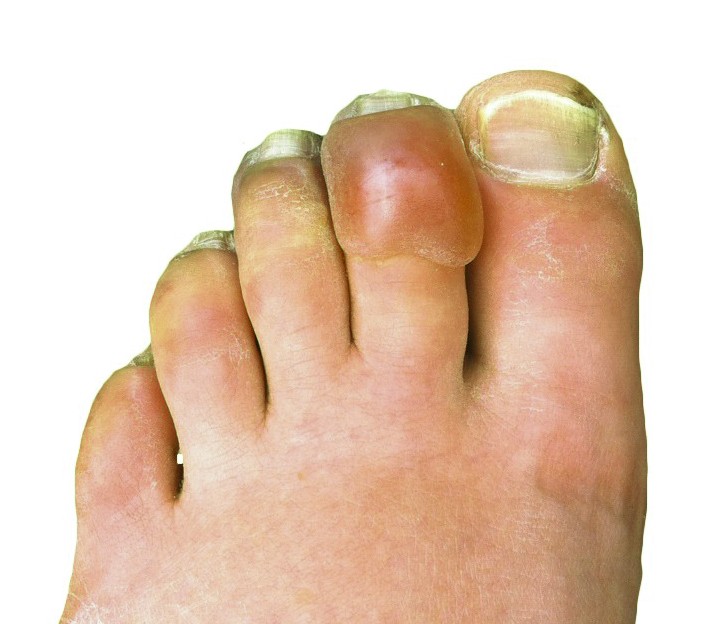
Fourth-degree
Full-thickness involvement extending into muscle, tendon, and bone, with cyanotic or blood-spot blistering and — because the tissue is this severely devascularized — often surprisingly little swelling. Deep, aching joint pain is typical. This is the depth most likely to progress to mummification and self- or surgical amputation.[5][6][1]

Because the injury genuinely evolves after rewarming, a first-assessment "degree" is provisional, not final — a wound that looks like a straightforward second-degree injury on day 1 can look unmistakably third-degree the next day.[1]

The Cauchy severity grading system — a better predictor once rewarming is complete
Applied immediately after rewarming, the Cauchy system grades severity 1-4 by the proximal extent of cyanosis or hemorrhagic blistering and correlates far more reliably with eventual amputation risk than the initial degree-based exam — it is the same system the British Columbia provincial wound-care guideline itself has adopted for its own assessment form.[7][1]
| Grade (assessed after rewarming) | Extent of cyanosis / hemorrhagic blistering | Approximate amputation risk |
|---|---|---|
| Grade 1 | No cyanosis, no hemorrhagic blisters | Approximately 0% |
| Grade 2 | Cyanosis or hemorrhagic blisters limited to the distal phalanx | Approximately 1% |
| Grade 3 | Cyanosis or hemorrhagic blisters extending into the mid or proximal phalanx | Roughly 39-83% |
| Grade 4 | Cyanosis or hemorrhagic blisters extending into the metacarpals/metatarsals | Approaching 100% |
[7] Re-grade on this same scale immediately after rewarming, daily for the first week, and weekly for the following 3-4 weeks — injury can genuinely progress clinically within the first 72 hours, and a Grade 2 injury assessed on day 1 can present as an unambiguous Grade 3 the next day.[1]
Differential diagnosis
- Frostnip — reversible, no actual tissue freezing below the epidermis, resolves fully with simple warming.[2]
- Chilblains (pernio) — itchy, painful, erythematous-to-violaceous papules or plaques from repetitive non-freezing cold and damp exposure; the skin never actually freezes and there is no blistering.
- Trench foot (immersion foot) — from prolonged wet cold exposure without an actual freeze; presents with macerated, numb, mottled skin rather than the frozen-then-thawed appearance of frostbite.
- Raynaud phenomenon — episodic digital vasospasm triggered by cold or stress, without a true freeze injury; typically a recurrent pattern rather than a single acute exposure event.
- Peripheral arterial occlusive disease or embolic ischemia — consider especially when the presentation seems disproportionate to the reported cold exposure, or in a patient with known vascular disease.
Risk Factors
- Prolonged exposure to freezing temperatures, worsened by wind chill and humidity — risk rises sharply once wind chill drops below approximately -27, and uncovered skin can freeze in minutes at the most extreme values.[4]
- Inadequate cold-weather clothing or footwear, or inadequate heating, shelter, or no shelter at all.[1]
- Homelessness and inadequate or unstable housing — a major and disproportionate driver of the most severe frostbite injuries seen in Canadian practice, not a peripheral detail; the most severe cases documented in the literature are frequently in patients who were homeless or otherwise unable to keep clothing and footwear dry.[1]
- Alcohol or substance use — impairs judgment and the ability to recognize and respond to numbness, and causes peripheral vasodilation that paradoxically increases heat loss from exposed skin even as it produces a subjective feeling of warmth.[1][2]
- Tobacco use in combination with cold exposure — nicotine-mediated vasoconstriction further reduces peripheral perfusion.[1]
- Poor arterial circulation at baseline — peripheral vascular/arterial disease, diabetes mellitus, Raynaud phenomenon.[1][2]
- Decreased mobility or sensation — spinal cord injury, prior stroke, peripheral neuropathy — reducing both the ability to move to warmth and the ability to feel early cold injury.[1]
- Impaired oxygenation — chronic obstructive pulmonary disease, heart failure, significant anemia.[1]
- Cognitive impairment (dementia, delirium) that could lead to wandering in cold weather or being inappropriately dressed for the conditions.[1]
- Extremes of age — infants and young children have less effective thermoregulation and cannot reliably communicate numbness; older adults also have impaired thermoregulation and are more likely to have a relevant comorbidity above.[1][2]
- A trauma event in a cold environment (for example, a fall) leading to hypotension from dehydration or blood loss, compounding heat loss.[1]
- A prior frostbite injury — the previously injured area is more prone to repeat injury.[1]
- High-altitude or wilderness recreation (mountaineering, backcountry skiing) and occupational cold exposure (outdoor trades, emergency services).[2][8]
- Psychiatric illness or medication effects that impair cold perception, judgment, or the ability to seek shelter.
Red Flags & Refer
Any of the following moves frostbite out of straightforward wound-care follow-up and into urgent, time-sensitive referral:
- Grade 2-4 frostbite (cyanosis or hemorrhagic blistering) at or proximal to a major joint (the distal interphalangeal joint of a digit, or an anatomically equivalent level) — arrange urgent transfer to a centre able to assess candidacy for thrombolytic or iloprost limb-salvage therapy. The window is short and closes quickly: thrombolysis is generally considered within 24 hours of injury and iloprost within 48 hours, and specialist consultation is best made within about 72 hours of injury even once the specific drug windows are closing, since salvage rates fall off sharply with delay.[5][9] Where the receiving centre is not obvious, a specialized frostbite referral network can help identify an appropriate centre with limb-salvage protocol experience.[10]
- Concurrent systemic hypothermia (core temperature below 35°C) — assess for and manage this alongside, and where genuinely life-threatening before, definitive local rewarming; do not let the visible severity of a local frostbite injury distract from a systemic, life-threatening problem.[2]
- Signs of compartment syndrome — a tensely swollen limb, pain out of proportion, worsening paresthesia, or diminishing pulses after rewarming — one of the few situations that needs urgent surgical evaluation before the injury has had time to demarcate.[2]
- Suspected concurrent trauma or hypotension in a patient found in a cold-exposure environment (for example, a fall preceding the exposure).[1]
- Circumferential frostbite of a digit or limb with any sign of vascular compromise once rewarmed.
- Signs of local wound infection — spreading erythema, increasing rather than decreasing pain, purulent discharge, malodour, or fever — the only situation in which antibiotics are actually indicated.
- Any grade 2-4 frostbite in a patient who is homeless, has unstable housing, or has no safe way to prevent re-exposure — arrange concurrent social-work and housing support alongside medical wound care; a wound genuinely cannot heal in the same conditions that caused it.[1]
- Uncertain tetanus immunization status in a patient with an open, contaminated, or necrotic frostbite wound.[11]
- A pediatric or cognitively impaired patient re-presenting with frostbite, or any suspicion of a supervision gap or self-neglect contributing to the injury.
Assessment & Diagnosis
History
Characterize the exposure — approximate temperature and wind chill, duration, how long ago it ended, and specifically whether the area was rewarmed and then refrozen at any point, since a freeze-thaw-refreeze cycle is substantially more damaging than a single freeze.[5][1] Ask about the risk factors above (peripheral vascular disease, diabetes, prior frostbite, alcohol or substance use), current medications relevant to thrombolysis candidacy (anticoagulants, recent bleeding, recent surgery or stroke), and tetanus immunization history.
Examination
Frostbite is fundamentally a clinical diagnosis.[2] Assess and document colour, blister type (clear versus hemorrhagic), tissue pliability, sensation, capillary refill, and distal pulses — ideally repeated at defined intervals rather than as a single snapshot, since the exam genuinely changes over the first hours and days (see Recognize the Condition for the Cauchy re-grading schedule).
Investigations
In a specialized or tertiary centre considering thrombolytic or iloprost therapy, Technetium-99 triple-phase bone scanning or magnetic resonance angiography (MRA) performed within the first days after injury can map tissue perfusion and help predict eventual amputation level and treatment candidacy.[2][5] This is not something a community pharmacist orders, but it is worth understanding why early referral genuinely matters clinically: a delay of even a day or two can close both the imaging window that identifies salvageable tissue and the treatment window itself.
Differential diagnosis
See Recognize the Condition for frostnip, chilblains, trench foot, Raynaud phenomenon, and peripheral arterial disease as the principal alternatives to actively rule out or rule in.
Treatment Targets
- Stop further heat loss and prevent any refreeze of already-injured tissue before definitive rewarming — field management matters as much to the final outcome as anything done in hospital.
- Rapidly and completely rewarm frostbitten tissue using a controlled-temperature water bath, once there is no remaining risk of refreezing.
- Control pain adequately through and after rewarming — this is a genuinely severe pain stimulus, and undertreated pain is a real, avoidable failure of care here.
- Identify candidates for time-sensitive thrombolytic or iloprost limb-salvage therapy quickly enough to still be within the treatment window.
- Limit the secondary microvascular/reperfusion injury with anti-thromboxane adjuncts (ibuprofen, aspirin, topical aloe vera) where appropriate.
- Prevent wound infection without defaulting to unnecessary prophylactic antibiotics.
- Protect tissue through the demarcation period rather than debriding or amputating prematurely, preserving the maximum possible amount of viable tissue.
- Confirm and update tetanus prophylaxis for any open, contaminated, or necrotic frostbite wound.
- Recognize and address the underlying exposure risk — including housing instability and substance use — to prevent recurrence, not only treat the presenting wound.
Choose Initial Treatment
Field first aid — and the two genuine myths to correct
Every case, immediately move the patient out of the cold, remove wet clothing and replace with dry layers, and remove jewelry and constrictive items from the affected area before swelling makes this difficult.[1] Never rub or massage a frostbitten area — this is a genuine and important myth to correct, since the mechanical friction directly worsens ice-crystal-related tissue damage rather than helping restore circulation.[9][8] Never apply dry heat — a stove, campfire, car exhaust, or heating pad — to insensate, freezing-cold tissue; because sensation is already impaired, this frequently causes a superimposed thermal burn on top of the frostbite.[2]
Do not attempt field rewarming if there is any realistic chance of the area refreezing before reaching definitive care — for example, before a patient can be transported indoors or to hospital. A freeze-thaw-refreeze cycle causes substantially more tissue damage than leaving the area frozen a little longer and rewarming it properly once, so field rewarming should generally be deliberately deferred until refreezing risk is fully eliminated.[1][8]
Rapid rewarming — the definitive intervention
Once there is no remaining risk of refreezing, immerse the affected area in a circulating water bath controlled between approximately 37°C and 39°C, checked with an actual water thermometer roughly every 10 minutes and topped up with hot water as needed — some BC provincial nursing protocols specify a slightly higher ceiling of 39-40°C maximum, and StatPearls cites a wider 40-42°C range as an alternative; the exact number varies a little between published protocols, but the underlying principle across all of them is the same.[5][1][2] Continue for approximately 30 minutes or until the tissue becomes soft, pliable, and visibly reperfused (a red-purple colour returns), whichever comes first.[5][1] Water hotter than this range risks a superimposed thermal burn on tissue that is still largely insensate, without added benefit — use an actual thermometer rather than a hand or elbow test wherever one is available.[2] If clothing such as a sock or mitten has frozen to the skin, leave it in place; the water bath will loosen it and allow easier, less traumatic removal.[1] For the nose, ears, or a body-surface injury that cannot easily be immersed, apply gauze or cloth well-dampened with water at the same controlled temperature instead, re-dampening frequently and checking temperature the same way.[1]
Analgesia before and during rewarming
Rewarming is genuinely and severely painful — ensure an appropriate level of analgesia is in place before immersion begins, not only after the patient reports pain.[1] 1st line ibuprofen at a frostbite-specific anti-inflammatory dose — 12 mg/kg/day in divided doses, to a maximum of 2400 mg/day — meaningfully higher than the standard self-care OTC ceiling and intended for short-term, medically supervised use in the acute post-injury period, not routine analgesia.[5][9] In hospital IV ketorolac can provide faster pain relief than an oral agent when rewarming is imminent.[5] Severe pain a titratable opioid (morphine, hydromorphone, or fentanyl) is appropriate on top of scheduled NSAID therapy for pain that is not otherwise controlled — reserve for genuine breakthrough need rather than as the default first agent.[2]
Advanced limb-salvage therapy for severe, deep frostbite
For Grade 2-4 injury at or proximal to a major joint, early specialist consultation should specifically address candidacy for thrombolytic or prostacyclin therapy — both measurably reduce amputation risk in this group, though it is worth being transparent that the randomized-trial evidence behind both remains very limited (one small trial, judged very-low-certainty by a 2020 Cochrane review), even as they are now routinely endorsed in clinical protocols.[12][5][9]
Representative protocols
Thrombolysis (alteplase/tPA)
Consider within 24 hours of injury for Grade 3-4 injury at or proximal to the distal interphalangeal joint. A representative regimen: Combo: alteplase 3 mg IV bolus (30 mL of a 0.1 mg/mL solution) + then an alteplase infusion at 1 mg/mL (10 mL/hr) + with concurrent heparin 500 units/hr IV. Published series report limb-salvage rates ranging widely (0-100%) with a weighted average around 79%, underscoring how strongly outcome depends on how early treatment starts.[5][9]
Iloprost (prostacyclin analogue)
Consider within 48 hours of injury for deep (Grade 2-4) frostbite, alone or alongside thrombolysis. A representative titration: start at 0.5 ng/kg/min, increasing by 0.5 ng/kg/min every 30 minutes over days 1-3 up to a maximum of 2 ng/kg/min, administered over approximately 6 hours daily. Reported salvage rates are particularly favourable for Grade 2-3 injury (up to 100% in some series) and lower, though still meaningful, for Grade 4 (around 50%).[5][9]
Anti-thromboxane adjuncts
Early days of injury in addition to its analgesic effect, ibuprofen provides systemic blocking of both prostaglandins and thromboxane that may help limit the extent of the secondary microvascular injury.[1] Aspirin works through the same anti-thromboxane mechanism and is a reasonable adjunct where an NSAID is not appropriate. Do not give either NSAIDs or aspirin to a patient receiving alteplase, enoxaparin, heparin, or any other anticoagulant, given the added bleeding risk on top of an already anticoagulated, thrombolysed patient.[1] Topical aloe vera may inhibit thromboxane production at the wound level; apply an aloe vera-based product with each dressing change for at least the first 5 days after injury to all frostbite-injured tissue (mottled or cyanotic skin, open wounds, de-roofed or aspirated clear blisters, and hemorrhagic blistered areas) — evidence for this specific practice remains modest, but the mechanistic rationale is sound and it is genuinely low-risk.[1][9]
Antibiotics — only for actual infection
Do not use antibiotics prophylactically on a clean frostbite wound. Reserve a topical (mupirocin, fusidic acid) or systemic antimicrobial for a wound with an actual sign of local infection.
Wound care — protect, don't rush
Blister management: aspirate or debride small, clear (serous) blisters, since the thromboxane- and prostaglandin-rich fluid inside them can itself cause further tissue damage if left in place — this should be done by a clinician competent in conservative sharp wound debridement.[1] Leave hemorrhagic (blood-filled) blisters intact — they indicate deep tissue and deep vessel injury, and debriding them adds injury rather than helping; if one impinges on a joint, it may reasonably be aspirated, but only after the first week of care.[1][9] Once an area evolves into dry eschar, maintain it and keep it open to air rather than soaking it — wound healing frequently occurs underneath the eschar itself, or the tissue mummifies and self-amputates over time.[1]
Delayed debridement — the central teaching point of this section: the true extent of tissue loss is often not knowable for 3-4 weeks, and the decision to proceed with surgical amputation is deliberately deferred, sometimes for up to 6 weeks, specifically to let the injury fully demarcate.[1][2] This is exactly the logic behind the well-known clinical teaching aphorism that "frostbite is not amputated in winter, it's amputated in summer" — outside a genuine surgical emergency (compartment syndrome, or established wet-gangrene infection), premature amputation removes tissue that might otherwise have recovered, and the safe default is to wait for clear demarcation rather than to act on how bad a wound looks in the first days.
Tetanus prophylaxis
Treat a frostbite wound with blistering, an open wound, or necrotic/devitalized tissue as a tetanus-prone wound.[11] Confirm at every assessment if the patient has had fewer than 3 lifetime doses of a tetanus-toxoid-containing vaccine, or the history is uncertain, give a dose now (Td or Tdap, whichever is due) and also give tetanus immunoglobulin, since this is a tetanus-prone wound rather than a clean minor one. If the patient has had 3 or more documented doses, a booster is due if it has been 5 years or more since the last dose — the shorter, wound-specific interval, not the usual 10-year interval used for a clean wound.[11]
Non-Pharmacologic Treatment
- Elevate the affected limb to reduce the substantial edema that develops in the initial days after injury.[1]
- Protect the injured area from trauma — a bed cradle to keep blanket weight off an injured foot, and no weight-bearing on a foot injury involving more than the toes until the injury has stabilized.[1]
- Splint digits or an extremity as directed by occupational or physical therapy, and encourage range-of-motion exercises, to prevent or minimize joint contractures — avoid compression wrapping in the early weeks specifically, since it can compound ischemia in already-compromised tissue.[1]
- Support nutrition — a high-calorie, high-protein diet and adequate fluid intake meaningfully support wound healing; involve a registered dietitian where available.[1]
- Advise against tobacco and alcohol use during recovery, since both cause further vasoconstriction to already-injured tissue; offer non-nicotine substitutes and connect the patient with relevant community services rather than simply telling them to stop.[1]
- Do not soak an area that has progressed to dry eschar — showering is fine, but a bath, dishwashing without gloves, or wet socks/shoes should be avoided until the area is fully healed.[1]
- Once healed, protect the area from cold re-exposure with appropriately warm, dry clothing and footwear — previously frostbitten tissue is genuinely more susceptible to repeat injury.[1]
- Protect healed skin from the sun with a strong sunscreen and physical covering for at least several months, since new epithelium is unusually UV-sensitive.[1]
- Address the underlying exposure risk directly — involve social work for housing instability or a connection to community shelter and substance-use support services wherever this contributed to the injury; the wound cannot reliably heal, or stay healed, in the same conditions that caused it.[1]
Pharmacologic Treatment Options
| Drug / intervention | Role | Dose / use | Important adverse effects | Teaching points |
|---|---|---|---|---|
| Ibuprofen Preferred | 1st line analgesia plus anti-thromboxane effect during and after rewarming | 12 mg/kg/day PO in divided doses, maximum 2400 mg/day (frostbite-specific dose, higher than standard OTC use) | GI upset, renal effects; do not combine with thrombolysis/anticoagulation | Ensure analgesia is in place before rewarming begins, not only after pain is reported. |
| Acetaminophen Preferred | Adjunct analgesia, or 1st line where NSAIDs are contraindicated | 500-1000 mg PO Q4-6H, maximum 4 g/day (lower with hepatic impairment) | Hepatotoxicity with overdose or significant hepatic impairment | Combine with ibuprofen for multimodal pain control. |
| Ketorolac Alternative | Faster-onset IV analgesia immediately before hospital rewarming | 15-30 mg IV, maximum 5 days total | GI bleeding, renal impairment, platelet inhibition | Avoid in significant renal impairment, active bleeding risk, or alongside thrombolysis/anticoagulation. |
| Morphine Alternative | Breakthrough pain during/after rewarming not controlled by scheduled NSAID/acetaminophen | 2-4 mg IV Q3-4H PRN | Respiratory depression, sedation, constipation, nausea | Reserve for genuine breakthrough pain, not as the default first agent. |
| Hydromorphone Alternative | Breakthrough pain, particularly if renal function is impaired | 0.2-0.5 mg IV Q3-4H PRN | Respiratory depression, sedation, constipation, nausea | Preferred over morphine in significant renal impairment. |
| Fentanyl Alternative | Rapid-onset breakthrough analgesia, particularly pre-procedural | 25-50 mcg IV, titrated to effect | Respiratory depression, sedation, chest wall rigidity at high doses | Short duration of action supports careful titration during a painful, time-limited procedure like rewarming. |
| Acetylsalicylic acid (aspirin) Special situation | Anti-thromboxane adjunct where an NSAID is not appropriate | 325-650 mg PO daily during the acute post-injury period, per protocol | GI upset, bleeding risk | Do not combine with alteplase or another anticoagulant. |
| Alteplase (tPA) Special situation | Thrombolysis for Grade 3-4 deep frostbite at or proximal to a major joint, within 24 hours of injury | 3 mg IV bolus then infusion 1 mg/mL (10 mL/hr), with concurrent heparin 500 units/hr IV, per specialized-centre protocol | Bleeding, including intracranial hemorrhage | Time-critical; consult a centre with limb-salvage protocol experience as early as possible. |
| Iloprost Special situation | Prostacyclin therapy for deep frostbite, within 48 hours of injury, alone or with alteplase | 0.5 ng/kg/min IV, titrated by 0.5 ng/kg/min every 30 min over days 1-3 to a maximum of 2 ng/kg/min, given over approximately 6 hours daily | Headache, flushing, hypotension | No Pharmasist Drug Database monograph; administered only in a specialized-centre protocol. |
| Aloe vera (topical) Alternative | Adjunct wound-level anti-thromboxane effect, first 5 days after injury | Apply with each dressing change to injured tissue; ears/nose may be left open with product reapplied every few hours | Local irritation, uncommon | Modest evidence, mechanistically reasonable, and low-risk. |
| Mupirocin Special situation | Confirmed or strongly suspected local wound infection only | Apply to the affected area 3 times daily for up to 10 days | Local irritation, rare hypersensitivity | Not for prophylactic use on a clean frostbite wound. |
| Fusidic acid Alternative | Alternative topical antimicrobial for confirmed local infection | Apply 3-4 times daily | Local irritation, rare hypersensitivity | A reasonable alternative to mupirocin when local infection is confirmed. |
| Tetanus-diphtheria toxoid (Td) Preferred | Tetanus-prone frostbite wound, 3 or more prior documented doses, last dose 5 years or more ago | Single IM dose per product monograph | Local injection-site reaction, low-grade fever | The 5-year interval for a tetanus-prone wound is shorter than the usual 10-year clean-wound interval. |
| Tetanus immunoglobulin (TIg) Special situation | Unknown or fewer than 3 prior tetanus-toxoid doses, with a tetanus-prone frostbite wound | Per product monograph, given with the toxoid dose at a separate injection site | Local injection-site reaction; rare hypersensitivity | Needed in addition to the toxoid dose for a tetanus-prone wound specifically. |
| Gabapentin Special situation | Chronic neuropathic pain or cold-induced dysesthesia as a late complication | Start 100-300 mg PO at bedtime, titrate per response and tolerability | Sedation, dizziness, peripheral edema | Reserve for a genuine chronic-pain complication, not routine acute-phase use. |
| Pregabalin Alternative | Alternative for chronic neuropathic pain as a late complication | Start 25-75 mg PO twice daily, titrate per response and tolerability | Sedation, dizziness, peripheral edema | Renal dose adjustment required. |
| Amitriptyline Alternative | Alternative for chronic neuropathic pain, particularly with a sleep-disruption component | Start 10-25 mg PO at bedtime, titrate per response and tolerability | Anticholinergic effects, sedation, QTc prolongation | Use cautiously in older adults given anticholinergic burden. |
Special Populations
Homelessness and housing instability
This is not a minor demographic footnote — patients who are homeless or otherwise unable to keep clothing and footwear dry are disproportionately represented among the most severe (Grade 3-4) frostbite injuries seen in Canadian practice.[1] Apply a lower threshold for admission and social-work involvement in this group, and build a discharge plan that genuinely accounts for where the patient is actually going to be able to keep the wound dry, warm, and protected — a wound-care plan that assumes stable housing is not a realistic plan for a patient without it.
Alcohol and substance use disorder
Beyond contributing to the original injury (see Risk Factors), ongoing use during recovery continues to cause peripheral vasoconstriction that can worsen healing — approach this the same way as the tobacco-cessation counselling in Non-Pharmacologic Treatment: offer a genuine connection to support services rather than a simple instruction to stop.[1]
Peripheral vascular disease, diabetes, and Raynaud phenomenon
Baseline poor perfusion both increases initial injury severity and slows healing — apply closer follow-up and a lower threshold to escalate a wound that is not progressing as expected.
Pediatrics
Children have a higher surface-area-to-mass ratio and less effective thermoregulation than adults, and often cannot reliably describe or localize numbness — apply a lower threshold to bring a cold-exposed child in for assessment even before frank frostbite is obvious. Weight-based dosing applies throughout the pharmacologic options above; confirm pediatric-specific dosing against each drug's own Drug Database entry before use.
Older adults
Impaired thermoregulation and a higher prevalence of the comorbidities listed in Risk Factors (peripheral vascular disease, diabetes, cognitive impairment, reduced mobility) both increase injury risk and slow recovery — apply a lower referral threshold and watch closely for anticholinergic burden if amitriptyline is used for a chronic-pain complication.
Pregnancy and breastfeeding
Acetaminophen is the preferred systemic analgesic throughout pregnancy; avoid an NSAID from about 20 weeks of pregnancy onward given the established Health Canada advisory on fetal renal impairment and low amniotic fluid with later-pregnancy NSAID use, and use acetaminophen instead. Thrombolytic and anticoagulant therapy in pregnancy is a genuinely high-stakes, specialist-only decision weighing maternal limb salvage against bleeding risk — this is not a community-pharmacy decision, but it is worth knowing that pregnancy does not automatically exclude a patient from being considered. For breastfeeding, acetaminophen and ibuprofen are both considered compatible at standard doses; confirm opioid and gabapentinoid specifics against each drug's own Drug Database entry if used during lactation.
Renal and hepatic impairment
Reduce or avoid NSAID and ketorolac use in significant renal impairment; adjust gabapentin and pregabalin doses for reduced renal function. Reduce the total daily acetaminophen dose in significant hepatic impairment. Alteplase and heparin carry bleeding risk that is not primarily organ-function-driven but still warrants specialist dosing and monitoring in either renal or hepatic impairment.
Monitoring & Follow-Up
Re-grade the injury on the Cauchy scale (see Recognize the Condition) immediately after rewarming, daily for the first week, and weekly for the following 3-4 weeks — this is the single highest-yield follow-up pattern in this chapter, since the injury genuinely evolves and a wound that looked mild on day 1 can look materially worse within 72 hours.[1]
- At each dressing change, reassess for infection (spreading erythema, increasing pain, purulent discharge, fever) and escalate promptly if present, rather than continuing routine wound care unchanged.
- Confirm the patient is attending every scheduled wound-care appointment during the first few weeks — this is exactly the period during which the true extent of the injury is being determined, and missed follow-up genuinely changes outcomes here.[1]
- Track for developing joint stiffness or contracture and involve occupational or physical therapy promptly if range of motion is not being maintained.
- Confirm tetanus prophylaxis was actually completed, not only recommended.
- Do not finalize an amputation decision before the injury has had adequate time to demarcate — 3-4 weeks at minimum, and up to 6 weeks in some protocols.[1][2]
- At each visit, ask specifically about ongoing housing stability and substance use, and reconnect the patient with social work or community services if the underlying exposure risk has not actually been addressed.
- Screen for and address chronic sequelae at longer-term follow-up — paresthesias, cold intolerance, nail changes, altered sweating, muscle atrophy, phantom or chronic neuropathic pain, and complex regional pain syndrome are all recognized long-term complications.[2]
- Once healed, counsel on sun protection of new skin for several months and on protecting the previously injured area from cold re-exposure indefinitely, given its increased susceptibility to repeat injury.[1]
Treatment Failure / Next Step
- Pain not controlled by scheduled ibuprofen and/or acetaminophen during or after rewarming: escalate to a titratable opioid rather than simply reassuring the patient that severe pain is expected — undertreated pain is itself an avoidable failure of care here.
- Deepening cyanosis, new hemorrhagic blistering, or worsening pain in the days after initial assessment: re-grade on the Cauchy scale and escalate to specialist reassessment — this may still be within a thrombolysis/iloprost treatment window if caught early enough.
- New spreading erythema, increasing pain after the first 48 hours, purulent discharge, or fever: treat as a possible wound infection and escalate; this is the one situation that actually warrants an antimicrobial.
- Developing joint stiffness or reduced range of motion at a joint near the injury: refer promptly for occupational/physical therapy input rather than waiting to see if it resolves on its own.
- Signs of compartment syndrome at any point: this is a surgical emergency independent of the usual "wait for demarcation" principle — refer immediately.
- A wound that is not clearly improving, or a housing/substance-use situation that has not actually changed, by the time dressings are otherwise ready to stop: escalate the social-work and community-service connection rather than repeating the same wound-care instructions.
- Emerging chronic neuropathic pain, cold intolerance, or features suggesting complex regional pain syndrome at longer-term follow-up: consider a trial of gabapentin, pregabalin, or amitriptyline (see Pharmacologic Treatment Options) and refer for pain-specialist input if this does not resolve with a reasonable trial.
Common Errors to Avoid
- Rubbing or massaging a frostbitten area to "get the circulation going" — this directly worsens tissue damage rather than helping.[9]
- Attempting field rewarming when there is a real chance of refreezing before reaching definitive care — a freeze-thaw-refreeze cycle causes more damage than simply waiting.[1]
- Using dry heat (a stove, fire, car exhaust, or heating pad) to rewarm insensate tissue, risking a superimposed thermal burn.[2]
- Rewarming in water that is too hot in an attempt to "speed things up," rather than using a controlled, thermometer-checked temperature.
- Deroofing or debriding a hemorrhagic blister — leave it intact; this is different from the correct approach to a small clear blister.[1]
- Finalizing an amputation decision, or setting patient expectations around one, before the injury has had adequate time (weeks, not days) to demarcate — "frostbite is not amputated in winter, it's amputated in summer."[1][2]
- Reaching for prophylactic antibiotics on a clean frostbite wound rather than reserving them for an actual sign of infection.
- Giving an NSAID or aspirin to a patient who is receiving alteplase, heparin, enoxaparin, or another anticoagulant, without checking for this interaction first.[1]
- Treating housing instability or ongoing substance use as outside the scope of wound-care follow-up, when it is very often the actual reason the injury happened and the reason it will recur.[1]
- Underdosing analgesia before rewarming begins, rather than ensuring adequate pain control is in place proactively.[1]
- Missing or delaying a referral for possible thrombolytic/iloprost therapy because the treatment-window urgency was not recognized at first contact.[5][9]
- Not asking about tetanus immunization status on an open or necrotic frostbite wound.[11]
Clinical Decision Algorithm
Drug Tables
How to use this table: Doses are adult doses and require patient-specific confirmation (renal/hepatic function, weight, allergy history). Pediatric dosing is weight-based per the current product monograph unless stated. Drug pricing is intentionally omitted. Select any drug name to open its complete Pharmasist Drug Database page.
Analgesia Through and After Rewarming
Rewarming is severely painful — ensure adequate analgesia is in place before immersion begins, escalating to a titratable opioid for genuine breakthrough pain rather than accepting undertreated pain as expected.
| Drug | Dosage | Adverse effects | Drug interactions | Comments |
|---|---|---|---|---|
| Ibuprofen | Adults: 12 mg/kg/day PO in divided doses, maximum 2400 mg/day | GI upset, renal effects, fluid retention | Do not combine with alteplase, heparin, enoxaparin, or another anticoagulant | Frostbite-specific anti-thromboxane dose, higher than standard OTC use — for short-term, medically supervised use only. |
| Acetaminophen | Adults: 500-1000 mg PO every 4-6 hours, maximum 4 g/day (lower with hepatic impairment) | Hepatotoxicity with overdose or in significant hepatic impairment | None significant at standard doses | Combine with ibuprofen for multimodal analgesia, or use alone where an NSAID is contraindicated. |
| Ketorolac | Adults: 15-30 mg IV every 6 hours | GI bleeding, renal impairment, platelet inhibition | Increased bleeding risk with anticoagulants; avoid with other NSAIDs | IV route can provide faster relief than oral immediately before hospital rewarming; limit to 5 days total. |
| Morphine | Adults: 2-4 mg IV every 3-4 hours PRN | Respiratory depression, sedation, constipation, nausea | Additive CNS/respiratory depression with other sedatives | Reserve for breakthrough pain on top of scheduled NSAID/acetaminophen. |
| Hydromorphone | Adults: 0.2-0.5 mg IV every 3-4 hours PRN | Respiratory depression, sedation, constipation, nausea | Additive CNS/respiratory depression with other sedatives | Preferred over morphine in significant renal impairment. |
| Fentanyl | Adults: 25-50 mcg IV, titrated to effect | Respiratory depression, sedation, chest wall rigidity at high doses | Additive CNS/respiratory depression with other sedatives | Rapid onset and short duration support careful titration during a time-limited painful procedure. |
Anti-Thromboxane Adjuncts
Aim to limit the secondary microvascular/reperfusion injury that unfolds over the days after rewarming, on top of direct ice-crystal cellular injury from the freeze itself.
| Drug | Dosage | Adverse effects | Drug interactions | Comments |
|---|---|---|---|---|
| Acetylsalicylic acid (aspirin) | Adults: 325-650 mg PO daily during the acute post-injury period, per protocol | GI upset, bleeding risk | Do not combine with alteplase or another anticoagulant | Anti-thromboxane adjunct where an NSAID is not appropriate. |
| Aloe vera (topical) | Adults/children: Apply to injured tissue with each dressing change | Local irritation, uncommon | None significant | Modest evidence, mechanistically reasonable, low-risk; apply with each dressing change for at least the first 5 days. |
Advanced Limb-Salvage Therapy — Specialized-Centre Protocols Only
Randomized-trial evidence remains very limited (one small trial, very-low-certainty per a 2020 Cochrane review), but both agents are now routinely guideline-endorsed for severe deep frostbite within a narrow, time-critical treatment window.
| Drug | Dosage | Adverse effects | Drug interactions | Comments |
|---|---|---|---|---|
| Alteplase (tPA) | Adults: 3 mg IV bolus (30 mL of 0.1 mg/mL), then infusion 1 mg/mL at 10 mL/hr, with concurrent heparin 500 units/hr IV | Bleeding, including intracranial hemorrhage | Do not combine with NSAIDs or aspirin | Consider within 24 hours of injury for Grade 3-4 frostbite at or proximal to a major joint; time-critical. |
| Iloprost | Adults: 0.5 ng/kg/min IV, titrated by 0.5 ng/kg/min every 30 min over days 1-3 to a maximum of 2 ng/kg/min, over approximately 6 hours daily | Headache, flushing, hypotension | Additive hypotension with other vasodilators | Consider within 48 hours of injury for deep frostbite, alone or with alteplase; no Drug Database monograph. |
Topical Antimicrobials — Confirmed Infection Only
Reserve for a wound with an actual sign of local infection; do not use prophylactically on a clean frostbite wound.
| Drug | Dosage | Adverse effects | Drug interactions | Comments |
|---|---|---|---|---|
| Mupirocin | Adults/children: Apply to the affected area 3 times daily for up to 10 days | Local irritation, rare hypersensitivity | None significant at standard topical use | Reserve for confirmed or strongly suspected local wound infection. |
| Fusidic acid | Adults/children: Apply 3-4 times daily | Local irritation, rare hypersensitivity | None significant at standard topical use | A reasonable alternative to mupirocin when local infection is confirmed. |
Tetanus Prophylaxis for a Tetanus-Prone Frostbite Wound
Blistering, open, or necrotic frostbite tissue is a tetanus-prone wound — confirm immunization history at every assessment and use the shorter, wound-specific intervals below rather than the usual 10-year clean-wound interval.
| Drug | Dosage | Adverse effects | Drug interactions | Comments |
|---|---|---|---|---|
| Tetanus-diphtheria toxoid (Td) | Adults/adolescents: Single IM dose per product monograph | Local injection-site reaction, low-grade fever | None significant | For 3 or more prior documented doses with the last dose 5 years or more ago. |
| Tdap | Adults/adolescents: Single IM dose per product monograph | Local injection-site reaction, low-grade fever | None significant | Use in place of Td when a pertussis-component booster is also due. |
| Tetanus immunoglobulin (TIg) | Adults/children: Per product monograph, given with the toxoid dose at a separate injection site | Local injection-site reaction; rare hypersensitivity | None significant | Needed in addition to the toxoid dose when the patient has had fewer than 3 prior doses, or the history is uncertain. |
Chronic Neuropathic Pain and Cold-Induced Complications
For a late complication (persistent cold-induced dysesthesia, phantom pain, or complex regional pain syndrome) rather than acute-phase management.
| Drug | Dosage | Adverse effects | Drug interactions | Comments |
|---|---|---|---|---|
| Gabapentin | Adults: Start 100-300 mg PO at bedtime, titrate per response and tolerability | Sedation, dizziness, peripheral edema | Additive CNS depression with other sedatives | Reserve for a genuine chronic-pain complication; titrate to response. |
| Pregabalin | Adults: Start 25-75 mg PO twice daily, titrate per response and tolerability | Sedation, dizziness, peripheral edema | Additive CNS depression with other sedatives | Alternative to gabapentin; requires renal dose adjustment. |
| Amitriptyline | Adults: Start 10-25 mg PO at bedtime, titrate per response and tolerability | Anticholinergic effects, sedation, QTc prolongation | Additive CNS/anticholinergic effects with other such agents | Particularly useful with a sleep-disruption component; use cautiously in older adults. |
Professional reference only. Apply clinical judgment and verify patient-specific decisions against current authoritative guidance and product information.