Hemorrhoids
Hemorrhoids
References
- Improving Hemorrhoid Outcomes: A Narrative Review and Best Practices Guide for Pharmacists — Pharmacy (Nakhla N, Hospattankar A, Siddiqui K, Bridgeman MB). Pharmacy (Basel) 2025;13(4):105
- Hemorrhoids: Prevention and Treatment — Canadian Digestive Health Foundation (Spichak S). Canadian Digestive Health Foundation, updated December 1, 2025
- The American Society of Colon and Rectal Surgeons Clinical Practice Guidelines for the Management of Hemorrhoids — Diseases of the Colon & Rectum (Hawkins AT, Davis BR, Bhama AR, Fang SH, Dawes AJ, Feingold DL, Lightner AL, Paquette IM; ASCRS Clinical Practice Guidelines Committee). Dis Colon Rectum 2024;67(5):614-623
- Diagnosis and Treatment of Hemorrhoids: AGA Clinical Practice Update — Clinical Gastroenterology and Hepatology (Qureshi W, Hoang S, Frye J, Rao SSC). Clin Gastroenterol Hepatol 2026 Apr 29 (Epub ahead of print)
- Management of Hemorrhoids: Guidelines From the ASCRS — American Family Physician (Arnold MJ, Smith D). Am Fam Physician 2025;112(6):694-695
Clinical Snapshot
Hemorrhoids are enlarged, symptomatic vascular cushions of the anal canal — a normal anatomic structure that becomes a "disease" only once it is swollen, prolapsed, thrombosed, or bleeding enough to cause symptoms.[1] They are classified by location relative to the dentate line: internal hemorrhoids arise above the dentate line from the internal hemorrhoidal plexus, are covered by mucosa, carry visceral (not somatic) innervation, and are therefore usually painless unless they prolapse, strangulate, or thrombose; external hemorrhoids arise below the dentate line, are covered by squamous epithelium supplied by the pudendal nerve and sacral plexus, and are the type that typically causes pain, especially when thrombosed; mixed hemorrhoids bridge both plexuses.[1] Internal hemorrhoids are further graded I-IV by degree of prolapse using the Goligher classification, which — despite real limitations, including that it was developed for surgical settings and does not track symptom severity — remains the standard reference point for matching treatment intensity to disease severity; no equivalent formal grading system exists for external hemorrhoids, which are assessed by symptoms and examination findings instead.[1] Hemorrhoidal disease is extremely common: an estimated 50-70% of Canadians will develop hemorrhoids at some point in their life, and about half of adults over age 50 report symptoms.[2] It is also one of the more frequently over-diagnosed anorectal conditions — in one study, only 18% of patients who believed their symptoms were caused by hemorrhoids actually had them on examination, with the remainder driven by other anorectal or colorectal conditions.[1] That gap is exactly why hemorrhoids belong in self-care: most confirmed, uncomplicated disease responds well to conservative measures and OTC therapy, but the pharmacist's first and most important job is confirming the diagnosis and screening out the minority of presentations — particularly new or unexplained rectal bleeding — that need medical assessment before any self-care plan begins.[3][4]
Recognize the Condition
Goligher grading of internal hemorrhoids
Grade I
Anal cushions bleed but do not prolapse through the anus. Painless bright red bleeding — coating the stool, dripping into the bowl, or streaked on toilet tissue — is often the only symptom.[1]
Grade II
Anal cushions prolapse through the anus with straining or defecation but reduce spontaneously once straining stops.[1]
Grade III
Anal cushions prolapse with straining or exertion and require the patient to manually push them back into the anal canal.[1]
Grade IV
Prolapse is permanent and irreducible — the tissue stays outside the anal canal at all times.[1]
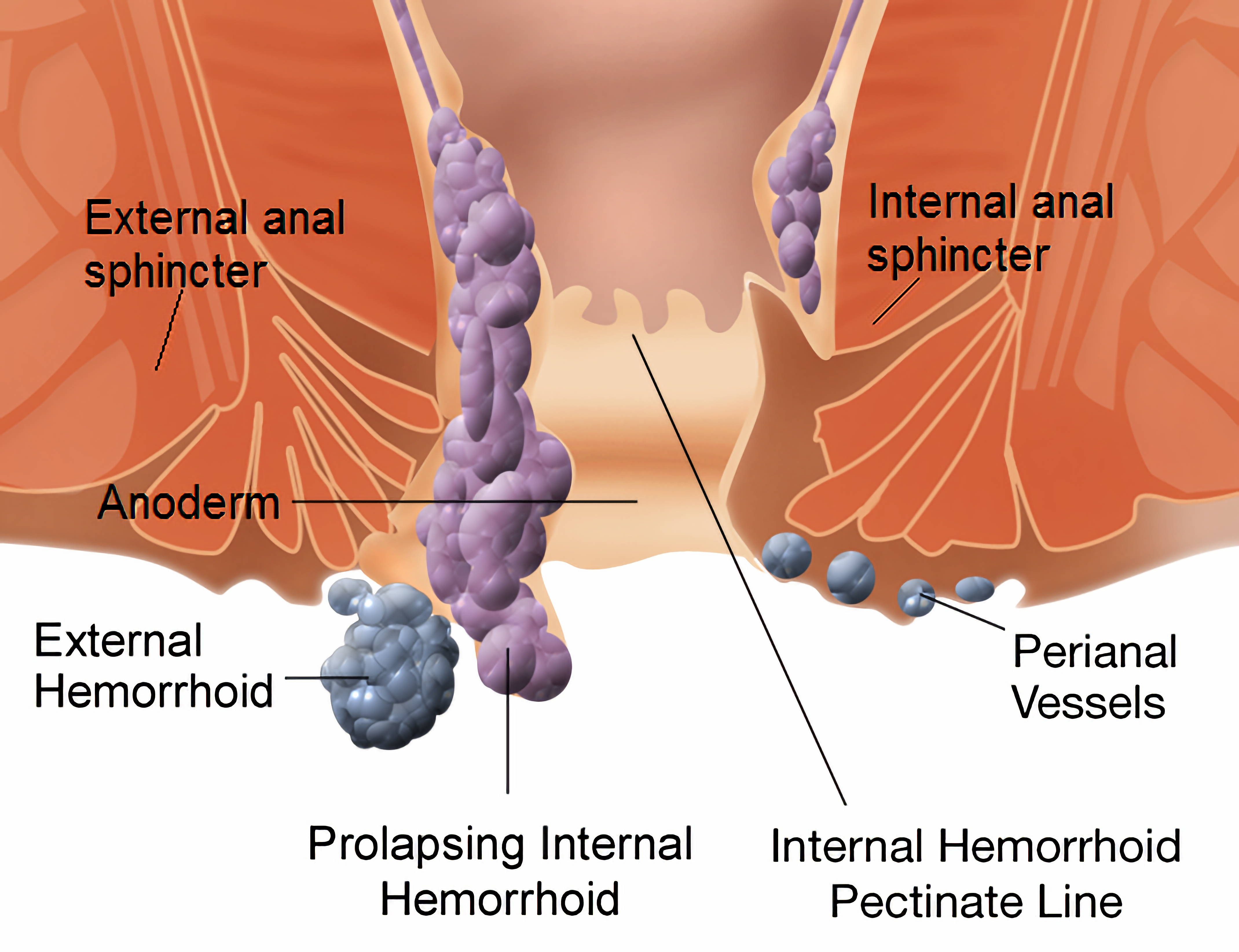
External hemorrhoids present differently: because they carry somatic sensory innervation, they cause pain — most often when a vein within one thromboses, producing a tense, tender, bluish-purple perianal lump that can appear suddenly.[1] Mixed hemorrhoids, where internal and external plexuses are both involved and bridge the dentate line, combine features of both.[1]
Symptoms across grades and types include painless bright red bleeding (the classic first symptom of internal disease), pruritus, mucus discharge, fecal seepage or soiling, a palpable lump, and — mainly with prolapse, thrombosis, or a coexisting fissure — pain.[1] Symptom severity does not track cleanly with Goligher grade, so use the grading system as a guide to selecting treatment intensity, not as a predictor of how bothered a given patient will be by their symptoms.[1]
Risk Factors
- Age — prevalence peaks between 45 and 65 years and is uncommon under age 20.[1]
- Pregnancy — increased pelvic venous pressure and hormonal changes cause anal cushion congestion; more than 1 in 4 women experience hemorrhoids during pregnancy, and symptoms often resolve after delivery.[2]
- Chronic constipation and straining during defecation.[1]
- Chronic diarrhea — increasingly recognized as a contributor alongside constipation, not simply its protective opposite.[1]
- Low dietary fiber intake, which drives the constipation and straining above.[2]
- Obesity, including abdominal obesity specifically.[1]
- Sedentary lifestyle and prolonged sitting or standing; conversely, at least 150 minutes/week of moderate physical activity has been associated with lower hemorrhoid occurrence.[1]
- Family history of hemorrhoidal disease.[1]
- Depressive mood — population studies have found a consistent association between depression and hemorrhoid prevalence, for reasons not yet fully understood.[1]
- Prolonged toilet time, including habits such as reading or using a phone while on the toilet.[1]
Red Flags & Refer
Never assume rectal bleeding is "just hemorrhoids" without first considering — and, where indicated, ruling out — more serious causes, especially in patients over 50 or with any alarm feature below. Increased hemorrhoid-treatment prescribing has been documented in the year before a rectal cancer diagnosis, a reminder of how easily true pathology gets misattributed to a "benign," embarrassing, self-diagnosed condition.[1] Escalate to medical assessment — rather than proceeding with routine self-care — for any of the following:
- Age over 65 — warrants additional scrutiny and a lower threshold for referral even with typical-sounding symptoms.[1]
- Unintentional weight loss.[1]
- Signs of iron-deficiency anemia — fatigue, breathlessness, pallor, or a known low hemoglobin.[1]
- Personal or family history of colorectal cancer or polyps, particularly a first-degree relative diagnosed before age 50 or more than one affected first-degree relative.[1]
- Personal or family history of inflammatory bowel disease.[1]
- A change in stool caliber, frequency, or consistency, or stool that is dark red or tarry (melena) rather than bright red blood clearly associated with defecation.[1]
- Bleeding with no obvious hemorrhoidal source on examination, or any new bleeding in a patient who has never had a hemorrhoid diagnosis confirmed by anoscopy — anoscopy should be performed on every new suspected-hemorrhoid presentation whenever possible, and colonoscopy considered when no clear bleeding source is found or when abdominal pain or new/progressive constipation accompanies the bleeding.[4][5]
- Severe anal pain — more often a fissure or a perianal/perirectal abscess than uncomplicated hemorrhoids, and a reason to reassess the diagnosis rather than intensify hemorrhoid treatment.[1]
- Fever, or a tender, fluctuant, or spreading perianal swelling — possible abscess, needing urgent assessment.
- Immunosuppression or anticoagulant/antiplatelet therapy — both change the risk of complications and lower the threshold for referral.[1]
- Pregnancy or postpartum status, and older adults — both warrant a modified, lower-threshold assessment approach.[1]
- No meaningful improvement after a full, adherent trial of conservative and OTC therapy (typically assessed at about 7 days).[3]
Assessment & Diagnosis
History
- Characterize the bleeding: color (bright red versus dark or tarry), timing relative to defecation, whether it is on the tissue, dripping into the bowl, or mixed into the stool, and duration.
- Ask specifically about pain — severity, whether it is present at rest or only with defecation, and whether a tender lump is present — since pain out of proportion to typical hemorrhoidal symptoms points toward a fissure or abscess rather than hemorrhoids.[1]
- Ask about prolapse (does anything come out, and does it reduce on its own, need to be pushed back, or stay out), pruritus, mucus discharge, and fecal seepage or soiling.
- Screen bowel habits directly: frequency, straining, and stool consistency — the Bristol Stool Scale is a useful structured tool (types 1-2 suggest constipation, types 3-4 are ideal, types 5-7 suggest diarrhea).[1]
- Ask about diet (fiber sources), fluid intake, physical activity, occupation (prolonged sitting/standing), and, in women, pregnancy or recent delivery.
- Screen every red flag explicitly rather than waiting for it to be volunteered — patients frequently minimize or feel embarrassed about anorectal symptoms.[1]
Examination
Visual inspection of the perianal area, with straining if tolerated, identifies external hemorrhoids, prolapse, skin tags, fissures, and fistula openings. A digital rectal exam and, where available, anoscopy allow direct visualization and grading of internal hemorrhoids, and are recommended for every new suspected-hemorrhoid presentation before treatment begins — specifically to confirm the diagnosis rather than assume it.[4]
Differential diagnosis
| Condition | Features that point away from hemorrhoids |
|---|---|
| Anal fissure | Sharp, tearing pain with and after defecation, often severe and out of proportion to visible findings; a linear tear (usually posterior midline) with a sentinel skin tag; bleeding is typically minor and bright red on the tissue. |
| Perianal or perirectal abscess | Constant throbbing pain, fever or systemic symptoms, and a tender, fluctuant, sometimes spreading swelling — a surgical emergency, not a self-care presentation. |
| Anal fistula | Intermittent or persistent purulent/serosanguinous drainage from an external opening near the anus, often with a history of a prior abscess. |
| Colorectal or anal cancer | Unintentional weight loss, a persistent change in bowel habit or stool caliber, iron-deficiency anemia, a palpable mass, or the age/family-history risk factors above — always keep on the differential for new bleeding, especially over age 50. |
| Pruritus ani | Itching without bleeding or a palpable mass, often driven by hygiene practices, irritant contact dermatitis, or a dermatologic condition — not synonymous with hemorrhoids even though patients frequently self-label it that way. |
| Anogenital warts (condyloma acuminata) | Discrete verrucous (cauliflower-like) papules rather than a smooth, vascular, reducible mass. |
| Rectal prolapse | Full-thickness, circumferential prolapse with concentric mucosal folds, versus the radial grooves of prolapsing hemorrhoidal cushions. |
| Inflammatory bowel disease (perianal Crohn disease, proctitis) | Diarrhea, mucus, urgency, systemic symptoms, or a personal/family history of IBD; perianal fistulizing disease is a hallmark of Crohn disease specifically. |
| Pilonidal disease | Located over the sacrococcygeal region rather than the perianal skin itself. |
Diagnostic uncertainty matters in practice: in one study, only 18% of patients who believed they had hemorrhoids actually did on examination, with the rest attributable to one of the conditions above.[1] When the presentation is atypical, when pain is disproportionate, or when bleeding is new and unconfirmed by prior anoscopy, confirm the diagnosis before treating rather than defaulting to a hemorrhoid self-care plan.[1][4]
Treatment Targets
- Relieve bleeding, pain, pruritus, and the discomfort of prolapse or swelling.
- Normalize bowel habits — softer, more regular stool passed without straining — to reduce both current symptoms and the drivers of recurrence.[3]
- Prevent progression to a higher Goligher grade or to acute complications such as thrombosis or strangulation.
- Use topical corticosteroids, anesthetics, and vasoconstrictors only for the shortest effective course, since all 3 classes carry real harms with prolonged or repeated use.[4][1]
- Correctly identify the minority of patients whose presentation needs anoscopy, colonoscopy, or specialist referral rather than a self-care trial — this is a bigger determinant of good outcomes than the choice of OTC product.[1]
Choose Initial Treatment
Step 1 — confirm the diagnosis and screen every red flag first
Do not begin a self-care plan until hemorrhoids are the confirmed cause of the presenting symptoms and none of the red flags above are present — this single step, more than the choice of product, is what prevents a missed colorectal cancer or abscess.[1][4]
Step 2 — conservative measures are first-line for every grade
1st line, all patients dietary and lifestyle modification — adequate fiber and fluid intake plus counselling on defecation habits — typically forms the primary first-line therapy for symptomatic hemorrhoidal disease of any grade, alongside sitz baths.[3] Increasing fiber intake specifically has been shown to reduce persistent hemorrhoidal symptoms by roughly 53% compared with usual care, and pooled trial data show it reduces bleeding episodes by about half.[5][1] See Non-Pharmacologic Treatment for specific fiber/fluid targets and technique.
Step 3 — add short-course topical therapy for symptomatic relief
Adjunct, grade I-II or mild external topical astringents, protectants, and anesthetics can be added for symptom relief once conservative measures are underway; a topical corticosteroid-containing product can be added for inflammation and itching but should be limited to about 7-14 days of continuous use given the risk of local skin thinning, sensitization, and masking an underlying infection.[4][1] None of these agents treat the underlying disease — they manage symptoms while conservative measures take effect.[4]
Step 4 — consider an oral phlebotonic for persistent or recurrent symptoms
Special situation oral phlebotonics (venoactive flavonoid compounds, e.g., micronized purified flavonoid fraction/diosmin) improve venous tone, capillary permeability, and lymphatic drainage; a Cochrane review found significant improvement in pruritus, bleeding, discharge, and overall symptoms compared with placebo.[1] They are not specifically approved for hemorrhoids by most regulators and are used off-label, but the 2024 ASCRS guideline update newly acknowledged their role, albeit with a weak recommendation given limited long-term data — a reasonable option for persistent bleeding, pruritus, or prolapse despite conservative and topical measures, before moving to a procedure.[1][3]
Step 5 — office-based procedures for grade I-II and select grade III disease failing medical therapy
Procedural referral office-based procedures are effective first-line procedural options for symptomatic grade I and II hemorrhoids, and select grade III cases, once conservative and medical therapy have failed to control symptoms.[3][1] Rubber band ligation is generally preferred: a meta-analysis found it provides significantly better outcomes than sclerotherapy, with comparable complication rates and fewer repeat procedures, though it carries a higher likelihood of post-procedural discomfort than sclerotherapy or infrared coagulation.[1] Injection sclerotherapy and infrared coagulation remain reasonable alternatives, particularly when banding is not tolerated or not available.[1]
Step 6 — surgical referral for grade III-IV, combined internal/external disease with prolapse, or failed office procedures
Surgical referral hemorrhoidectomy should typically be offered to patients whose symptoms arise from external hemorrhoids or from combined internal-and-external hemorrhoids with prolapse (grade III-IV), and to patients who fail, cannot tolerate, or are not candidates for office-based procedures.[3] Newer approaches — Doppler-guided hemorrhoidal artery ligation and stapled hemorrhoidopexy — aim to reduce postoperative pain, though each carries trade-offs: artery ligation generally causes less postoperative pain than excisional hemorrhoidectomy but may not resolve prolapse in advanced disease and has variable recurrence, while stapled hemorrhoidopexy is not recommended as a first-line treatment given its more limited effectiveness and significant risks relative to excisional hemorrhoidectomy.[1]
Step 7 — thrombosed external hemorrhoid is a distinct, time-sensitive presentation
Special situation a thrombosed external hemorrhoid presents as an acutely painful, tense, bluish-purple perianal lump. Presenting early (within roughly 48-72 hours of onset) with severe pain favors prompt referral for excision of the clot under local anesthesia, which typically gives faster relief than waiting; presenting later, or with pain already improving, favors conservative management — analgesia, sitz baths, a stool softener, and topical therapy — since the thrombus generally resorbs over 1-3 weeks on its own.[1]
Non-Pharmacologic Treatment
- Increase dietary fiber gradually toward a total intake of roughly 25-30 g/day (age- and sex-specific targets: about 25 g/day for women and 38 g/day for men under 50, and about 21 g/day for women and 30 g/day for men over 50), pairing the increase with about 2 L of fluid daily to limit bloating.[1]
- Use a commercial fiber supplement (e.g., psyllium) when dietary sources alone are not enough to reach target intake.[1]
- Avoid straining and limit time spent on the toilet; do not bring a phone, book, or other reading material into the bathroom, since it encourages prolonged sitting.[1]
- Respond promptly to the urge to defecate rather than deferring it.
- Take a sitz bath — warm water covering the hips and buttocks — for about 15-20 minutes after bowel movements and as needed for comfort.[1][2]
- Maintain regular moderate-intensity physical activity (at least 150 minutes/week) and avoid prolonged sitting or standing.[1]
- Maintain a healthy body weight; obesity, including abdominal obesity specifically, is an independent risk factor.[1]
- Practice gentle anal hygiene — pat rather than wipe vigorously, and consider unscented, alcohol-free moist wipes instead of dry toilet tissue during a flare.[1]
- Treat the underlying driver directly — constipation or diarrhea — rather than only treating the hemorrhoidal symptoms it is causing.[1]
Pharmacologic Treatment Options
| Drug / intervention | Role | Dose / use | Important adverse effects | Teaching points |
|---|---|---|---|---|
| Psyllium (fiber supplement) Preferred | 1st-line conservative measure, all grades | Titrate to a total dietary + supplemental fiber intake of ~25-30 g/day; introduce gradually with ~2 L fluid/day | Bloating, gas, especially if increased too quickly or without adequate fluid | Continue indefinitely, not just during a flare — fiber is the single most evidence-supported intervention for reducing bleeding and recurrence. |
| Docusate sodium Alternative | Stool softener adjunct when straining persists despite fiber | 100-200 mg PO once or twice daily | Mild abdominal cramping (uncommon) | Softens stool but does not add bulk — use with, not instead of, fiber. |
| Hydrocortisone 1% (topical) Preferred | 1st-line topical corticosteroid for inflammation/pruritus | Apply externally up to 3-4 times daily; limit to about 7-14 days of continuous use | Local skin thinning/atrophy and sensitization with prolonged use; can mask an underlying infection | Reassess rather than refill automatically — a corticosteroid should not become the default long-term maintenance product. |
| Lidocaine (topical) Alternative | Local anesthetic for pain/pruritus | Apply externally up to 3-4 times daily as needed, per product labeling | Local irritation; rare contact sensitization with prolonged use | Pramoxine (no ester or amide linkage) is a reasonable alternative anesthetic when sensitization to lidocaine- or benzocaine-type agents is a concern. |
| Phenylephrine (topical) Special situation | Topical vasoconstrictor for swelling | Apply externally up to 4 times daily per product labeling | Local irritation; systemic absorption is a theoretical concern with heavy or prolonged use | Confirm with a prescriber first in uncontrolled hypertension, cardiac arrhythmia, or hyperthyroidism given its alpha-1 adrenergic activity. |
| Witch hazel (topical astringent) Alternative | Astringent for itching/irritation | Apply externally (pad, wipe, or gel) up to 6 times daily or after each bowel movement | Minimal; local irritation is uncommon | Widely used first-choice topical with a good safety record, though controlled trial evidence specific to hemorrhoids is limited. |
| Oral phlebotonic (e.g., diosmin / micronized purified flavonoid fraction) Special situation | Adjunct for persistent bleeding, pruritus, or prolapse | Product-specific; typically a higher acute-flare dose tapered to a lower maintenance dose — follow product labeling or prescriber direction | Generally well tolerated; mild GI upset reported occasionally | Newly acknowledged, with a weak recommendation, in the 2024 ASCRS guideline — reasonable before a procedure in patients with persistent symptoms despite conservative and topical measures. |
| Nitroglycerin (topical, Rx) Special situation | Prescription option for refractory hemorrhoid-associated anorectal pain, off-label | Small amount applied externally per prescriber direction | Headache (common, from systemic absorption), hypotension/dizziness | Prescription-only and not a routine first choice — reserve for prescriber-directed use in refractory anorectal pain. |
Special Populations
Pregnancy
Hemorrhoids are very common in pregnancy — over 1 in 4 pregnant women are affected, driven by increased pelvic venous pressure, hormonal changes, and later straining — and symptoms often improve after delivery.[2]
Topical astringents, protectants, and anesthetics remain the mainstay, and sitz baths are well tolerated and helpful.[1] A randomized trial of a foam-based 1% hydrocortisone/1% pramoxine product in 88 pregnant patients found significant, placebo-adjusted improvement in pain, itching, and swelling with no adverse fetal outcomes reported, supporting this combination as a reasonable option when a corticosteroid-containing product is needed in pregnancy.[1] Data on oral phlebotonics in pregnancy are more limited — treat this as a prescriber decision rather than a self-care default. Because pregnancy also changes the differential for rectal bleeding, keep the same threshold for referring new or unconfirmed bleeding rather than assuming pregnancy explains it.
Breastfeeding
Topical products with minimal systemic absorption (astringents, protectants, anesthetics, and short-course topical corticosteroids) are reasonable choices. Data on oral phlebotonics in lactation are limited; apply the same prescriber-judgment approach as in pregnancy if oral therapy is being considered.
Pediatrics
True hemorrhoidal disease is rare in children. A perianal mass, bleeding, or pain in a child should not be assumed to be a hemorrhoid — the pediatric differential (constipation-related fissures, rectal prolapse, juvenile polyps, and other causes) differs from the adult differential, and these presentations warrant medical assessment rather than a self-care trial.
Older adults
Age over 65 alone warrants additional scrutiny and a lower threshold for referral, since the prevalence of colorectal cancer and other serious anorectal pathology rises with age and can present with the same symptoms as hemorrhoids.[1] Comorbidities and polypharmacy — anticoagulant or antiplatelet therapy especially — further lower the threshold to investigate new or changing bleeding rather than attribute it to hemorrhoids by default.[1]
Immunosuppression and anticoagulation
Both change the risk-benefit calculation: immunosuppressed patients need closer monitoring for infection (including one a topical corticosteroid could mask), and patients on anticoagulant or antiplatelet therapy need a lower threshold for investigating bleeding, since it can be harder to distinguish clinically significant bleeding from expected minor hemorrhoidal bleeding in this group.[1]
Monitoring & Follow-Up
Set a specific follow-up point rather than leaving it open-ended — reassess at about 7 days, matching the duration most OTC hemorrhoid product labeling supports before advising the patient to stop self-care and seek medical attention if symptoms persist, worsen, or bleeding continues.[3][1]
Treatment Failure / Next Step
- Confirm the diagnosis is actually hemorrhoids — reconsider anal fissure, abscess, fistula, pruritus ani, or a more serious anorectal or colorectal condition, and arrange anoscopy or referral if this was never confirmed on examination.[1]
- Confirm adherence to conservative measures specifically — actual daily fiber and fluid intake, not just intention to increase them, since this is the intervention most likely to be under-dosed.[1]
- Confirm topical therapy was used correctly and for an adequate duration, and that a corticosteroid-containing product was not used too briefly (or too long) to still be expected to help.
- Re-screen every red flag — new or changing symptoms since the first assessment can shift a patient from appropriate self-care into needing referral.[1]
- If diagnosis, adherence, and duration are all confirmed adequate but symptoms persist, add or escalate — an oral phlebotonic if not already tried, or referral for an office-based procedure (rubber band ligation preferred) for grade I-III disease.[3][1]
- Persistent grade III-IV disease, external or mixed disease with prolapse, or failure of office-based procedures warrants surgical referral.[3]
Common Errors to Avoid
- Treating any rectal bleeding as automatically hemorrhoidal without an exam or a red-flag screen — only about 18% of patients who self-attribute symptoms to hemorrhoids actually have them on assessment.[1]
- Continuing a topical corticosteroid-containing product well beyond its labeled duration because symptoms are "better but not gone."[4]
- Recommending a suppository for external hemorrhoids — suppositories are formulated to melt inside the rectum and are not an effective delivery method for external disease; use a cream or ointment applied externally instead.[1]
- Treating severe anal pain as hemorrhoidal without considering a fissure or abscess, which are more likely causes of pain that severe.[1]
- Not asking about anticoagulant or antiplatelet therapy before reassuring a patient that their bleeding is minor.[1]
- Leaving the underlying constipation or diarrhea untreated while only managing the hemorrhoidal symptoms it is causing.
- Increasing fiber too quickly, or without adequate fluid, producing bloating and gas that undermines adherence to the single most effective conservative measure.[1]
- Recommending an oral phlebotonic, or any other therapy, without setting a follow-up point — an open-ended self-care trial delays recognizing treatment failure.
- Assuming pregnancy explains new bleeding without at least considering the same differential used in a non-pregnant patient.
Clinical Decision Algorithm
Drug Tables
How to use this table: Doses are adult doses unless a separate line is given, and require patient-specific confirmation, including renal/hepatic adjustment. Select any drug name to open its complete Pharmasist Drug Database page.
Bulk-forming fiber supplements
The single most evidence-supported intervention for hemorrhoidal bleeding and recurrence; a first-line measure for every grade, not just mild disease.
| Drug | Dosage | Adverse effects | Drug interactions | Comments |
|---|---|---|---|---|
| Psyllium | Dosing: Titrate to a total dietary + supplemental fiber intake of ~25-30 g/day | Bloating, gas, especially with rapid dose escalation or inadequate fluid | May reduce absorption of some oral medications taken at the same time — separate dosing by 1-2 hours | Titrate gradually alongside adequate fluid intake to improve tolerability and adherence. |
Stool softeners and short-term laxative adjuncts
Used when straining persists despite adequate fiber, or when straining specifically must be avoided (e.g., after a procedure).
| Drug | Dosage | Adverse effects | Drug interactions | Comments |
|---|---|---|---|---|
| Docusate sodium | Adults: 100-200 mg PO once or twice daily | Mild abdominal cramping (uncommon) | None clinically significant | Softens stool but does not add bulk — pair with, not substitute for, fiber. |
| Polyethylene glycol 3350 | Adults: 17 g powder dissolved in liquid, PO once daily | Bloating, cramping, diarrhea if overdosed | None clinically significant | Osmotic laxative alternative when a softener alone is not enough; effective and generally well tolerated for short-term use. |
| Sennosides | Adults: 17.2 mg PO once daily, up to twice daily | Abdominal cramping; not for prolonged routine use | None clinically significant | Stimulant laxative reserved for short-term use when straining persists despite fiber and a softener — not a long-term maintenance choice. |
Topical astringents
Cause protein coagulation on the skin surface to reduce itching and irritation; limited controlled trial evidence specific to hemorrhoids but a long safety record.
| Drug | Dosage | Adverse effects | Drug interactions | Comments |
|---|---|---|---|---|
| Witch hazel (Hamamelis virginiana) | Dosing: Apply externally up to 6 times daily or after each bowel movement | Minimal; local irritation uncommon | None clinically significant given topical use | Available as pads, wipes, gels, and sprays; widely used first-choice topical for itching and irritation. |
Topical protectants
Create a physical barrier over the affected area to reduce further irritation and promote healing; effectiveness data specific to hemorrhoids are limited but these agents are considered safe.
| Drug | Dosage | Adverse effects | Drug interactions | Comments |
|---|---|---|---|---|
| Zinc oxide | Dosing: Apply externally per product directions, up to 4-6 times daily or after each bowel movement | Minimal; local irritation uncommon | None clinically significant given topical use | Common combination-product ingredient; forms a protective barrier over irritated anorectal skin. |
| Glycerin | Adults: Insert 1 suppository into the rectum up to 4-6 times daily or after each bowel movement | Minimal; local irritation uncommon | None clinically significant given topical/rectal use | Suppository form is appropriate for internal hemorrhoids only — not suitable for external disease, where it can slip, melt, or leak. |
| Mineral oil | Dosing: Apply externally per product directions | Minimal; local irritation uncommon | None clinically significant given topical use | Emollient/protectant base, often combined with other protectants or anesthetics in OTC products. |
Topical anesthetics
Provide temporary pain and pruritus relief; do not treat the underlying disease.
| Drug | Dosage | Adverse effects | Drug interactions | Comments |
|---|---|---|---|---|
| Lidocaine | Dosing: Apply externally up to 3-4 times daily as needed | Local irritation; rare contact sensitization with prolonged use | None clinically significant given minimal systemic absorption with topical use | Amide-type anesthetic; widely available in OTC creams, ointments, and wipes. |
| Tetracaine | Dosing: Apply externally per product directions | Local irritation; contact sensitization more common than with amide-type agents | None clinically significant given minimal systemic absorption with topical use | Ester-type anesthetic; higher cross-sensitization risk with other -caine agents such as benzocaine. |
| Pramoxine | Dosing: Apply externally per product directions | Local irritation (uncommon) | None clinically significant given minimal systemic absorption with topical use | Lacks the ester or amide linkage of other topical anesthetics, reducing cross-sensitization risk — a reasonable alternative when lidocaine or benzocaine-type agents cannot be used. |
Topical corticosteroids
Reduce inflammation, pruritus, and swelling; the class most in need of an explicit duration limit.
| Drug | Dosage | Adverse effects | Drug interactions | Comments |
|---|---|---|---|---|
| Hydrocortisone 1% | Dosing: Apply externally up to 3-4 times daily | Local skin thinning/atrophy and sensitization with prolonged use; may mask an underlying infection | None clinically significant given topical use | Limit to about 7-14 days of continuous use; reassess rather than refill automatically. |
Topical vasoconstrictors
Temporarily shrink swollen hemorrhoidal tissue.
| Drug | Dosage | Adverse effects | Drug interactions | Comments |
|---|---|---|---|---|
| Phenylephrine | Dosing: Apply externally up to 4 times daily per product labeling | Local irritation; systemic absorption a theoretical concern with heavy or prolonged use | Alpha-1 adrenergic activity — use caution with other sympathomimetics; confirm with a prescriber in uncontrolled hypertension, cardiac arrhythmia, or hyperthyroidism | Common combination-product ingredient with astringents, protectants, and anesthetics. |
Oral venotonics / phlebotonics
Plant-based bioflavonoids that improve venous tone, capillary permeability, and lymphatic drainage; newly acknowledged (with a weak recommendation) in the 2024 ASCRS guideline.
| Drug | Dosage | Adverse effects | Drug interactions | Comments |
|---|---|---|---|---|
| Diosmin / micronized purified flavonoid fraction | Dosing: Product-specific; typically a higher acute-flare dose tapered to a lower maintenance dose | Generally well tolerated; occasional mild GI upset | None clinically significant | Not specifically approved for hemorrhoids by most regulators and used off-label; a Cochrane review found benefit for pruritus, bleeding, discharge, and overall symptoms versus placebo. |
Prescription options for refractory anorectal pain (off-label, adjunct)
Reserved for prescriber-directed use when conservative and standard topical/oral therapy have not controlled pain — not routine first choices for uncomplicated hemorrhoids.
| Drug | Dosage | Adverse effects | Drug interactions | Comments |
|---|---|---|---|---|
| Nitroglycerin, topical | Dosing: Small amount applied externally per prescriber direction | Headache (common, from systemic absorption), hypotension, dizziness | Additive hypotension with phosphodiesterase-5 inhibitors (e.g., sildenafil) — do not combine | Used off-label for refractory anorectal pain via smooth-muscle relaxation. |
| Nifedipine, topical | Dosing: Small amount applied externally per prescriber direction | Local irritation, headache | None clinically significant given topical use | Calcium channel blocker used off-label as a topical for refractory anorectal pain; an alternative to topical nitroglycerin with less headache. |
| Botulinum toxin, injection | Use: Specialist-administered injection only — not applicable to self-care | Local pain at injection site; rare transient incontinence | None clinically significant with local injection | Reserved for prescriber/specialist-directed injection in refractory anorectal pain; not a self-care or routine pharmacologic option. |
Professional reference only. Apply clinical judgment and verify patient-specific decisions against current authoritative guidance and product information.