Mastitis
Mastitis
References
- Academy of Breastfeeding Medicine Clinical Protocol #36: The Mastitis Spectrum, Revised 2022 — Breastfeeding Medicine, Academy of Breastfeeding Medicine (Mitchell KB, Johnson HM, Rodríguez JM, Eglash A, Scherzinger C, Widmer K, Berens P, Miller B). Breastfeed Med 2022;17(5):360-376
- Management of Infective Mastitis — Association of Ontario Midwives. Association of Ontario Midwives, Updated June 2022
- Antibiotics for mastitis in breastfeeding women — Cochrane Database of Systematic Reviews (Jahanfar S, Ng CJ, Teng CL). Cochrane Database Syst Rev 2013;(2):CD005458
- Using probiotics in the paediatric population — Canadian Paediatric Society, Nutrition and Gastroenterology Committee (Marchand V). Paediatr Child Health 2012;17(10):575 (Updated June 2019)
Clinical Snapshot
Mastitis is inflammation of the lactating breast — most often unilateral, most common in the first 6-12 weeks postpartum but possible at any point during lactation — that exists on a continuum rather than as a single fixed diagnosis. Current evidence-based practice, led by the Academy of Breastfeeding Medicine's 2022 revision of its core mastitis protocol, reframes the condition as a spectrum: ductal narrowing (the everyday "blocked duct" or "plug") can progress to inflammatory mastitis, which — if unresolved — can progress further to bacterial mastitis and, less commonly, to a phlegmon or a drainable abscess.[1] A related but distinct entity, the galactocele (an obstructed, cystic collection of stagnant milk), and early postpartum breast engorgement are also covered in this chapter.[1]
The single most consequential update in modern mastitis management is this: the traditional advice to "keep the breast empty" — pumping after every feed, aggressively massaging a "clog," or feeding on a fixed frequent schedule specifically to drain the affected breast — is now understood to worsen ductal narrowing and inflammation, not resolve it.[1] Milk volume is governed by a feedback inhibitor of lactation: the more milk is removed, the more is made, so "emptying" an already inflamed, edematous breast simply drives more blood flow and swelling into already-narrowed ducts.[1] The modern approach instead favours physiologic, on-demand feeding; gentle, non-deep technique; ice rather than heat; and a genuinely selective, evidence-based approach to antibiotics that reserves them for bacterial mastitis specifically, not for the entire spectrum.[1] Equally important for pharmacist counselling: bacterial mastitis is not a reason to stop breastfeeding or discard milk — it is safe for the infant to continue feeding from the affected breast throughout treatment, and interrupting feeding tends to worsen engorgement and outcomes rather than protect the infant.[1][2]
Recognize the Condition
Pathophysiology: hyperlactation and dysbiosis, not "milk stasis"
Mastitis-spectrum conditions arise from a combination of host, microbial, and medical factors that narrow the lactiferous ducts and disrupt the normally protective diversity of the human milk microbiome (mammary dysbiosis).[1] Hyperlactation — milk production that exceeds what the infant actually removes, whether from genuinely high supply or from iatrogenic over-removal (pumping "to keep the breast empty," feeding or pumping on a fixed schedule instead of on demand) — is the single most important host risk factor: it drives alveolar distension, interstitial edema, and ductal narrowing.[1] Layered onto this, when the normally heterogeneous population of commensal bacteria lining the ducts (coagulase-negative staphylococci and viridans streptococci) is disrupted by antibiotic exposure, probiotic use, or Cesarean birth, an opportunistic pathogen — usually a single dominant strain of Staphylococcus or Streptococcus — can proliferate and form a biofilm inside an already-narrowed duct, driving the transition from inflammatory to bacterial mastitis.[1] Milk stasis has long been taught as the underlying cause of mastitis, but current evidence does not support this as a proven mechanism — it remains a plausible, unproven hypothesis, and the interventions it used to justify (aggressive pumping, deep massage to "break up" a clog) are now recognized as actively harmful rather than therapeutic (see Non-Pharmacologic Treatment).[1]
The mastitis spectrum
From ductal narrowing to abscess
Each condition below is a progression from the last if inadequately managed — not a separate, unrelated diagnosis.
Ductal narrowing ("a blocked duct" or "plug")
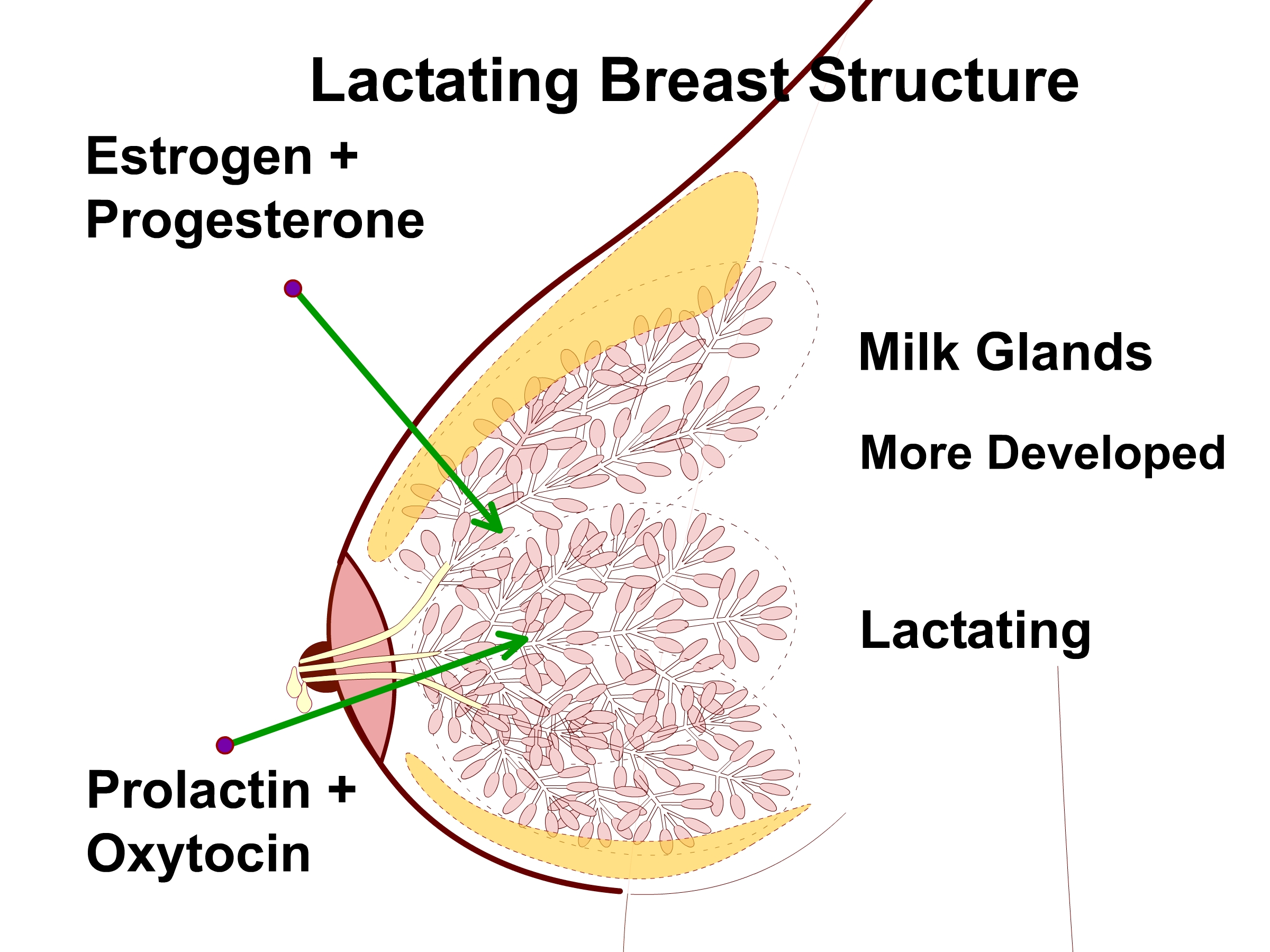
Microscopic ductal inflammation and narrowing related to alveolar distension and/or dysbiosis — not a macroscopic plug that can be massaged or expressed out, since the breast contains innumerable small, interlacing ducts rather than a single duct system feeding one lobule (see the anatomy figure above).[1] Presents as a focal area of induration or more globally congested, tender breast tissue; may be mildly erythematous from lymphatic congestion, but has no associated systemic symptoms.[1] It often resolves spontaneously; physiologic breastfeeding and the anti-inflammatory measures in this chapter are the most effective management — attempts to extrude a "plug" by squeezing or aggressively massaging the breast are ineffective and cause tissue trauma instead.[1]
Inflammatory mastitis
Develops when ductal narrowing persists or worsens and surrounding inflammation progresses. Presents as an increasingly erythematous, edematous, and painful region of the breast, now with systemic signs — fever, chills, and tachycardia can occur even in the complete absence of infection, as a systemic inflammatory response.[1] A Swedish trial found that most women with inflammatory mastitis achieve complete symptom resolution with conservative, non-antibiotic measures alone.[1]
Bacterial mastitis
A true infection — cellulitis of a region of the breast that can spread to involve additional quadrants, with systemic symptoms, developing when inflammatory mastitis is not resolved.[1] Staphylococcus (S. aureus, S. epidermidis, S. lugdunensis, S. hominis) and Streptococcus (S. mitis, S. salivarius, S. pyogenes, S. agalactiae) species are the organisms most often implicated.[1] This is the stage that actually needs antibiotics (see Choose Initial Treatment) — systemic symptoms persisting beyond about 24 hours, or a breast not responding to conservative measures, should prompt evaluation for this diagnosis.[1]
Phlegmon
A heterogeneous, ill-defined inflammatory fluid collection, distinguished from a true abscess by its lack of a discrete, drainable cavity; suspected clinically when a history of mastitis worsens into a firm, mass-like area without fluctuance, and confirmed on ultrasound.[1] Excessive deep tissue massage in the setting of ductal narrowing and inflammatory mastitis is itself a recognized way to propagate phlegmon formation, since deep massage worsens the edema and microvascular injury that drive it.[1]
Abscess
A well-defined, drainable, infected fluid collection — the feature distinguishing it from a phlegmon's ill-defined margins.[1] Represents a progression from bacterial mastitis or phlegmon; roughly 3-11% of women with acute mastitis go on to develop an abscess.[1] Presents as progressive induration and erythema, often with a palpable fluid collection in a well-defined area; systemic symptoms may resolve as the body walls off the infection, or may persist or recur until the collection is drained (see Choose Initial Treatment and Treatment Failure/Next Step).[1]
Galactocele
A distinct entity, not part of the infectious progression above: ductal narrowing obstructs milk flow enough that a significant volume of milk collects in a cyst-like cavity, ranging from 1-2 cm to over 10 cm.[1] Presents as a moderately firm mass that may fluctuate in size through the day (smaller after a feed), is generally not painful, and does not have associated erythema or systemic symptoms unless it becomes infected — an infected galactocele needs both drainage and antibiotics.[1]
Subacute mastitis
Ductal lumens narrowed by bacterial biofilms in the setting of chronic mammary dysbiosis, rather than an acute infectious process. Presents with a history of previously treated acute bacterial mastitis, needle-like or burning breast pain, nipple blebs, and recurrent areas of induration or congestion, often with unresolved hyperlactation; systemic symptoms and overt local findings are typically milder than in acute bacterial mastitis, since the causative organisms (coagulase-negative staphylococci, viridans streptococci) do not produce the toxins responsible for acute bacterial mastitis's more dramatic presentation.[1]
Early postpartum engorgement — a related but distinct entity
Physiologic breast engorgement from the onset of copious milk production (lactogenesis II) shares some clinical features with the mastitis spectrum but is not itself an inflammatory or infectious process.[1] It presents as bilateral breast pain, firmness, and swelling, usually between postpartum days 3 and 5 (later, up to day 9-10, in multiparous mothers, and further delayed after Cesarean birth, which itself delays lactogenesis II).[1] Appropriately managed engorgement should not progress to a mastitis-spectrum condition — see Special Populations for its specific management.
A myth worth actively correcting: "candida mastitis"
Despite persistent popular belief, no scientific evidence supports a diagnosis of "candida" or "thrush" mastitis — deep, shooting breast pain has long been attributed to a yeast infection of the ducts, but this has never been demonstrated, and sterilizing pump parts or infant toys to "eradicate" yeast is not recommended and does not help.[1] A patient with burning, needle-like breast pain and a history of treated bacterial mastitis more often has subacute mastitis (above) than a fungal infection — treat the actual diagnosis rather than defaulting to an antifungal (see Common Errors to Avoid).
Risk Factors
- Hyperlactation (oversupply) — from genuinely high milk production or from iatrogenic over-removal (frequent pumping "to keep the breast empty," feeding or pumping on a fixed schedule instead of on demand) — the single most important modifiable host risk factor across the entire spectrum.[1]
- A previous episode of mastitis, particularly if the underlying driver (hyperlactation, pump/massage habits) was not addressed at the time.[2]
- Prolonged engorgement or poor milk drainage from an ineffective infant latch, tongue-tie, or an infant unable to transfer milk effectively.[2]
- Nipple trauma or cracking — commonly taught as a cause of ascending infection, but current evidence characterizes this association as confounded rather than clearly causal; bacteria and fungi are regularly identified on the nipple-areolar complex of lactating people with no nipple damage and no mastitis at all.[1]
- Cesarean birth — associated with delayed lactogenesis II and, independently, with disruption of the normal milk microbiome (dysbiosis).[1]
- Recent maternal antibiotic or probiotic use, which can alter the normal, protective diversity of the milk microbiome.[1]
- Exclusive pumping, regular breast pump use, nipple shield use, or an improperly fitted pump flange — each associated with a higher risk of dysbiosis and/or ductal trauma.[1]
- Excessive deep breast massage, including from an electric toothbrush or a commercial vibrating massage device used specifically to "work out a clog" — causes microvascular injury and worsens, rather than resolves, ductal narrowing.[1]
- Maternal stress, sleep deprivation, and a history of anxiety or depression — associated with both a higher rate of mastitis symptoms and reduced response to reassurance alone; screening for a perinatal mood or anxiety disorder is part of a complete assessment (see Assessment & Diagnosis).[1]
- Abrupt weaning or a sudden, significant reduction in feeding/pumping frequency.
Red Flags & Refer
Most of the mastitis spectrum is managed conservatively or with outpatient oral antibiotics, but escalate for the following:
- Signs of a drainable abscess — a well-defined, fluctuant, palpable fluid collection, or progressive induration and erythema not improving on appropriate antibiotics — needs ultrasound and, if confirmed, needle aspiration or drain placement for source control; refer to breast surgery, general surgery, or interventional radiology as locally available.[1]
- Suspected phlegmon — a firm, mass-like area without fluctuance, in a patient with a mastitis history — needs ultrasound confirmation and, often, an extended, individualized antibiotic course; a phlegmon can coalesce into a drainable abscess, so interval examination and repeat imaging are needed until it fully resolves, not just until symptoms feel better.[1]
- Systemic symptoms persisting more than about 24 hours, symptoms worsening quickly, or a temperature above 38.5°C — the specific threshold at which a Canadian midwifery mastitis protocol triggers antibiotic treatment rather than continued observation alone.[2]
- No improvement 48 hours after starting first-line antibiotics — obtain a sterile milk culture to identify a resistant or less common pathogen (including MRSA) before simply switching agents empirically, and reassess for an evolving phlegmon or abscess.[1][2]
- Evidence of severe sepsis, or inability to tolerate oral medication or fluids — needs hospital-level care; if admission is necessary, mother and infant should be kept rooming in together with breastfeeding continued on demand wherever clinically possible, rather than separated.[1]
- Recurrent mastitis at the same location, or any presentation with progressive erythema, skin retraction, or a peau d'orange appearance that does not fully resolve with appropriate treatment — raises concern for an underlying mass, granulomatous mastitis, or inflammatory breast cancer, an aggressive malignancy that can closely mimic mastitis; any such concern warrants urgent referral to breast surgery/oncology, not another course of antibiotics.[1]
- A patient who expresses significant worry about recurrence, feels unable to stop pumping despite reassurance, or reports pain out of proportion to examination findings — consider a perinatal mood or anxiety disorder, or dysphoric milk ejection reflex, in the differential and screen accordingly rather than escalating antibiotics or imaging alone.[1]
Assessment & Diagnosis
History and examination
Mastitis-spectrum diagnosis is clinical, based on history and examination — position on the spectrum (see Recognize the Condition) is determined primarily by the presence and duration of systemic symptoms and by whether a discrete fluid collection can be felt or seen on imaging, not by a laboratory test.[1] Ask specifically about the onset and duration of local findings (induration, erythema, pain) versus systemic findings (fever, chills, myalgia, malaise); duration of symptoms; feeding/pumping frequency and any recent change in routine; a history of previous mastitis and how it was managed; and screen for the modifiable risk factors above (pump flange fit and frequency, massage habits, recent weaning or schedule change).[2] Examine for the differential: a hard, red, tender, swollen area is consistent with mastitis, a clogged duct, or engorgement, while a fluctuant mass raises concern for abscess, and progressive skin change or peau d'orange raises concern for inflammatory breast cancer — actively consider this differential at every visit, not just the first.[2][1]
Laboratory testing has limited value
C-reactive protein and white blood cell count are markers of inflammation, not infection specifically, and are of limited utility in diagnosing bacterial mastitis — a normal or mildly elevated result does not reliably distinguish inflammatory from bacterial mastitis and should not be relied on to make or exclude the diagnosis.[1]
When to obtain a sterile milk culture
Milk culture is not needed for a first, straightforward episode responding to first-line therapy, but should be considered specifically when: there is no symptomatic improvement 48 hours after starting first-line antibiotics (to identify a resistant or less common pathogen, including MRSA); the mother is expressing milk for an immunocompromised infant in a neonatal intensive care unit; she is a health care worker in a setting with a high prevalence of MRSA; or she has recurrent infections, where culture-directed therapy replaces further empiric guessing.[1] A proper technique matters for a genuinely useful result: clean the nipple and areola (a topical antiseptic solution or soap-and-water washing, then air-dry), express 5-10 mL of milk into a sterile container using sterile gloves without letting the nipple contact the container, and send it labelled as a "body fluid culture" rather than a "wound culture."[1]
Imaging: distinguishing phlegmon, abscess, and galactocele
Ultrasound is the imaging modality of choice whenever a discrete fluid collection is suspected. It differentiates a phlegmon (heterogeneous, ill-defined fluid collection with surrounding hyperemia and edema) from a true abscess (a well-defined collection, often with a visible wall) and from a galactocele (a simple or loculated cystic collection, without the surrounding hyperemia and edema of an infectious process).[1] Ultrasound also confirms simple ductal narrowing or inflammatory mastitis, in which imaging typically shows hyperemia and edema without any discrete fluid collection at all.[1]
Screening for a perinatal mood or anxiety disorder
Because women with a history of anxiety or depression have higher rates of mastitis symptoms, and because the postpartum period is itself the highest lifetime-risk window for a new mood or anxiety disorder, screen for perinatal mood and anxiety disorders (PMADs) as a routine part of assessment — with particular attention to a patient who seems defeated or withdrawn by breastfeeding difficulty, who cannot tolerate stopping pumping despite reassurance, or whose reported pain is out of proportion to examination findings.[1]
Treatment Targets
- Correctly place the presentation on the mastitis spectrum (ductal narrowing, inflammatory mastitis, bacterial mastitis, phlegmon, abscess, or galactocele) so treatment intensity actually matches the diagnosis, rather than defaulting to antibiotics for everyone.
- Relieve pain and inflammation with the interventions that genuinely help (ice, scheduled NSAID/acetaminophen, gentle lymphatic-drainage technique) while actively avoiding the ones that do not (deep massage, aggressive pumping, cabbage leaves).
- Reserve antibiotics for confirmed or strongly suspected bacterial mastitis, using an agent, dose, and duration matched to the likely organism and any penicillin/cephalosporin allergy.
- Support the patient in continuing to breastfeed or express milk throughout treatment, at a frequency and volume that mirrors physiologic infant demand rather than a fixed "empty the breast" schedule.
- Identify and, where possible, address the underlying driver — hyperlactation, pump technique, massage habits, latch/tongue-tie — so the episode does not simply recur.
- Recognize progression to phlegmon or abscess promptly, and secure source control (aspiration or drainage) rather than escalating oral antibiotics indefinitely.
- Screen for and support a perinatal mood or anxiety disorder, and provide genuine reassurance and psychosocial support as an active part of treatment, not an afterthought.
- Avoid the specific, still-common practices this chapter's evidence base has moved away from: unnecessary antibiotics for non-bacterial stages, deep massage, pump-to-empty advice, cabbage leaves/castor oil/saline soaks, unroofed nipple blebs, and empiric antifungal treatment for "candida mastitis."
Choose Initial Treatment
Ductal narrowing or inflammatory mastitis, no signs of bacterial infection conservative management only (see Non-Pharmacologic Treatment and Pharmacologic Treatment Options) — antibiotics are not indicated at this stage; using them anyway disrupts the breast microbiome and increases the risk of driving progression toward bacterial mastitis and antibiotic resistance, without a demonstrated benefit.[1] Most inflammatory mastitis resolves fully with symptomatic, conservative care alone.[1]
No penicillin/cephalosporin allergy cloxacillin 500 mg PO four times daily for 10-14 days, or cephalexin 500 mg PO four times daily for 10-14 days — cephalexin offers broader coverage including gram-negative rods and does not need to be separated from meals, which can make it the more practical choice.[1] A Canadian midwifery mastitis pathway uses cephalexin as its default first-line agent, at a shorter 7-10 day course for an uncomplicated first episode responding well to treatment — a reasonable, more stewardship-conscious alternative to the longer 10-14 day course; confirm local protocol, and reassess at 48 hours regardless of which duration is chosen.[2]
The trial evidence behind antibiotic treatment of lactational mastitis is genuinely thinner than commonly assumed: a Cochrane systematic review identified only two eligible trials — one comparing two antibiotics head-to-head with no significant difference found, the other over 30 years old — and concluded there was insufficient evidence to confirm or refute a clear treatment benefit from antibiotics outright.[3] Current practice nonetheless reserves antibiotics for the bacterial-mastitis stage specifically, based on the pathophysiologic staging above, organism data, and clinical consensus, rather than on high-quality randomized-trial evidence of benefit — a genuinely honest caveat worth knowing rather than presenting antibiotic therapy here as more definitively proven than it is.[3]
2nd line clindamycin 300 mg PO four times daily for 10-14 days (a Canadian midwifery protocol instead uses 300-450 mg PO three times daily for 10 days — either regimen is reasonable; follow local protocol).[1][2] Alternative 2nd line sulfamethoxazole/trimethoprim one double-strength tablet PO twice daily for 10-14 days — avoid if the infant is younger than about 30 days old, was born premature, has hyperbilirubinemia, or has known or suspected G6PD deficiency, given the risk of displacing bilirubin and precipitating kernicterus in a vulnerable newborn.[1]
amoxicillin-clavulanic acid 500 mg PO twice daily for 7-10 days is also used in some Canadian midwifery practice, particularly where beta-lactam sensitivity (not true allergy) is the concern rather than an indication to move to clindamycin — this is not part of the Academy of Breastfeeding Medicine's own antibiotic table, but is a genuinely used local alternative; confirm against local protocol before defaulting to it over the agents above.[2]
Expect clear symptomatic improvement within 48 hours of starting an appropriate antibiotic. No improvement at 48 hours obtain a sterile milk culture (see Assessment & Diagnosis) to identify a resistant organism (including MRSA) before empirically switching agents, and reassess for an evolving phlegmon or abscess.[1] Routine hospital admission and IV antibiotics are not necessary for straightforward bacterial mastitis unless a multidrug-resistant organism or clinical evidence of severe sepsis is present.[1]
A phlegmon may need an extended antibiotic course individualized to the case, with interval examination and imaging until it fully resolves, since it can coalesce into a drainable abscess.[1] A confirmed abscess needs drainage to achieve source control — needle aspiration with fluid culture and sensitivity is often first-line, though repeated aspirations can be discouraging for the patient and carry a real risk of prompting breastfeeding discontinuation, so drain placement should be considered as the initial intervention for definitive management at the time of the index procedure, particularly for a larger or recurrent collection.[1] Continue an antibiotic course of about 10-14 days after aspiration or drain placement, though a shorter course is reasonable if surrounding cellulitis resolves rapidly; mothers should continue breastfeeding from the affected breast throughout — milk fistula occurs in under 2% of cases, and lactation should be actively managed and supported, not shut down, if a fistula does occur.[1]
A symptomatic galactocele is drained for symptom relief, diagnostic confirmation, and to reduce mass effect on latch — needle aspiration alone frequently results in incomplete drainage or recurrence, so drain placement (as for an abscess, above) is often the more definitive choice. An infected galactocele needs both drainage and a course of antibiotics as for bacterial mastitis.[1]
Non-Pharmacologic Treatment
- Feed or express on demand, not to a schedule, and never with the explicit goal of "emptying" the breast — milk volume responds to a feedback mechanism where more removal drives more production; overfeeding the affected breast or "pumping to empty" perpetuates a cycle of hyperlactation and worsens the tissue edema and inflammation actually driving symptoms.[1] If the affected breast is too edematous and inflamed for the infant to latch or for hand expression to work, it is reasonable to feed from the unaffected breast only during the acute phase and return to the affected side once edema and inflammation subside, expressing small comfort volumes by hand in the meantime rather than a full pump session.[1]
- Minimize breast pump usage. A pump stimulates milk production without the physiologic, bacterial-exchange benefit of infant feeding, and can itself cause trauma if flange size, suction strength, or session duration is wrong — limit expression to when mother and infant are separated or pumping is otherwise medically necessary, at a frequency and volume mirroring what the infant would actually take, not a fixed "keep it empty" routine.[1]
- Avoid deep massage of the lactating breast. Deep massage — including from an electric toothbrush or a commercial vibrating massage device — increases inflammation, tissue edema, and microvascular injury, and is a primary risk factor for phlegmon and abscess formation; a systematic review concluded that although breast massage may reduce pain, it should not be recommended as standard care because an atraumatic technique requires extensive training to master.[1] A gentle lymphatic drainage technique is different and reasonable: very light touch/traction of the skin ("like petting a cat"), starting with small circles at the junction of the internal jugular and subclavian vein and in the axilla, then light-touch strokes from the nipple toward the clavicle/axilla — this reduces swelling by assisting lymph movement rather than by force.[1] "Hands-on pumping" (gentle compressions during pump use) provides an effect similar to hand expression and is safe if excessive manual force is avoided.[1]
- Ice, not heat, for symptomatic relief — ice can be applied every hour or more often if desired, and reduces the vasodilation, edema, and ductal narrowing that heat can actually worsen; a randomized trial found warm showers and antipyretics did not improve mastitis outcomes.[1] Heat may still provide comfort for some patients and is not absolutely contraindicated, but ice is the better-evidenced default.[1]
- Do not use cabbage leaves, castor oil, saline soaks, or a silicone breast pump insert filled with Epsom salt. Studies have not demonstrated cabbage leaves to be more effective than ice — any benefit is likely from cold, not a specific property of cabbage — and cabbage carries a real risk of Listeria contamination.[1] Castor oil does not treat a deep-organ-space inflammatory process and can itself cause tissue damage, particularly combined with massage; Epsom-salt-filled silicone inserts contribute to localized hyperemia and edema; and general wound-care evidence does not support saline soaking for pain or nipple trauma.[1]
- Avoid nipple shields — available evidence does not support their use for this purpose; neither safety nor effectiveness has been demonstrated, and they represent nonphysiological breastfeeding that can result in inadequate milk extraction (the infant passively drinking from the shield's reservoir rather than transferring milk from the breast).[1]
- Wear an appropriately fitting, supportive (not tight or constricting) bra — lactating breasts are highly vascular and benefit from support to avoid dependent lymphedema and progressive back/neck pain, but a garment that compresses the tissue can itself contribute to ductal narrowing.[1]
- If a nipple bleb is present, do not unroof it. A bleb represents ductal inflammatory cells and debris propagating to the surface and lodging there; deroofing it causes trauma and further luminal narrowing rather than resolving anything. Oral lecithin and a topical steroid applied to the surface of the nipple (see Pharmacologic Treatment Options) are the recommended approach instead.[1]
- Avoid routine sterilization of breast pump parts and other household items, and avoid deliberately scrubbing the nipple between feeds. Mastitis is not a contagious condition and does not result from unhygienic practice — pump parts should be cleaned appropriately (basic washing) after each use, but routine sterilization is not necessary to prevent mastitis, and vigorous nipple cleaning can macerate the skin and cause pain without any protective benefit.[1]
- Reassure, and actively educate on normal lactation physiology. Lactating breasts normally feel lumpy and full, and a low-estrogen postpartum hormonal state predisposes to sweating and hot flashes that can mimic fever — patients should be reassured that infection does not develop over a period of hours, and that morning pain/redness after a long stretch of sleep typically reflects alveolar distension and lymphatic congestion rather than a new infection.[1] Help mothers identify concrete ways to decrease stress and increase rest, and connect them with resources they may need to avoid unwanted early weaning.[1]
- Screen for and support a perinatal mood or anxiety disorder as an active part of management, not a side conversation (see Assessment & Diagnosis).[1]
Pharmacologic Treatment Options
| Drug / intervention | Role | Dose / use | Important adverse effects | Teaching points |
|---|---|---|---|---|
| Cloxacillin Preferred | 1st-line, bacterial mastitis, no penicillin/cephalosporin allergy | 500 mg PO four times daily for 10-14 days | GI upset, hypersensitivity reactions | Take on an empty stomach (1 hour before or 2 hours after food) for reliable absorption; safe with continued breastfeeding. |
| Cephalexin Preferred | 1st-line, bacterial mastitis, no penicillin/cephalosporin allergy | 500 mg PO four times daily for 10-14 days (a Canadian midwifery protocol uses 7-10 days for an uncomplicated first episode) | GI upset, hypersensitivity reactions | Broader gram-negative coverage than cloxacillin and does not need to be separated from meals — often the more practical first choice. |
| Clindamycin Alternative | Penicillin/cephalosporin allergy, or inadequate response to first-line therapy | 300 mg PO four times daily for 10-14 days (or 300-450 mg PO three times daily for 10 days per a Canadian midwifery protocol) | GI upset, rare C. difficile-associated diarrhea | Confirm true allergy versus intolerance before reaching for this over cephalexin; safe with continued breastfeeding. |
| Sulfamethoxazole/trimethoprim Alternative | Penicillin/cephalosporin allergy, alternative to clindamycin | One double-strength tablet PO twice daily for 10-14 days | GI upset, hypersensitivity, hyperkalemia | Avoid if the infant is under about 30 days old, was born premature, has hyperbilirubinemia, or has known/suspected G6PD deficiency — risk of displacing bilirubin and precipitating kernicterus. |
| Amoxicillin-clavulanic acid Alternative | Genuinely used Canadian midwifery-protocol alternative, particularly for beta-lactam sensitivity rather than true allergy | 500 mg PO twice daily for 7-10 days | GI upset (particularly diarrhea from the clavulanic-acid component), hypersensitivity | Not part of the Academy of Breastfeeding Medicine's own antibiotic table; confirm against local protocol before choosing this over cephalexin/cloxacillin or clindamycin. |
| Ibuprofen Preferred | First-line analgesia/anti-inflammatory, scheduled rather than as-needed, across the entire mastitis spectrum | Up to 800 mg PO every 8 hours | GI upset/bleeding risk, renal effects with prolonged use | Pair with ice; scheduled dosing controls the pain and inflammation of the acute phase more consistently than waiting for pain to build. |
| Acetaminophen Preferred | Analgesia, alone or combined with an NSAID | 1,000 mg PO every 8 hours | Hepatotoxicity with overdose or significant hepatic impairment | A reasonable NSAID-sparing or add-on option; both ibuprofen and acetaminophen are compatible with continued breastfeeding at these doses. |
| Sunflower or soy lecithin Adjunct | Reduce ductal inflammation and emulsify milk; adjunct for ductal narrowing, subacute mastitis, and nipple blebs | 5-10 g PO daily | GI upset | Evidence for benefit is limited and the mechanism is more theoretical than proven, but the risk is low; a reasonable adjunct trial rather than a primary treatment. |
| Triamcinolone 0.1% cream (topical) Special situation | Nipple bleb with surface inflammation, applied to the nipple only | Thin application to the affected nipple surface after feeds | Local skin atrophy with prolonged/excessive use | Safe with continued breastfeeding; wipe off before the next feed. Do not unroof the bleb itself — treat with this and oral lecithin instead. |
| Probiotic (specific strains: Ligilactobacillus salivarius or Limosilactobacillus fermentum) Special situation | Consider for recurrent-mastitis prevention, or as an adjunct for subacute mastitis | Per product-specific labelling for the studied strain | Generally well tolerated | Efficacy is strain-specific, not a class effect — a generic probiotic without one of these two specific studied strains has not been shown effective for this indication. |
Special Populations
Early postpartum engorgement
Manage as its own distinct entity rather than as early mastitis: minimize intravenous fluids during labour, since interstitial fluid accumulation from IV loading worsens later edema and engorgement; promote rooming-in to allow physiologic, on-demand breastfeeding rather than a scheduled or restricted routine; teach hand expression, including reverse-pressure softening of the areola before latch, to relieve pressure and support an infant who cannot yet transfer milk effectively; and use the same gentle lymphatic-drainage technique, ice, and scheduled analgesia as for the rest of the spectrum.[1] Appropriately managed engorgement should not progress to ductal narrowing, inflammatory mastitis, or bacterial mastitis.[1]
Recurrent mastitis
There is no consensus definition, but patients describing fever, redness, swelling, and/or pain recurring every 2-4 weeks (or less often) warrant a different approach than treating each episode as an isolated event.[1] Obtain a milk culture to establish a genuine diagnosis of recurrent bacterial mastitis, rather than treating empirically again, and to identify an uncommon or resistant pathogen — coagulase-negative staphylococci are commonly present in milk as normal flora but have also been identified as an opportunistic pathogen in mastitis, and MRSA/resistant CoNS will not respond to the typical agents used for acute mastitis.[1] Evaluate breastfeeding and pumping practices specifically for the risk factors above (excessive massage, unnecessary or excessive pumping, hyperlactation) and address them directly; consider a daily probiotic containing one of the two specific studied strains (Ligilactobacillus salivarius or Limosilactobacillus fermentum) for prevention, recognizing that efficacy is strain-specific and cannot be generalized to any probiotic product.[1] Prophylactic antibiotics have not been shown effective for prevention and risk selecting resistant organisms, so are not recommended.[1] Multiple recurrences at the same location warrant radiology evaluation to rule out an underlying mass or another abnormality such as granulomatous mastitis — and any concern for inflammatory breast cancer specifically warrants urgent referral to breast surgery and oncology (see Red Flags & Refer).[1]
Subacute mastitis
Because individual mammary microbiomes differ in the threshold at which an opportunistic pathogen becomes symptomatic, and because milk culture may not grow a dominant organism even when subacute mastitis is clinically likely, treatment should be individualized based on history and clinical suspicion rather than a single algorithm.[1] A macrolide such as azithromycin may have the best efficacy in this specific clinical scenario, plausibly related to its intracellular mechanism of action against biofilm-forming organisms, though the evidence base remains limited and more study is needed.[1] Probiotics containing L. salivarius or L. fermentum are also a reasonable adjunct, with the same strain-specific caveat as above.[1]
Hyperlactation as an underlying, recurring driver
Persistent high milk production that continues despite eliminating iatrogenic causes of excess removal (pump-to-empty habits, scheduled rather than on-demand feeding) may need dedicated pharmacologic management of hyperlactation itself, which is outside the scope of this chapter — refer to the Academy of Breastfeeding Medicine's dedicated hyperlactation protocol, or to a lactation-medicine specialist, for that specific management.[1] Do not add or continue a galactagogue (domperidone, metoclopramide) in a patient whose recurrent mastitis is actually being driven by oversupply — this directly worsens the underlying problem (see Common Errors to Avoid).
Penicillin/cephalosporin allergy
Confirm whether a reported allergy is a true immune-mediated reaction or an intolerance before defaulting to clindamycin or sulfamethoxazole/trimethoprim — both carry a different adverse-effect profile and, for sulfamethoxazole/trimethoprim, real infant-specific cautions in early lactation (see Choose Initial Treatment).
Renal and hepatic impairment
Adjust cloxacillin, cephalexin, and sulfamethoxazole/trimethoprim doses for significant renal impairment per standard renal dosing references; clindamycin does not require renal dose adjustment but should be used cautiously in significant hepatic impairment. Acetaminophen should be used cautiously, or avoided, in significant hepatic impairment.
Exclusive pumping
The same principles apply — express milk at a frequency and volume that mirrors what the infant would actually take rather than a fixed maximizing schedule, confirm correct flange sizing to avoid nipple trauma, and apply the same "minimize pump usage during the acute phase, prefer gentle hand expression" approach described in Non-Pharmacologic Treatment.[1]
Neonatal monitoring during maternal antibiotic treatment
Monitor the infant for vomiting, diarrhea, or a new rash during a maternal antibiotic course, and have the family seek assessment if these occur; a Canadian midwifery mastitis protocol also suggests considering an infant probiotic during maternal antibiotic treatment, referencing the Canadian Paediatric Society's position statement on probiotics in the pediatric population — this is a reasonable, individualized consideration rather than a strong or universal recommendation.[2][4]
Monitoring & Follow-Up
For ductal narrowing or inflammatory mastitis managed conservatively, arrange a follow-up check (by phone or in person) within 24-48 hours to confirm symptoms are trending toward resolution rather than progressing — most cases resolve fully with conservative measures alone.[1]
- For bacterial mastitis started on antibiotics, reassess at 48 hours; expect clear symptomatic improvement. No improvement by then triggers a sterile milk culture and reassessment for phlegmon/abscess (see Choose Initial Treatment and Treatment Failure/Next Step).[1]
- For a phlegmon, arrange interval clinical examination and repeat imaging until fully resolved — tissue inflammation and phlegmonous change can take several weeks to resolve, and a residual small, mass-like area during that time does not necessarily mean treatment has failed.[1]
- After abscess aspiration or drain placement, follow up to confirm the collection has not reaccumulated and, if a drain was placed, to remove it once drainage has stopped (commonly within a few days).[1]
- Monitor the breastfeeding infant for vomiting, diarrhea, or rash during any maternal antibiotic course.[2]
- For recurrent mastitis, confirm resolution of the acute bacterial episode with follow-up examination, and revisit whether the modifiable risk factors identified (pump habits, massage, hyperlactation) have actually been addressed, not just discussed.[1]
- Document the stage treated, what was tried, and the response, so a later episode is not simply re-escalated through the same steps without learning from what did or did not work.
Treatment Failure / Next Step
- No improvement 48 hours after starting first-line antibiotics for bacterial mastitis: obtain a sterile milk culture to identify a resistant organism (including MRSA) or a less common pathogen before switching agents empirically, and re-examine specifically for an evolving phlegmon or abscess.[1]
- A firm, mass-like area develops or persists without fluctuance: obtain ultrasound to confirm or exclude phlegmon; if confirmed, plan an extended, individualized antibiotic course with interval examination and imaging until it fully resolves, since a phlegmon can still coalesce into a drainable abscess.[1]
- A well-defined, fluctuant fluid collection develops: proceed to ultrasound-guided or clinical aspiration with fluid culture and sensitivity for source control; consider drain placement as the initial, more definitive intervention rather than planning for repeated aspirations, particularly for a larger collection.[1]
- Symptoms recur at the same location after apparently successful treatment: treat as recurrent mastitis (see Special Populations) — obtain a milk culture, address modifiable risk factors, and obtain radiology evaluation to rule out an underlying mass after multiple recurrences at the same site.[1]
- Progressive erythema, skin retraction, or a peau d'orange appearance that does not fully resolve with adequate antibiotic treatment: treat as a possible inflammatory breast cancer mimic and refer urgently to breast surgery/oncology rather than continuing to escalate antibiotics.[1]
- The mother reports persistent needle-like or burning pain, nipple blebs, and a pattern of previously treated acute mastitis with milder recurring flares: reconsider subacute mastitis (see Special Populations) rather than repeating the same acute-bacterial-mastitis antibiotic course indefinitely.[1]
- The patient cannot tolerate stopping pumping, reports pain out of proportion to exam findings, or seems defeated/withdrawn about breastfeeding despite reassurance and appropriate treatment: screen (or re-screen) for a perinatal mood or anxiety disorder rather than attributing this solely to unresolved mastitis.[1]
Common Errors to Avoid
- Prescribing antibiotics for ductal narrowing or inflammatory mastitis without systemic symptoms or a strong bacterial-infection likelihood — most of this resolves with conservative care alone, and unnecessary antibiotic use disrupts the breast microbiome and raises resistance risk.[1]
- Advising a mother to pump after every feed, feed on a strict schedule to "empty" the affected breast, or aggressively massage/knead a "clogged duct" to break it up — all of these worsen edema and ductal narrowing rather than resolving it, and deep massage is a specific, recognized risk factor for phlegmon and abscess formation.[1]
- Recommending cabbage leaves, castor oil, saline soaks, or an Epsom-salt-filled silicone breast pump insert — none is better evidenced than ice, cabbage carries a real Listeria risk, and castor oil/aggressive topical products can cause tissue damage.[1]
- Advising a mother to stop breastfeeding or discard milk because of bacterial mastitis — it is safe for the infant to continue feeding from the affected breast, and interrupting feeding worsens engorgement rather than protecting anyone.[1][2]
- Unroofing a nipple bleb — this causes trauma and further luminal narrowing; treat with oral lecithin and a topical steroid on the nipple surface instead.[1]
- Diagnosing and treating "candida" or "thrush" mastitis with an antifungal, or recommending sterilization of pump parts/infant toys to "eradicate yeast" — no scientific evidence supports this diagnosis; needle-like, burning breast pain in a patient with a mastitis history is more often subacute mastitis (see Special Populations).[1]
- Recommending a nipple shield as a routine part of mastitis management — evidence does not support its safety or effectiveness for this purpose, and it can itself cause inadequate milk extraction.[1]
- Ordering a CRP or white blood cell count to try to distinguish inflammatory from bacterial mastitis — both are non-specific markers of inflammation and are of limited diagnostic utility here.[1]
- Continuing or adding a galactagogue (domperidone, metoclopramide) in a patient whose recurrent mastitis is being driven by genuine oversupply — this directly worsens the underlying hyperlactation problem.[1]
- Treating every recurrence at the same site as "just mastitis again" without ever obtaining imaging — repeated same-location recurrence needs radiology evaluation to rule out an underlying mass, including the rare but aggressive inflammatory breast cancer.[1]
- Missing a perinatal mood or anxiety disorder in a mother whose reported pain, or inability to stop pumping despite reassurance, is disproportionate to clinical findings.[1]
Clinical Decision Algorithm
Drug Tables
How to use this table: doses are adult doses for a lactating patient and require patient-specific confirmation (renal/hepatic function, weight, true allergy history, and — where noted — infant age/gestational history). Drug pricing is intentionally omitted. Select any drug name to open its complete Pharmasist Drug Database page.
Bacterial Mastitis — First-Line, No Penicillin/Cephalosporin Allergy
Antibiotics are reserved for bacterial mastitis specifically — see Choose Initial Treatment for the full spectrum-staged approach and the evidence-quality caveat around antibiotic benefit.[1]
| Drug | Dosage | Adverse effects | Drug interactions | Comments |
|---|---|---|---|---|
| Cloxacillin | Adults: 500 mg PO four times daily for 10-14 days | GI upset, hypersensitivity reactions | Reduced absorption if taken with food | The Canadian anti-staphylococcal-penicillin equivalent to the dicloxacillin/flucloxacillin in the source protocol's own table; take on an empty stomach for reliable absorption. |
| Cephalexin | Adults (10-14 day course): 500 mg PO four times daily Adults (7-10 day course, per a Canadian midwifery protocol): 500 mg PO four times daily | GI upset, hypersensitivity reactions | None significant at standard doses | Broader gram-negative coverage than cloxacillin and can be taken with food; a Canadian midwifery protocol uses a shorter 7-10 day course for an uncomplicated first episode.<cite data-reference-id="63b67b39-3872-4c9b-a13e-edadbaae4d17"></cite> |
Bacterial Mastitis — Penicillin/Cephalosporin Allergy, or Inadequate Response to First-Line Therapy
Confirm true allergy versus intolerance before selecting an agent from this group.[1]
| Drug | Dosage | Adverse effects | Drug interactions | Comments |
|---|---|---|---|---|
| Clindamycin | Adults: 300 mg PO four times daily for 10-14 days Adults (Canadian midwifery-protocol alternative): 300-450 mg PO three times daily for 10 days | GI upset, rare C. difficile-associated diarrhea | None significant at standard doses | Two accepted regimens exist; either is reasonable, follow local protocol.<cite data-reference-id="63b67b39-3872-4c9b-a13e-edadbaae4d17"></cite> |
| Sulfamethoxazole/trimethoprim | Adults: One double-strength tablet PO twice daily for 10-14 days | GI upset, hypersensitivity, hyperkalemia | Increased INR with warfarin; caution with other potassium-elevating drugs | Avoid if the infant is under about 30 days old, was born premature, has hyperbilirubinemia, or has known/suspected G6PD deficiency, given the risk of displacing bilirubin and precipitating kernicterus. |
| Amoxicillin-clavulanic acid | Adults: 500 mg PO twice daily for 7-10 days | GI upset (particularly diarrhea from the clavulanic-acid component), hypersensitivity | None significant at standard doses | A genuinely used Canadian midwifery-protocol alternative, particularly for beta-lactam sensitivity rather than true allergy; not part of the source protocol's own antibiotic table.<cite data-reference-id="63b67b39-3872-4c9b-a13e-edadbaae4d17"></cite> |
Analgesia and Anti-Inflammatory Support — Entire Spectrum
Pair scheduled analgesia with ice (see Non-Pharmacologic Treatment); both agents below are compatible with continued breastfeeding at these doses.[1]
| Drug | Dosage | Adverse effects | Drug interactions | Comments |
|---|---|---|---|---|
| Ibuprofen | Adults: Up to 800 mg PO every 8 hours | GI upset/bleeding risk, renal effects with prolonged use | Increased bleeding risk with anticoagulants/antiplatelets; avoid combining with another NSAID | Scheduled, not as-needed, dosing controls acute-phase pain and inflammation more consistently. |
| Acetaminophen | Adults: 1,000 mg PO every 8 hours | Hepatotoxicity with overdose or significant hepatic impairment | None significant at standard doses | Reasonable NSAID-sparing option or add-on for additional analgesia. |
Ductal Narrowing, Nipple Blebs, Subacute Mastitis, and Recurrence Prevention
Evidence for this group is generally weaker than for the antibiotics above; frame accordingly when counselling.[1]
| Drug | Dosage | Adverse effects | Drug interactions | Comments |
|---|---|---|---|---|
| Sunflower or soy lecithin | Adults: 5-10 g PO daily | GI upset | None significant | Adjunct for ductal narrowing, nipple blebs, and subacute mastitis; theorized to reduce ductal inflammation and emulsify milk, though the evidence base is limited. |
| Triamcinolone 0.1% cream (topical) | Adults: Thin application to the affected nipple surface after feeds | Local skin atrophy with prolonged/excessive use | None significant with topical nipple-only use | For a nipple bleb's surface inflammation only — never unroof the bleb itself. Wipe off before the next feed; safe with continued breastfeeding. |
| Azithromycin | Per specialist-directed course: Individualized | GI upset, rare QTc prolongation | Reduced absorption with antacids containing aluminum/magnesium | May have the best efficacy specifically for subacute mastitis given its intracellular, biofilm-active mechanism, though more study is needed; individualize rather than using as a default first choice. |
| Probiotic (Ligilactobacillus salivarius or Limosilactobacillus fermentum, specific studied strains) | Per product-specific labelling: Per product-specific labelling | Generally well tolerated | None significant | Efficacy is strain-specific; a generic probiotic without one of these two specific strains is not an equivalent substitute. |
Professional reference only. Apply clinical judgment and verify patient-specific decisions against current authoritative guidance and product information.