Mumps
Mumps
References
- Mumps: For health professionals — Public Health Agency of Canada. Public Health Agency of Canada
- Mumps — StatPearls, NCBI Bookshelf (Rausch-Phung EA, Davison P, Morris J). StatPearls Publishing, last updated 2024 May 1 (Bookshelf ID NBK534785)
- Mumps — HealthLinkBC (British Columbia Ministry of Health). HealthLinkBC File
- Mumps — National Collaborating Centre for Infectious Diseases. NCCID Debrief
- Use of Measles-Mumps-Rubella (MMR) Vaccine for the Management of Mumps Outbreaks in Canada — National Advisory Committee on Immunization (NACI), Public Health Agency of Canada. NACI Statement, approved 2020 Nov 18 (Cat. HP40-286/2021E-PDF)
- Parotitis — StatPearls, NCBI Bookshelf (Al Ghabra Y, Goldin J, Pandey S). StatPearls Publishing, last updated 2025 Jun 23 (Bookshelf ID NBK560735)
- Chapter 15: Mumps — Epidemiology and Prevention of Vaccine-Preventable Diseases ("Pink Book"), Centers for Disease Control and Prevention. CDC Pink Book, 14th Edition, Chapter 15: Mumps
- Mumps — Canadian Paediatric Society, Caring for Kids. Canadian Paediatric Society, Caring for Kids
Clinical Snapshot
Mumps is caused by mumps virus, a single-stranded RNA paramyxovirus spread almost entirely by upper-respiratory-tract routes — inhalation of infectious respiratory particles and direct contact of the eyes, nose, or mouth with infectious respiratory secretions or saliva; transmission from contaminated surfaces is uncommon.[1][2] The incubation period is genuinely long and variable — 12 to 25 days, averaging 16 to 18 days — which matters practically, since an exposure counselled on today may not produce symptoms for the better part of a month.[1] The hallmark finding is acute parotitis, but it is not universal: roughly one-third of infections produce no visible salivary-gland swelling, and up to 30% of infected people remain fully asymptomatic while still capable of transmitting the virus — a genuinely practical point, since a documented exposure cannot be dismissed just because the exposed person does not look unwell.[3]
Two things separate who actually presents with mumps in a Canadian pharmacy today from the textbook picture of a sick, unvaccinated child. First, mumps is now overwhelmingly a disease of teenagers and young adults, with the highest reported Canadian rates currently at ages 20 to 24 — a real shift driven by outbreaks in universities, sports teams, and other close-contact congregate settings.[1][4] Second, and easiest to miss at the counter: a large share of these cases occur in people who received both recommended doses of MMR vaccine. In a national review of Canadian outbreak cases with known immunization status, essentially half (49%) had received two documented doses.[5] Mumps immunity genuinely wanes over time — the risk of breakthrough infection rises measurably starting about 2 years after the last MMR dose and increases sharply beyond 10 years — so being "fully vaccinated" is a reason to keep mumps lower on the differential, never a reason to remove it.[5]
Management is entirely supportive; there is no specific antiviral treatment. But the practical stakes are real: mumps is a nationally notifiable disease in Canada, correct isolation advice (5 days from the onset of parotid swelling) genuinely limits ongoing transmission, and a meaningful minority of cases develop complications — orchitis in postpubertal males chief among them — that deserve accurate, specific counselling rather than reflexive reassurance or reflexive alarm.[1][2]
Recognize the Condition
Pathophysiology
After entering through the respiratory tract, mumps virus replicates in upper-airway epithelium and infects mononuclear cells in regional lymph nodes, producing a viremia that seeds glandular and, less commonly, neural tissue — chiefly the salivary glands, but also the testes, ovaries, pancreas, mammary glands, and central nervous system. This is why a single infection can present as parotitis, orchitis, pancreatitis, or meningitis depending on which tissue the virus reaches.[2]
Prodrome and parotitis
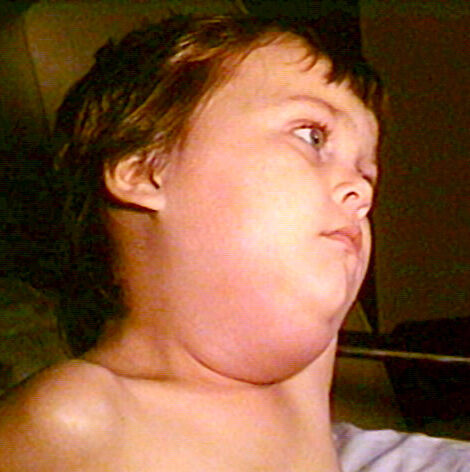
Illness typically begins with a nonspecific 1-2 day prodrome — fever, headache, malaise, myalgia, and anorexia — before the classic finding appears.[1][2] In children under 5, cough and rhinorrhea are also commonly part of this early picture, which can make an early case look like an ordinary upper-respiratory-tract infection before the parotid swelling declares itself.[1] Parotitis usually appears within about 48 hours of the prodrome, causing painful swelling of the area between the earlobe and the angle of the mandible; the earlobe is often displaced outward and upward, and the angle of the jaw becomes difficult to palpate.[2][6] It affects the great majority of clinically apparent infections and becomes bilateral in roughly 90% of cases, though it often starts unilaterally, with the second side following a day or so later.[6] Swelling and pain typically peak within a few days and resolve over about a week; pain is often made worse by chewing, swallowing, or anything sour or acidic, since these stimulate salivary flow through an already inflamed gland.[1][2]
Distinguishing mumps from other causes of parotid swelling
Painful parotid swelling with a compatible prodrome is genuinely distinctive, but several other conditions can present similarly, and the distinction changes management — most importantly, bacterial parotitis needs antibiotics, and several chronic causes need referral rather than reassurance that "it's probably mumps."
| Condition | Typical pattern | Key distinguishing features |
|---|---|---|
| Mumps | Acute, painful, usually bilateral (~90%) parotid swelling with a fever/malaise prodrome | No purulent Stensen's-duct discharge; pain worsened by chewing or sour/acidic food; resolves over about a week |
| Other viral parotitis (Epstein-Barr virus, influenza A, parainfluenza types 1 and 3, enteroviruses) | Acute, painful swelling clinically similar to mumps | Not typically associated with purulent Stensen's-duct drainage; distinguished from mumps mainly by exposure history, serology, or PCR rather than exam findings alone |
| Acute bacterial (suppurative) parotitis | Usually unilateral, progressively painful swelling with overlying erythema, high fever, and a systemically unwell patient | Purulent discharge from Stensen's duct in roughly 50% of cases; more common with dehydration, recent surgery, or in debilitated/elderly patients; needs antibiotics, not supportive care alone |
| Sialolithiasis (salivary stone) | Intermittent, meal-triggered painful swelling of a single gland | About one-third of patients have painless swelling instead, and roughly 10% have pain without visible swelling; classically resolves between meals |
| HIV-associated parotitis | Chronic, bilateral, painless glandular swelling | Typically without accompanying dry mouth, which helps distinguish it from Sjögren's disease |
| Sjögren's disease | Chronic or intermittent, firm, non-tender bilateral enlargement | Accompanied by dry eyes and dry mouth, sometimes with difficulty swallowing or wearing dentures |
| Juvenile recurrent parotitis | Recurrent, painful swelling of one or both parotid glands, typically lasting 24-48 hours but sometimes up to 2 weeks | Accompanied by erythema and fever; occurs in a child with a history of previous similar episodes, unlike a first mumps infection |
| Sialosis (metabolic/drug-related) | Chronic, painless, bilateral, non-fluctuating enlargement | Associated with diabetes, malnutrition, or liver disease rather than an acute infectious trigger |
| Salivary gland tumour (benign or malignant) | Firm, painless mass, usually unilateral | Facial asymmetry or inability to raise the eyebrow or close the eye on the affected side suggests malignant involvement of the facial nerve — never a mumps finding |
Risk Factors
- Being unvaccinated or incompletely vaccinated (0 or 1 documented dose) — the population at genuinely highest individual risk.[1]
- Waning immunity even after a completed 2-dose series: the risk of breakthrough infection rises measurably starting about 2 years after the last MMR dose, increases sharply beyond 10 years, and mathematical modelling suggests up to 25% of vaccinated individuals may become susceptible within roughly 7.9 years.[5]
- Age 20 to 24 — currently the age band with the highest reported mumps rates in Canada, a marked shift from the pre-vaccine-era childhood-predominant pattern.[1][4]
- Close-contact congregate settings — university and college residences, sports teams, military settings, healthcare workplaces, and large households — where efficient droplet and saliva-contact transmission drives the great majority of recent Canadian outbreaks.[5]
- International travel to or from areas with ongoing mumps circulation or lower vaccine coverage, and travellers visiting friends or relatives who may be under-immunized.[1]
- Healthcare workers, military personnel, and postsecondary students born in or after 1970 without documented 2-dose MMR status — groups PHAC and NACI specifically name as warranting confirmed adequate immunization given genuinely elevated occupational or setting-based exposure.[1]
- Close contact — household, intimate, or shared food/drink/utensils — with a confirmed case during the infectious window (roughly 7 days before to 9 days after that person's parotitis onset).[1]
Red Flags & Refer
Escalate beyond routine reassurance and supportive-care counselling for any of the following:
- Meningeal signs — severe headache, neck stiffness, photophobia, altered mental status, seizure, or a focal neurologic deficit. Aseptic meningitis is the most frequently reported CNS complication of mumps and, while usually mild, needs medical evaluation rather than home reassurance.[2][7]
- Sudden, severe testicular pain in a postpubertal male. Once mumps is confirmed, orchitis is typically managed supportively at home (see Choose Initial Treatment) — but sudden, severe unilateral pain, especially if the mumps diagnosis itself is not yet confirmed, should also prompt considering testicular torsion, a surgical emergency, rather than assuming orchitis outright.[2]
- Severe or persistent abdominal pain, especially epigastric, with nausea or vomiting — consider pancreatitis.[7][2]
- New hearing loss or tinnitus, usually sudden and unilateral — refer urgently for audiology/ENT assessment. Mumps-associated sensorineural hearing loss is usually transient but can be permanent, and earlier recognition supports better monitoring and counselling.[7]
- Suspected mumps in a pregnant patient, particularly in the first trimester — refer for obstetric assessment given a documented association between first-trimester mumps infection and increased fetal loss.[1]
- Findings suggesting bacterial parotitis instead of mumps — unilateral, rapidly progressive swelling with overlying erythema, purulent discharge from Stensen's duct, high fever, and a systemically unwell patient — a different management pathway requiring antibiotics.[6]
- Parotid swelling in a neonate or very young infant — refer; mumps is uncommon in this age group given residual maternal antibody, and the differential is different.
- Pregnant or significantly immunocompromised close contacts of a confirmed case — refer for individualized risk assessment, since MMR is a live vaccine and is not an option for post-exposure use in either group.[1][5]
Complications
Complications occur in up to about 30% of mumps infections overall, and the rates below show a genuinely important pattern: they are consistently lower in the modern, mostly-vaccinated population than the pre-vaccine-era figures many textbooks still quote.[1][7]
- Orchitis — the most common complication in postpubertal males, occurring in roughly 30% of unvaccinated and about 6% of vaccinated postpubertal males with mumps; almost always unilateral and evident within about a week of parotitis onset. Testicular atrophy develops in roughly half of affected testes — but despite that, no controlled study has actually demonstrated an increased sterility risk from mumps orchitis itself, a genuinely useful and more accurate reassurance point than the flatter "sterility is rare" framing many sources default to.[7][2]
- Oophoritis and mastitis — less commonly reported in postpubertal females: oophoritis in about 7% and mastitis in about 30% of unvaccinated cases in the prevaccine era, versus 1% or fewer among vaccinated women for both. Oophoritis can present as lower abdominal pain that mimics appendicitis or an ovarian cyst, worth keeping in mind so it is not dismissed as "just" mumps.[7]
- Aseptic meningitis — the most frequently reported CNS complication; clinical meningitis occurred in up to 10% of unvaccinated cases historically, versus 1% or less in the modern, mostly-vaccinated population. Usually mild and self-limited.[7]
- Encephalitis — rare; permanent sequelae and death are very rare in both vaccinated and unvaccinated patients.[2][7]
- Pancreatitis — uncommon: up to 4% of unvaccinated cases historically, 1% or less currently. Causes transient, reversible hyperglycemia, and can occur without accompanying parotitis, which can make it harder to recognize as mumps-related.[7]
- Hearing loss — sensorineural, usually unilateral, usually transient but occasionally permanent; up to 4% of unvaccinated cases historically, 1% or less currently.[7]
- Rarer complications — myocarditis, thyroiditis, nephritis, hepatic involvement, arthritis, keratitis, thrombocytopenia, transverse myelitis, Guillain-Barré syndrome, cerebellar ataxia, facial palsy, and hydrocephalus have all been reported, are each individually rare, and are typically self-resolving.[2]
- In pregnancy — an increased risk of fetal loss is specifically associated with first-trimester infection; no clearly established pattern of congenital malformation has been demonstrated.[1]
Assessment & Diagnosis
When to suspect mumps
Consider mumps in anyone with acute salivary gland swelling, with or without the classic fever/malaise prodrome, especially with a compatible exposure history — a known case contact, an outbreak-affected setting (university residence, team, workplace), or recent travel. Do not let vaccination status talk you out of it: a genuinely large share of current Canadian cases occur in people with two documented MMR doses.[5]
Confirmatory testing
Real-time RT-PCR on a buccal or parotid-duct swab (massaging the gland toward Stensen's duct before swabbing) is the preferred confirmatory test; yield is best when the specimen is collected within 3 days of parotitis onset, though it remains useful for up to about 8 days. RT-PCR can also be run on saliva or urine.[2] Serology (IgM/IgG) is complementary but has real limitations: IgM can remain undetectable for up to 5 days after symptom onset, and — importantly given how many current cases occur in previously vaccinated people — a prior immune response blunts the primary IgM response in vaccinated individuals, so a negative IgM does not rule out mumps in someone with two prior MMR doses. RT-PCR is therefore the preferred test regardless of vaccination history.[2] Viral genotyping can distinguish wild-type infection from a rare vaccine-strain reaction when that distinction matters clinically or for outbreak investigation.[1]
Reporting
Mumps has been a nationally notifiable disease in Canada since 1924 (with a gap from 1959 to 1985). Report suspected cases meeting the case definition to the local public health unit promptly, rather than waiting for laboratory confirmation — particularly during a recognized outbreak, since timely reporting is what actually drives the contact management and outbreak-dose vaccination response covered later in this chapter.[1]
When to consider other testing
Lumbar puncture is reserved for patients with meningeal signs, and is a medical decision, not a self-care matter.[2] Lipase/amylase and a clinical abdominal assessment are appropriate for suspected pancreatitis given epigastric pain. Scrotal ultrasound and urology involvement are appropriate wherever testicular torsion cannot be confidently excluded on history and exam (see Red Flags/Refer).
Treatment Targets
- Correctly distinguish mumps from other causes of parotid swelling, and recognize it even in a fully vaccinated patient.
- Report suspected/confirmed cases to public health promptly, and support the broader outbreak-control response.
- Give clear, accurate isolation advice (5 days from parotid-swelling onset) and hygiene counselling that genuinely limits ongoing transmission.
- Relieve fever and glandular/orchitis-related pain with safe, age-appropriate analgesia — and specifically avoid aspirin in children and teenagers with any viral illness.
- Support hydration and nutrition despite pain with chewing and swallowing.
- Recognize and escalate red-flag complications early — meningitis/encephalitis, pancreatitis, severe or atypical orchitis, and hearing loss.
- Correct the common misconception that a completed 2-dose MMR series rules out mumps, and give accurate, evidence-graded counselling on post-exposure and outbreak-dose vaccination.
- Give accurate, reassuring fertility counselling for orchitis rather than either minimizing or over-alarming.
Choose Initial Treatment
Supportive care only — matched to the presenting problem
There is no antiviral treatment for mumps; management is entirely supportive.[2] Fever and general malaise acetaminophen or ibuprofen at a standard age-appropriate dose. Never aspirin (ASA) in children or teenagers with mumps or any other viral illness, given Reye syndrome risk. Parotid pain and swelling analgesia as above, plus warm or cold compresses to the jaw/parotid area — either is reasonable, use whichever the patient finds more comfortable — and a soft, bland diet; avoid sour or acidic foods and beverages, which stimulate salivary flow through the already inflamed gland and reliably worsen pain.[3] Orchitis in a postpubertal male analgesia (acetaminophen or an NSAID), scrotal support/elevation, and cold compresses to the scrotum, with bed rest during the acute phase. Reassure the patient accurately: despite testicular atrophy in roughly half of affected testes, no controlled study has actually demonstrated an increased sterility risk from mumps orchitis itself.[7][2] Corticosteroids for orchitis have no proven benefit — do not recommend them as a routine addition despite historical use.[2] Meningeal signs (severe headache, neck stiffness, photophobia, altered mental status) — this is a medical referral, not a self-care situation; a therapeutic lumbar puncture performed medically can relieve the headache of aseptic meningitis, but this is not a pharmacy-level decision.[2] Antibiotics are not indicated for mumps itself — reserve them for confirmed or strongly suspected secondary bacterial parotitis, a different presentation with overlying erythema and purulent Stensen's-duct drainage.[6]
Isolation and reporting — the two actions that matter most for transmission control
Isolate at least 5 days from the onset of parotid swelling — stay home from school, daycare, work, and other group settings, and use standard plus droplet precautions in any healthcare encounter during this window.[1][3] Report — mumps is a nationally notifiable disease in Canada; report suspected cases to the local public health unit promptly rather than waiting on lab confirmation, since timely reporting is what actually triggers contact management and, where appropriate, outbreak-dose vaccination.[1]
Non-Pharmacologic Treatment
Comfort measures
- Rest and adequate fluid intake — eating and drinking can be genuinely painful for several days with active parotitis.[8]
- Warm or cold compresses to the swollen parotid area, whichever the patient finds more soothing.[3]
- A soft, bland diet; avoid sour, acidic, or strongly flavoured foods and beverages (citrus, vinegar-based dressings, tomato-based sauces) that stimulate salivary flow and predictably worsen parotid pain.
- For orchitis: scrotal support/elevation (snug underwear or an athletic supporter) and cold compresses, with bed rest during the most painful first day or two.[2]
Isolation and hygiene
- Stay home from school, daycare, work, and other group settings for at least 5 days after parotid swelling begins — the single most concrete, actionable piece of transmission-control advice a pharmacist can give.[1][3]
- Avoid sharing food, drinks, utensils, cups, or toothbrushes, and avoid kissing, while potentially contagious. The virus is detectable in saliva from about 7 days before to 9 days after parotitis onset — well beyond the visible-illness window — so these precautions should not simply stop once the person feels better.[1]
- Reinforce hand hygiene and respiratory etiquette (covering coughs and sneezes) for the whole household during this period.[8]
Reporting, contacts, and vaccination review — where a pharmacist's counselling has real outbreak-control value
- Confirm the case has been, or will be, reported to local public health — this is not optional paperwork; it is what drives contact tracing and, in a recognized outbreak, targeted vaccination.[1]
- Review the MMR status of household and other close contacts. Anyone under-vaccinated (0 or 1 documented dose) should be offered catch-up vaccination as routine practice, since MMR remains the only real long-term protection against mumps, independent of the current exposure question.[1]
- In a recognized outbreak, and per local public health direction, an additional (third) dose of MMR may be offered to people whose last dose was 10 or more years ago — specifically where Canadian data shows the greatest waning-related risk. One NACI-reviewed outbreak-vaccination campaign reduced the mumps attack rate in the targeted age group by more than 95% within about three weeks.[5]
- Post-exposure MMR vaccination for a susceptible close contact may be considered, but set expectations correctly: it is not proven to reliably prevent illness in someone already exposed and incubating the virus. Its main value is closing an immunity gap for future exposures, and current NACI evidence for its specific post-exposure benefit is rated insufficient (Grade I).[5]
Pharmacologic Treatment Options
| Drug / intervention | Role | Dose / use | Important adverse effects | Teaching points |
|---|---|---|---|---|
| Acetaminophen Preferred | First-line fever and pain relief, any age | Standard age- and weight-based dosing per the current product monograph | Hepatotoxicity with overdose or significant hepatic impairment | Safe default across every mumps-related pain indication — parotid pain, fever, and orchitis alike. |
| Ibuprofen Preferred | Fever, parotid pain, and orchitis-related pain/inflammation | Standard age- and weight-based dosing per the current product monograph | GI upset; renal effects with dehydration; avoid in significant renal impairment | A reasonable first choice for orchitis given its anti-inflammatory effect, alongside scrotal support and cold compresses. |
| Naproxen Alternative | Alternative NSAID for adult orchitis-related pain | 250-500 mg PO twice daily with food, per product monograph | GI upset/bleeding risk; renal effects with prolonged use | Longer dosing interval than ibuprofen; same GI/renal cautions apply. |
| Acetylsalicylic acid (ASA / aspirin) Avoid | Not used for fever or pain in children or teenagers with mumps or any viral illness | Not applicable — do not use in children/teenagers | Reye syndrome — a rare but serious, potentially fatal condition affecting the liver and brain | A standing pediatric safety rule, not specific to mumps: never recommend aspirin for a child's or teenager's viral-illness fever. |
| Corticosteroids (e.g., dexamethasone) Avoid | Not routinely recommended for mumps orchitis despite historical use | Not applicable for this indication | Standard systemic corticosteroid adverse-effect profile with any course | No proven benefit for orchitis pain or swelling — support with NSAIDs, scrotal elevation, and cold compresses instead. |
| Measles-mumps-rubella (MMR) vaccine Special situation | Prevention: catch-up dosing for under-vaccinated contacts; outbreak (third) dose in a recognized outbreak per public health direction — not a treatment for active infection | 2 doses routinely, minimum 4 weeks apart; catch-up/outbreak dosing per local public health guidance | Injection-site reactions; rare transient fever/rash; live vaccine — contraindicated in pregnancy and significant immunocompromise | Does not reliably prevent illness in someone already exposed and incubating mumps — its role here is closing immunity gaps, not conventional post-exposure prophylaxis. |
Special Populations
Pregnant patients
Mumps in pregnancy has been specifically associated with an increased risk of fetal loss when infection occurs during the first trimester; no clearly established pattern of congenital malformation has been demonstrated.[1] MMR is a live-attenuated vaccine and is contraindicated in pregnancy, so post-exposure vaccination is not an option for a pregnant susceptible contact — manage supportively, refer for obstetric involvement given the first-trimester risk, and flag non-immune status for routine postpartum catch-up vaccination before hospital discharge.
Immunocompromised patients
MMR is contraindicated in significant immunocompromise for the same live-vaccine reason. Exposed immunocompromised contacts need individualized public health or specialist input rather than a standard post-exposure vaccine offer, and a lower threshold for medical assessment is appropriate if infection does occur, given the potential for a more severe or atypical course.[5]
Infants and young children
Cough and rhinorrhea are commonly part of the early picture in children under 5, which can make an early case look like a routine upper respiratory infection before parotid swelling appears.[1] Routine MMR is not due until 12-15 months of age on the Canadian schedule, with a second dose from 18 months of age (no later than school entry) and a minimum 4-week interval between doses. Infants as young as 6 months can receive an early dose specifically for travel to an area with mumps or measles circulation, but this early dose does not count toward the routine 2-dose series — both scheduled doses are still required after the first birthday.[1]
Postpubertal males
This is the group in which orchitis actually occurs — it is rare before puberty. See Red Flags/Refer and Choose Initial Treatment for the specific supportive-care approach and the genuinely reassuring fertility data: despite testicular atrophy in roughly half of affected testes, no controlled study has shown an increased sterility risk from mumps orchitis itself.[7]
Postpubertal females
Oophoritis and mastitis are the corresponding complications, both less frequently reported than orchitis and without an established fertility impact. Oophoritis can present as lower abdominal pain that mimics appendicitis or an ovarian cyst, worth keeping in mind so it is not missed as "just" mumps.[7]
Healthcare workers, postsecondary students, and other high-exposure adults
PHAC and NACI specifically name healthcare workers, military personnel, and postsecondary students born in or after 1970 as groups warranting confirmed 2-dose MMR status, given genuinely elevated occupational or setting-based exposure risk. Anyone in these groups without documented adequate immunization should be offered catch-up vaccination as routine practice, not only during a declared outbreak.[1]
Monitoring & Follow-Up
- Confirm resolution of parotid swelling and fever within the expected roughly 1-week course; symptoms meaningfully beyond this should prompt reassessment of the diagnosis rather than assuming a slow but typical case.[1][2]
- Reassess a postpubertal male with orchitis if pain is not improving with analgesia and scrotal support within a few days, or if there is any new concern for testicular torsion rather than orchitis.
- Explicitly confirm the case was actually reported to public health, not just assumed to have been — easy to overlook, and worth checking directly during follow-up counselling.[1]
- Follow up on the household/close-contact vaccination status review — confirm that under-vaccinated contacts actually completed catch-up dosing, not just that it was discussed.
- Ask specifically about the red-flag symptom set at follow-up: new or worsening headache/neck stiffness, testicular or abdominal pain, and any hearing change — these can emerge even after the initial parotitis has started to improve.[2][7]
Treatment Failure / Next Step
- Meningeal signs (severe headache, neck stiffness, photophobia, altered mental status) develop at any point, including after parotitis has started to improve: this is an urgent same-day medical assessment, not a "monitor at home" situation.
- Orchitis pain is not controlled with analgesia, scrotal support, and cold compresses, or any sudden worsening raises concern for an alternative diagnosis (including testicular torsion): refer promptly rather than escalating home analgesia alone.
- New severe abdominal pain with nausea/vomiting develops: consider pancreatitis and refer for assessment rather than treating it as ordinary viral malaise.
- Hearing loss or new tinnitus is reported at any point: refer urgently for audiology/ENT assessment — earlier recognition genuinely matters, since mumps-associated hearing loss can become permanent.
- Fever, parotid swelling, or general symptoms persist meaningfully beyond about 10 days without improvement: reassess the diagnosis — consider bacterial parotitis or another cause of parotid swelling from the Recognize the Condition differential rather than assuming an unusually slow but still-typical mumps course.
Common Errors to Avoid
- Ruling out mumps because the patient has received two documented MMR doses — a genuinely large share of current Canadian cases occur in fully vaccinated people, driven by waning immunity.[5]
- Relying on a negative IgM serology to exclude mumps in a previously vaccinated patient — IgM is frequently falsely negative in this group; RT-PCR is the preferred confirmatory test regardless of vaccination history.[2]
- Treating parotid swelling as automatically mumps without considering the differential — particularly missing bacterial parotitis (which needs antibiotics, not just supportive care) or a chronic, painless, bilateral pattern that actually points to Sjögren's disease, HIV-associated parotitis, or sialosis.[6]
- Recommending aspirin for a child's or teenager's fever from mumps or any other viral illness, given Reye syndrome risk.
- Assuming testicular atrophy after orchitis automatically means infertility, and either over-reassuring or over-alarming a patient instead of giving the actual evidence: atrophy is common, but no controlled study has shown an increased sterility risk.[7][2]
- Forgetting to confirm the case has actually been reported to public health — mumps is nationally notifiable, and reporting is what drives contact tracing and outbreak-dose vaccination, not an optional formality.[1]
- Stopping isolation and hygiene precautions as soon as the patient feels better, rather than completing the full 5 days from parotid-swelling onset, and forgetting that viral shedding in saliva can extend from about 7 days before to 9 days after that onset.[1]
- Offering post-exposure MMR vaccination to a susceptible contact with the expectation that it will reliably prevent illness from an exposure that has already occurred — current evidence for that specific benefit is rated insufficient; its real value is closing the immunity gap going forward.[5]
Clinical Decision Algorithm
Drug Tables
How to use this table: Doses are adult doses and require patient-specific confirmation (renal/hepatic function, weight, allergy history). Pediatric dosing is weight-based per the current product monograph unless stated. Drug pricing is intentionally omitted. Select any drug name to open its complete Pharmasist Drug Database page.
Antipyretics and Analgesics — First-Line Symptomatic Relief
Appropriate for fever, parotid pain, and orchitis-related pain alike, since there is no specific antiviral treatment for mumps.
| Drug | Dosage | Adverse effects | Drug interactions | Comments |
|---|---|---|---|---|
| Acetaminophen | All ages: Standard age- and weight-based dosing per the current product monograph, typically every 4-6 hours as needed | Hepatotoxicity with overdose or significant hepatic impairment | None significant at standard doses | First-line choice across every mumps-related pain/fever indication; safe when NSAIDs are contraindicated (e.g., dehydration, renal impairment). |
| Ibuprofen | Age 6 months and older: Standard age- and weight-based dosing per the current product monograph, typically every 6-8 hours as needed | GI upset; renal effects with dehydration | Avoid combining with other NSAIDs; caution with anticoagulants | Reasonable first choice for orchitis given its anti-inflammatory action, alongside scrotal support and cold compresses. |
| Naproxen | Adults: 250-500 mg PO twice daily with food | GI upset/bleeding risk; renal effects with prolonged use | Avoid combining with other NSAIDs; caution with anticoagulants | Longer dosing interval alternative to ibuprofen for adult orchitis-related pain. |
Avoid or Not Routinely Recommended
Two standing safety/effectiveness cautions that are easy to get wrong in a self-limited viral illness like mumps.
| Drug | Dosage | Adverse effects | Drug interactions | Comments |
|---|---|---|---|---|
| Acetylsalicylic acid (ASA / aspirin) | Children and teenagers: Do not use | Reye syndrome — a rare but serious, potentially fatal condition affecting the liver and brain | Not applicable | Never recommend for a child's or teenager's fever from mumps or any other viral illness — a standing pediatric safety rule, not specific to mumps. |
| Corticosteroids (e.g., dexamethasone) | Mumps orchitis: Not routinely recommended | Standard systemic corticosteroid adverse-effect profile with any course | Multiple — review before any systemic course | No proven benefit for mumps orchitis pain or swelling despite historical use; support with NSAIDs, scrotal elevation, and cold compresses instead. |
Prevention, Catch-Up, and Outbreak/Post-Exposure Management
Not a treatment for active infection. MMR is a live vaccine, contraindicated in pregnancy and significant immunocompromise; see Special Populations.
| Drug | Dosage | Adverse effects | Drug interactions | Comments |
|---|---|---|---|---|
| Measles-mumps-rubella (MMR) vaccine | Routine 2-dose series: 12-15 months of age, then 18 months or any time thereafter but no later than school entry; minimum 4 weeks between doses Catch-up, under-vaccinated contact: 2 doses at least 4 weeks apart, at any age Outbreak (third) dose: Considered per local public health direction in a recognized outbreak, prioritized for those whose last dose was 10 or more years ago; not indicated if 3 valid doses have already been received Post-exposure, susceptible close contact: MMR (not MMRV) may be considered in an outbreak setting; benefit for preventing illness from the current exposure is not established — NACI rates this Grade I (insufficient evidence) | Injection-site reactions; rare transient fever/rash 1-2 weeks post-dose | Live vaccine — contraindicated in pregnancy and significant immunocompromise; observe recommended intervals around immunoglobulin administration | Does not reliably prevent illness in someone already exposed and incubating mumps — see Choose Initial Treatment and Special Populations. |
Professional reference only. Apply clinical judgment and verify patient-specific decisions against current authoritative guidance and product information.