Chest Pain, Undifferentiated
Chest Pain, Undifferentiated
References
- 2021 AHA/ACC/ASE/CHEST/SAEM/SCCT/SCMR Guideline for the Evaluation and Diagnosis of Chest Pain: A Report of the American College of Cardiology/American Heart Association Joint Committee on Clinical Practice Guidelines — Journal of the American College of Cardiology (Gulati M, Levy PD, Mukherjee D, et al.). J Am Coll Cardiol 2021;78(22):e187-e285
- Safety and efficiency of emergency department assessment of chest discomfort — CMAJ: Canadian Medical Association Journal (Christenson J, Innes G, McKnight D, et al.). CMAJ 2004;170(12):1803-1807
- Signs of a heart attack — Heart & Stroke Foundation of Canada. heartandstroke.ca, accessed 2026
- The TIMI risk score for unstable angina/non-ST elevation MI: A method for prognostication and therapeutic decision making — JAMA (Antman EM, Cohen M, Bernink PJ, et al.). JAMA 2000;284(7):835-842
- Emergency signs: what to do during a heart attack — Heart & Stroke Foundation of Canada. heartandstroke.ca, accessed 2026
- Canadian Cardiovascular Society guidelines for the diagnosis and management of stable ischemic heart disease — Canadian Journal of Cardiology, Canadian Cardiovascular Society (Mancini GB, Gosselin G, Chow B, et al.). Can J Cardiol 2014;30(8):837-849
Clinical Snapshot
Undifferentiated chest pain means exactly what it says: a patient presenting with pain, pressure, tightness, burning, or discomfort in the chest whose cause has not yet been established. It is one of the most common reasons for an emergency department visit and one of the most common concerns raised directly to a pharmacist, and its differential spans essentially every organ system in the thorax and upper abdomen — several of which are immediately life-threatening if missed.[1]
A prospective cohort of 1819 consecutive patients presenting with chest discomfort to 2 Canadian tertiary care emergency departments found that 21.9% had a confirmed diagnosis of acute coronary syndrome (13.2% acute myocardial infarction, 8.6% definite unstable angina) at 30 days — and, critically, that the then-standard unstructured, individualized approach to assessment missed 5.3% of these ACS cases while simultaneously holding the large majority of patients who did not have ACS for extended observation.[2] That combination — a real, substantial minority with a life-threatening cause, and a real, measurable miss rate under unstructured assessment — is exactly why this chapter is built around a single, universal, conservative red-flag screen rather than clinical impression alone.
The pharmacist's role here is deliberately narrow: triage, not diagnosis. This chapter does not teach how to definitively distinguish angina from esophageal spasm at the bedside — no reliable bedside test does that. It teaches which features mean "call 911 now," which mean "refer urgently today," and the narrow, specific circumstance in which a patient's pain has already been characterized and investigated closely enough that reassurance and self-care are genuinely appropriate instead. Every other section of this chapter, and the flowcharts in Clinical Decision Algorithm especially, exist in service of that one triage decision.
Recognize the Condition
Chest pain is deliberately organized here by organ system, because the pharmacist's task is pattern recognition across systems, not deep diagnosis within any one of them — each of the conditions below has its own dedicated chapter on this platform for full assessment and management once the emergency-vs-not decision has been made.
The differential, by system
Cardiac / vascular
Acute coronary syndrome — substernal pressure, tightness, or heaviness, often radiating to the arm, jaw, neck, or back, associated with diaphoresis, dyspnea, or nausea, typically lasting more than 20 minutes; may be triggered by exertion and relieved by rest. Pericarditis — sharp, pleuritic pain that is classically positional (worse lying flat, improved sitting forward), often following a viral illness. Aortic dissection — sudden, severe, tearing or ripping pain that is maximal at onset and can migrate as it propagates; see the dedicated Aortic Dissection chapter.
Pulmonary
Pulmonary embolism — pleuritic pain plus dyspnea, often sudden in onset, in a patient with a VTE risk factor (immobility, recent surgery, active malignancy, hormonal therapy, pregnancy/postpartum, or personal/family history of VTE); see the Venous Thromboembolism chapter. Pneumothorax — sudden, sharp, unilateral pleuritic pain with dyspnea and decreased breath sounds on the affected side, classically in a tall thin young patient or one with known COPD or recent chest trauma/procedure; tension pneumothorax adds hypotension, tracheal deviation, and distended neck veins and is immediately life-threatening. Pneumonia — pleuritic pain with fever, cough, sputum, and dyspnea; see the Community-Acquired Pneumonia chapter.
Gastrointestinal
GERD — burning retrosternal discomfort, worse lying flat or after meals, improved with antacids; see the GERD chapter. Esophageal spasm — can closely mimic cardiac pain in both character and location, and — the genuine diagnostic trap here — can respond to nitrates just as angina does, so a positive response to nitroglycerin does not confirm a cardiac cause.[1] Biliary colic — epigastric or right upper quadrant pain, often postprandial after a fatty meal, radiating to the right shoulder or back. Peptic ulcer disease — epigastric pain with a clear relationship to meals; see the Dyspepsia and Peptic Ulcer Disease chapter.
Musculoskeletal
Costochondritis — sharp, well-localized pain that is reproducible with direct palpation of the costochondral joints and worsened by movement or deep breathing. Muscle strain — a clear history of recent exertion, lifting, or forceful coughing, with focal tenderness to palpation.
Psychiatric
Panic or anxiety disorder — often associated with hyperventilation, paresthesias, a sense of impending doom, palpitations, and a situational trigger. This diagnosis is genuinely common, but it is a diagnosis of exclusion for a first presentation — never anchor on it before an organic cause has been formally ruled out, especially in a patient with any cardiovascular risk factor.
Risk Factors
Risk factors here are organized by the serious condition they raise concern for, since the practical question at the point of contact is "does this patient's background raise or lower my index of suspicion for an emergency," not a single unified list.
- Cardiac risk factors (raise concern for ACS): age, smoking, diabetes, hypertension, dyslipidemia, family history of premature coronary artery disease, known coronary artery disease or prior MI/revascularization, chronic kidney disease, and cocaine or stimulant use.
- VTE/pulmonary embolism risk factors: recent surgery, hospitalization, or prolonged immobility; active malignancy; hormonal contraception or hormone replacement therapy; pregnancy and the postpartum period; obesity; and a personal or family history of venous thromboembolism.
- Aortic dissection risk factors: poorly controlled hypertension, a known connective tissue disorder (Marfan syndrome, vascular Ehlers-Danlos syndrome), bicuspid aortic valve, prior aortic surgery or instrumentation, and cocaine use — see the Aortic Dissection chapter for the full list.
- Pneumothorax risk factors: tall, thin body habitus in a young adult; smoking; known COPD or other underlying lung disease; and recent chest trauma or a thoracic procedure.
- Factors that should specifically raise suspicion despite a reassuring-seeming presentation: female sex, diabetes (autonomic neuropathy can blunt ischemic pain), and older age — all three are associated with atypical, less classic presentations of genuinely serious disease, discussed further in Special Populations.[3]
Red Flags & Refer
This entire chapter is, functionally, a red-flags chapter — the single most important message is to err toward emergency referral for any one of the following, regardless of how mild the pain seems or how confident the patient is that it is "nothing." A missed emergency is catastrophic; an unnecessary emergency department visit is not.
- Call 911 / activate EMS immediately for any of: pain radiating to the jaw, arm(s), neck, or back; diaphoresis (sweating) accompanying the pain; hemodynamic instability (hypotension, marked tachycardia, pallor, or clamminess); pleuritic pain (worse with breathing) combined with dyspnea; sudden, severe, tearing or ripping pain, especially if it migrates; syncope or near-syncope associated with the pain; new or worsening shortness of breath at rest; a sense of impending doom in a patient without a prior psychiatric diagnosis of panic disorder; or pain that is new, severe, or clearly different from any pattern the patient has been formally told is benign.
- Any of the classic "cannot miss" causes of chest pain — acute coronary syndrome, aortic dissection, pulmonary embolism with hemodynamic compromise, tension pneumothorax, esophageal rupture (Boerhaave syndrome), or cardiac tamponade — is a medical emergency; there is no safe way to exclude any of these outside of a monitored emergency setting with ECG, troponin, and imaging as needed.[1]
- Women, patients with diabetes, and older adults more often present atypically — without classic chest pressure, or with dyspnea, fatigue, epigastric discomfort, or lower-chest/upper-abdominal pressure instead — and atypical presentation is not reassuring; apply the same red-flag threshold regardless of how "typical" the pain sounds.[3]
- Pregnant or recently postpartum patients with chest pain, especially with new hypertension, headache, or visual changes (raising concern for preeclampsia/HELLP) or any dissection risk factor — refer urgently; see Special Populations.
- Do not let a patient with any red flag drive themselves to the emergency department — call an ambulance so treatment (and, if needed, resuscitation) can start immediately and continue en route.
The consequence of missing one of these diagnoses is not abstract: untreated ACS can progress to cardiac arrest or extensive myocardial damage; untreated Type A aortic dissection is fatal in roughly half of cases by 48 hours; untreated tension pneumothorax causes obstructive shock and cardiac arrest within minutes; and a large pulmonary embolism can cause sudden hemodynamic collapse. This is the entire reason the threshold in this chapter is deliberately conservative.
Assessment & Diagnosis
What the pharmacist can realistically assess
A community pharmacist's assessment is, by design, a focused history and visible/observable findings only — onset, character, location, radiation, duration, triggers and relievers, associated symptoms, and the red-flag screen in the previous section. A community pharmacist cannot obtain a 12-lead ECG, troponin, or imaging, and should not attempt to substitute clinical impression for those tests when any red flag is present. A hospital or clinic-based pharmacist may have access to review these results once they exist, but ordering and interpreting them is outside this chapter's scope — the point of this chapter is to get the patient to the team who can.
What happens after referral
Once a patient with chest pain reaches an emergency department, the standard immediate workup is a 12-lead ECG within 10 minutes of arrival (the single most important initial test, since it determines whether a STEMI protocol is activated), troponin (a highly sensitive and specific marker of myocardial injury, though also elevated by pulmonary embolism, myocarditis, pericarditis, and other non-ACS causes), and further imaging (chest x-ray routinely; CT angiography or echocardiography as the specific differential dictates).[1]
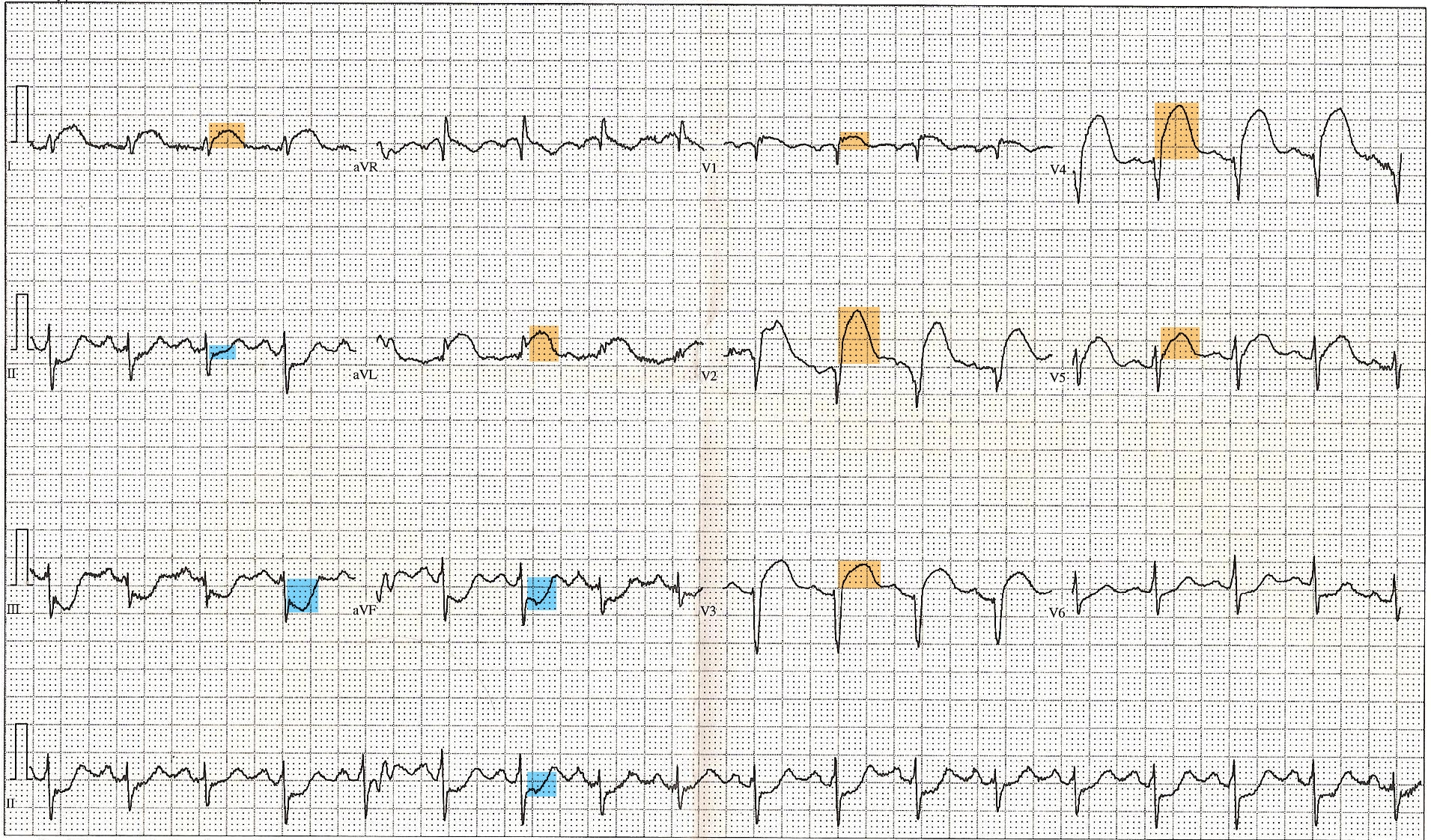
Risk stratification for suspected ACS (context, not a pharmacist task)
Once a patient reaches an emergency setting, suspected non-ST-elevation ACS is commonly risk-stratified using a validated tool such as the TIMI risk score, a 7-item point-sum estimating 14-day risk of death, MI, or urgent revascularization.[4] It is presented here only so a pharmacist reviewing a chart understands what the number means — full antiplatelet, anticoagulant, and reperfusion management is covered in the dedicated Acute Coronary Syndromes chapter, not here.
Why response to a trial treatment is not diagnostic
Neither relief with sublingual nitroglycerin nor relief with an antacid reliably distinguishes cardiac from non-cardiac chest pain — esophageal spasm can respond to nitrates, and cardiac pain has occasionally been reported to improve after antacid administration. Treat a "positive" response to either as reassuring at most, never as proof the pain is benign, and never let it substitute for the red-flag screen in a first presentation.[1]
Treatment Targets
- Apply the red-flag screen to every chest pain encounter, in every setting, before anything else.
- Act on any red flag within minutes — activate EMS immediately rather than after extended deliberation or a trial of self-care.
- Get every red-flag patient to emergency care by ambulance, not self-transport, so assessment and treatment can begin immediately and continue en route.
- Avoid under-triage — missing acute coronary syndrome, aortic dissection, pulmonary embolism, tension pneumothorax, esophageal rupture, or cardiac tamponade — since the harm of a missed emergency is far greater than the harm of an unnecessary emergency department visit.
- Avoid indiscriminate over-triage of pain that is genuinely, specifically, and recently confirmed as a benign recurrent pattern, which erodes patient trust and consumes emergency resources needed elsewhere.
- Reserve reassurance and self-care exclusively for the narrow circumstance defined in Choose Initial Treatment and Algorithm B — never as a default.
- Set explicit, specific return precautions for every patient who is not immediately referred.
- Route every patient who is escalated or diagnosed to the appropriate condition-specific chapter (Acute Coronary Syndromes, Aortic Dissection, Venous Thromboembolism, Community-Acquired Pneumonia, GERD) for full management.
Choose Initial Treatment
Step 1 — screen for red flags before anything else
Any red flag present call 911 / activate EMS immediately. Do not delay the call to attempt self-care, to see if the pain passes, or to complete a longer history — the screen itself takes under a minute; act on the first red flag identified rather than waiting to complete an exhaustive history.[5]
No red flag identified, but the pain is new, has changed in any way, or there is genuine uncertainty refer urgently for same-day medical assessment (emergency department or urgent care) rather than a routine scheduled appointment.
Do not offer reassurance or self-care for a first-ever presentation of chest pain, an atypical presentation in a higher-risk group (women, diabetes, older adults, pregnancy), or any pain that has not previously been formally investigated and explicitly attributed to a benign cause.
Eligible only if ALL of the following are true the patient (or a caregiver who knows the history well) confirms a prior formal medical workup for this exact pain pattern that concluded it was non-cardiac and non-emergent; today's pain is identical in character, location, and triggers to that previously investigated pattern; there are no new or additional associated symptoms; and no new cardiovascular, VTE, or dissection risk factor has developed since that workup.
Reflux-pattern pain meeting all of the above a trial of an antacid, H2-receptor antagonist, or proton pump inhibitor is reasonable — see Pharmacologic Treatment Options.
Musculoskeletal-pattern pain meeting all of the above acetaminophen or an NSAID (oral or topical) plus activity modification is reasonable.
If self-care does not relieve the pain within the expected timeframe for the agent used, or the pain changes in any way stop self-care and return to Step 1 — see Treatment Failure / Next Step.
Non-Pharmacologic Treatment
- Positioning — have the patient sit or lie down in whichever position is most comfortable while red flags are assessed and while awaiting EMS if activated; do not have them stand, pace, or continue activity.
- Never let a red-flag patient self-transport — call an ambulance rather than having the patient or a family member drive to the emergency department, so assessment and treatment (and, if needed, resuscitation) can begin immediately rather than only on arrival.[5]
- Stay with the patient until EMS arrives or the referral is otherwise handed off, monitoring for any change (worsening pain, new dyspnea, syncope, or hemodynamic change) that would itself be a red flag.
- Give a complete handoff to EMS or the receiving facility: onset and character of the pain, which red flag(s) prompted the call, relevant history and medications, and exactly what first-response treatment (nitroglycerin, ASA) was given and when.
- Document the encounter — what was assessed, what red-flag screen was applied, and what was advised — regardless of outcome, including for a patient who declines transport against advice.
- For a patient genuinely eligible for self-care (see Choose Initial Treatment): explicit activity/trigger modification specific to the confirmed pattern (avoiding the specific food/positional trigger for reflux-pattern pain; avoiding the specific movement/exertion trigger for musculoskeletal-pattern pain), plus clear, specific written return precautions restating every Algorithm A red flag before ending the encounter.
Pharmacologic Treatment Options
| Drug / intervention | Role | Dose / use | Important adverse effects | Teaching points |
|---|---|---|---|---|
| ASA Preferred | First-response, suspected cardiac chest pain, while awaiting EMS | Chew and swallow 160-325 mg once (one 325 mg tablet, or two 81 mg tablets), if not allergic/intolerant and no obvious contraindication | GI upset, bleeding | Give while waiting for EMS, never instead of calling 911. Confirm no allergy or active bleeding first. |
| Nitroglycerin (the patient's own, prescribed) Preferred | First-response, if the patient already has their own prescribed sublingual nitroglycerin | Assist the patient to take it exactly per their own prescribed instructions | Headache, hypotension, dizziness | Do not initiate nitroglycerin in a patient with no prescription for it. Relief does not confirm a cardiac cause — esophageal spasm can also respond. |
| Calcium carbonate (antacid) Preferred | Confirmed benign, previously investigated reflux-pattern pain only | 500-1000 mg PO as needed, or per product labelling | Constipation, hypercalcemia with excessive use | Trial only after full eligibility per Choose Initial Treatment is confirmed. No relief within the expected timeframe is a red flag — stop and refer. |
| Famotidine Alternative | Confirmed benign, previously investigated reflux-pattern pain only | 10-20 mg PO once or twice daily | Headache, dizziness | Reasonable step-up from an antacid for the same confirmed benign pattern; same stop-and-refer rule applies. |
| Omeprazole Alternative | Confirmed benign, previously investigated reflux-pattern pain, recurrent/frequent | 20 mg PO once daily | Headache, GI upset, long-term risks with prolonged use | For recurrent reflux-pattern episodes already characterized as benign; not a substitute for referral if the pattern changes. |
| Acetaminophen Preferred | Confirmed benign, previously investigated musculoskeletal-pattern pain only | 500-1000 mg PO every 6 hours as needed, maximum 4 g/day (lower in hepatic impairment) | Hepatotoxicity with overdose or in significant hepatic impairment | First-line for the confirmed musculoskeletal pattern; same stop-and-refer rule if pain does not behave as expected. |
| Ibuprofen Alternative | Confirmed benign, previously investigated musculoskeletal-pattern pain only | 200-400 mg PO every 6-8 hours as needed | GI upset, GI bleeding, renal impairment | Confirm no NSAID contraindication (renal impairment, active GI bleeding risk, concurrent anticoagulation) first. |
| Diclofenac (topical) Alternative | Confirmed benign, previously investigated musculoskeletal-pattern pain, well-localized | Apply to the affected area per product labelling, up to 4 times daily | Local skin irritation; lower systemic exposure than oral NSAIDs | A reasonable option when the pain is well-localized and reproducible with palpation, minimizing systemic NSAID exposure. |
Special Populations
Women
Women are meaningfully more likely than men to present without classic chest pressure — instead reporting shortness of breath, pressure or pain in the lower chest or upper abdomen, dizziness, lightheadedness, fainting, upper back pressure, or extreme fatigue. Apply the same red-flag threshold regardless of how atypical the presentation sounds; atypical is not reassuring.[3]
Older adults
Presentation is more often atypical and blunted — less pronounced pain, more often dyspnea, confusion, or general unwellness as the dominant complaint. Comorbidity burden and baseline risk are both higher in this group, which should raise, not lower, the index of suspicion for a vague presentation.
Diabetes
Autonomic neuropathy can blunt or entirely mask ischemic pain ("silent" ischemia), so a diabetic patient with only mild discomfort, or with dyspnea/fatigue/nausea as the dominant symptom instead of pain, deserves the same urgency as a classic presentation.
Pregnancy and the postpartum period
Physiologic dyspnea and reflux are both common in pregnancy, which can make a genuinely benign explanation seem likely — but this population also carries a higher risk of several serious causes: pregnancy is a recognized VTE risk factor; new hypertension with epigastric or right-upper-quadrant pain, headache, or visual changes raises concern for preeclampsia/HELLP syndrome (see the Preeclampsia chapter); peripartum cardiomyopathy can present with chest discomfort and dyspnea; and aortic dissection risk is elevated specifically in the third trimester and early postpartum period, especially with an underlying connective tissue disorder (see the Aortic Dissection chapter's Special Populations). Refer promptly rather than defaulting to a physiologic explanation.
Psychiatric history / panic disorder
A patient with an established panic disorder diagnosis can still have a genuine cardiac event — a known psychiatric history is never, by itself, grounds to skip the red-flag screen or to attribute new or different chest pain to anxiety without objective assessment.
Cocaine or stimulant use
Can cause coronary vasospasm and precipitate ACS even without underlying atherosclerosis, and independently raises aortic dissection risk through acute severe hypertension — treat any chest pain in this context with a low threshold for escalation.
Known coronary artery disease or prior MI
Any new or different pain pattern in this group — even if milder than the patient's prior infarct — is a red flag on its own; a lower threshold applies than in a patient with no cardiac history.
Stable, chronic angina previously characterized by a cardiologist
A patient with a formal diagnosis of stable angina, on an established anti-anginal regimen, whose pain today is unchanged from their well-characterized baseline pattern and responds to their usual nitroglycerin as expected, may be an appropriate candidate for the same-pattern self-care pathway in Choose Initial Treatment — but any change from that established baseline (more frequent, more severe, lower-threshold, or unrelieved by the usual dose of nitroglycerin) is itself a red flag requiring urgent reassessment, not a variant of the known pattern.[6]
Monitoring & Follow-Up
For every patient who is referred or for whom EMS was activated, the pharmacist's responsibility ends with a complete handoff (see Non-Pharmacologic Treatment) — ongoing monitoring and follow-up become the receiving team's responsibility.
For a patient genuinely eligible for reassurance and self-care: confirm they already have, or help arrange, follow-up with their own prescriber or primary care team, particularly if the "previously investigated" workup was some time ago or if self-care is being repeated for recurrent episodes. Restate the specific return precautions in plain language before ending the encounter — every Algorithm A red flag, plus "the self-care trial does not relieve the pain as expected" and "the pain changes in any way" — and confirm the patient (or a caregiver) can repeat them back before leaving.
Patient education is not a separate add-on here — it is the entire deliverable for a self-care encounter: what pattern was confirmed as benign, exactly what to try and for how long before it should have worked, and exactly what would mean "this is no longer the same pattern, call again or go to the emergency department." A patient who cannot repeat back the return precautions should not be discharged on a self-care plan alone.
Treatment Failure / Next Step
- Self-care trial (antacid, H2RA, PPI, acetaminophen, or NSAID) does not relieve the pain within the expected timeframe for that agent: stop self-care and treat as a new, undifferentiated presentation — return to the Algorithm A red-flag screen and refer. Do not extend the trial "a little longer" or add a second self-care agent on top of the first.
- Pain resolves spontaneously after 911 has already been called: continue with the planned EMS/emergency department evaluation regardless — spontaneous resolution does not exclude a serious cause and is not a reason to cancel the call.
- A patient with a prior negative cardiac or GI workup re-presents with a new or different feature (different location, new associated symptom, or any red flag): treat this as an entirely new presentation and apply the full Algorithm A screen — a prior negative workup for a different-sounding pain does not cover today's presentation.
- Genuine uncertainty about whether the current pain matches a previously investigated pattern closely enough: default to referral. When in doubt, the rule in this chapter is to escalate, never to reassure.
- A patient declines transport or referral despite an identified red flag: document the red flag, the recommendation given, and the decline clearly, and still provide explicit return precautions and encourage the patient to call 911 themselves if anything worsens.
Common Errors to Avoid
- Anchoring on "it's probably just anxiety" or "it's probably just reflux" in a young or otherwise low-apparent-risk patient without a completed, documented prior workup specific to today's pain.
- Treating an improving or currently pain-free patient as automatically safe — resolution of pain does not exclude a serious cause and is not a reason to skip the red-flag screen.
- Letting a patient with any red flag drive themselves, or be driven by a family member, to the emergency department instead of calling an ambulance.
- Withholding ASA due to an unclear or assumed allergy without actually asking the patient directly.
- Delaying the 911 call to try a self-care measure first "to see if it helps" — the red-flag screen comes before any treatment trial, not after one.
- Treating relief with nitroglycerin or an antacid as diagnostic proof of a cardiac or GI cause respectively — esophageal spasm can respond to nitrates, and neither response reliably distinguishes cardiac from non-cardiac pain.[1]
- Failing to re-screen a "known, chronic" pain pattern when it changes in frequency, severity, or trigger threshold — a changed pattern is a new presentation, not a variant of the old one.
- Under-recognizing atypical presentations in women, patients with diabetes, older adults, and pregnant/postpartum patients — atypical is not reassuring in any of these groups.
- Offering self-care advice for a first-ever, never-investigated episode of chest pain — the self-care pathway in this chapter requires a prior formal workup, not just the pharmacist's own clinical impression today.
- Stacking a second self-care agent on top of a first that has not worked, rather than stopping and escalating per Treatment Failure / Next Step.
Clinical Decision Algorithm
Drug Tables
How to use this table: This is a triage chapter, not a disease-specific management chapter. The first-response class below applies only while EMS is already en route for suspected cardiac chest pain; the self-care classes apply only after the strict eligibility criteria in Choose Initial Treatment and Algorithm B are confirmed — a prior formal workup for this exact pain pattern, unchanged today, with no new symptom or risk factor. Select any drug name to open its complete Pharmasist Drug Database page.
First-Response Therapy — Suspected Cardiac Chest Pain, While Awaiting Emergency Transport
Give while waiting for EMS, never instead of calling 911. Confirm no allergy/contraindication before ASA, and never initiate nitroglycerin in a patient with no prescription for it.
| Drug | Dosage | Adverse effects | Drug interactions | Comments |
|---|---|---|---|---|
| ASA (acetylsalicylic acid) | Adults: Chew and swallow 160-325 mg once (one 325 mg tablet, or two 81 mg tablets) | GI upset, bleeding, rare bronchospasm | Additive bleeding risk with anticoagulants or other antiplatelets | Chew (not swallow whole) for faster absorption. A single dose is the complete first-response contribution — ongoing antiplatelet therapy is determined by the receiving team. |
| Nitroglycerin (the patient's own, prescribed) | Adults: Per the patient's own prescribed sublingual dose and repeat-dosing instructions | Headache, hypotension, dizziness, reflex tachycardia | Contraindicated with recent phosphodiesterase-5 inhibitor use (sildenafil, tadalafil, vardenafil) due to severe hypotension risk | Assist administration only; do not initiate in a patient without their own prescription. Relief does not confirm a cardiac cause — esophageal spasm can also respond. |
Self-Care Therapy — Confirmed Benign, Previously Investigated Reflux-Pattern Pain Only
Use only after full eligibility per Choose Initial Treatment/Algorithm B is confirmed. No relief within the expected timeframe, or any change in the pain, is a red flag — stop and refer rather than continuing or escalating the self-care agent.
| Drug | Dosage | Adverse effects | Drug interactions | Comments |
|---|---|---|---|---|
| Calcium carbonate | Adults: 500-1000 mg PO as needed, or per product labelling | Constipation, hypercalcemia with excessive/prolonged use | May reduce absorption of tetracyclines, fluoroquinolones, and some other oral medications if taken together | First-line trial for a confirmed reflux pattern; onset within minutes. |
| Famotidine | Adults: 10-20 mg PO once or twice daily | Headache, dizziness | Minimal drug interaction potential compared with older H2RAs | Reasonable step-up from an antacid for the same confirmed benign pattern. |
| Omeprazole | Adults: 20 mg PO once daily | Headache, GI upset; long-term risks (fracture, B12 deficiency, enteric infection) with prolonged use | May reduce clopidogrel effectiveness; may increase levels of some other CYP2C19 substrates | For recurrent reflux-pattern episodes already characterized as benign; not a substitute for referral if the pattern changes. |
Self-Care Therapy — Confirmed Benign, Previously Investigated Musculoskeletal-Pattern Pain Only
Use only after full eligibility per Choose Initial Treatment/Algorithm B is confirmed, and only for pain that is sharp, well-localized, and reproducible with palpation or movement.
| Drug | Dosage | Adverse effects | Drug interactions | Comments |
|---|---|---|---|---|
| Acetaminophen | Adults: 500-1000 mg PO every 6 hours as needed, maximum 4 g/day (lower in hepatic impairment) | Hepatotoxicity with overdose or in significant hepatic impairment | None significant at standard doses | First-line for the confirmed musculoskeletal pattern. |
| Ibuprofen | Adults: 200-400 mg PO every 6-8 hours as needed | GI upset, GI bleeding, renal impairment | Increased bleeding risk with anticoagulants; avoid with other NSAIDs | Confirm no renal impairment, active GI bleeding risk, or concurrent anticoagulation first. |
| Diclofenac (topical) | Adults: Apply to the affected area per product labelling, up to 4 times daily | Local skin irritation; lower systemic exposure than oral NSAIDs | Minimal systemic interaction potential at topical doses | A reasonable option when the pain is well-localized, minimizing systemic NSAID exposure. |
Professional reference only. Apply clinical judgment and verify patient-specific decisions against current authoritative guidance and product information.